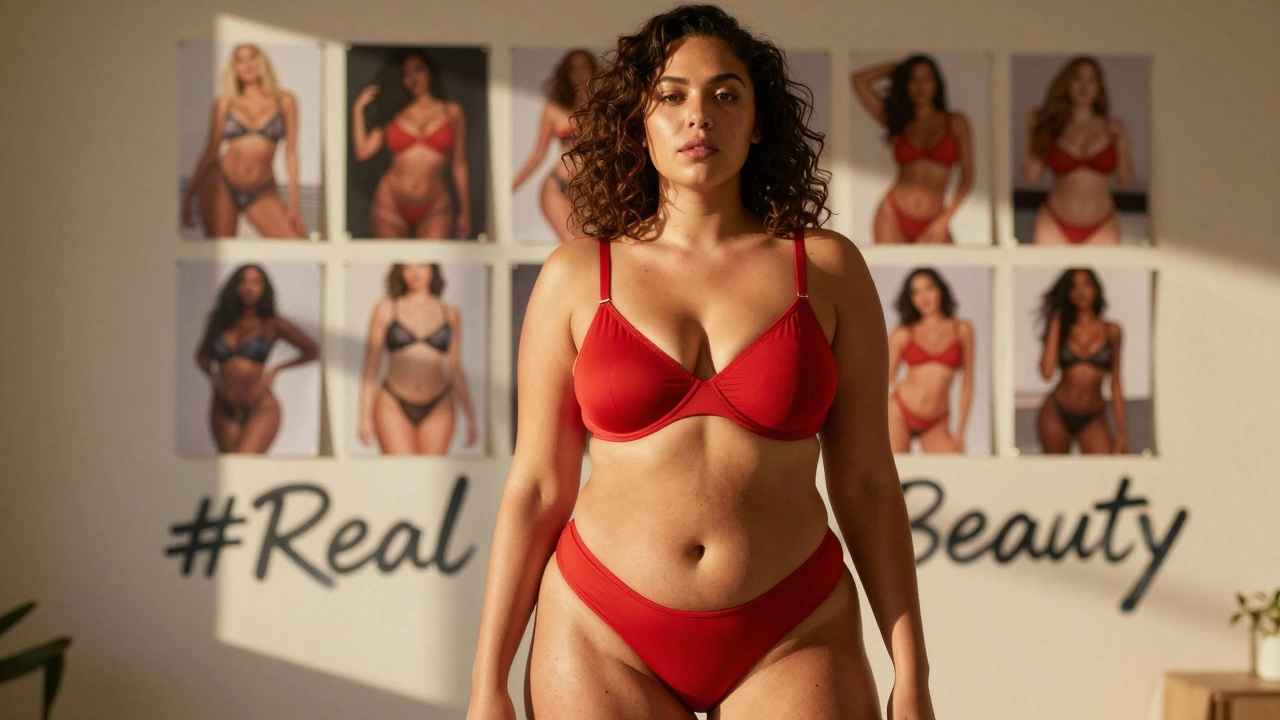
Five years ago, glamour models were mostly seen in men’s magazines, posing under harsh studio lights with perfect hair and zero imperfections. Today, that image is gone. The women reshaping glamour aren’t just posing-they’re redefining what beauty means, one unretouched photo at a time. In 2026, the glamour model isn’t a fantasy figure. She’s a real person with a voice, a platform, and the power to change how the world sees female bodies.
They’re Not Just About Looks Anymore
Glamour models used to be hired because they fit a narrow mold: slim waist, big hips, flawless skin. Now, the industry is waking up to the fact that real people don’t look like that-and that’s exactly what people want to see. Models like Isabella Rossellini is a retired model turned actress and activist who returned to glamour photography in her 60s to challenge ageism in fashion. Also known as Isabella Rossellini, she has been featured in campaigns for L’Oréal and Dove, proving that glamour isn’t tied to youth. aren’t just showing off curves or cleavage. They’re talking about mental health, body dysmorphia, and the pressure to stay thin. Their Instagram posts often include captions about therapy, eating disorders, or how they learned to love their stretch marks. That kind of honesty is what’s pulling in millions of followers-not just the lighting or the lingerie.Body Positivity Is the New Standard
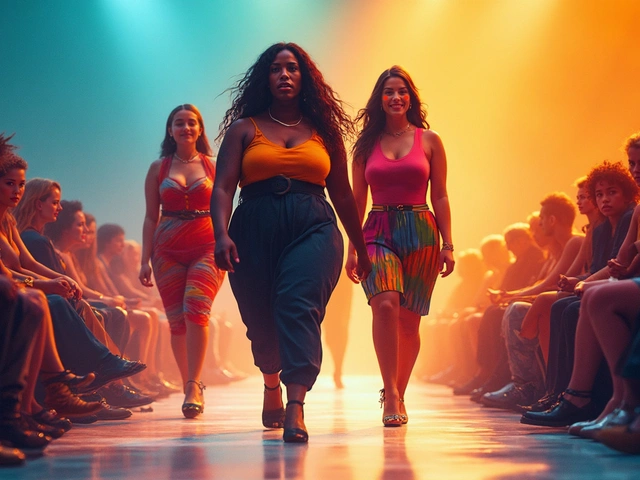
The old glamour model had a size 6. Today, the most influential ones wear sizes 12 to 20. Brands like Savage X Fenty, Torrid, and Chromat didn’t just hire curvy models-they built entire campaigns around them. And it’s working. In 2025, sales for plus-size lingerie rose by 42% compared to the year before, according to data from the Fashion Industry Association. That’s not a fluke. It’s a direct result of consumers seeing themselves reflected in ads.Take Lizzo is a singer and body positivity icon who regularly poses in lingerie and swimwear, challenging the idea that glamour requires a tiny frame. Also known as Lizzo, she has collaborated with major brands like Lane Bryant and has over 40 million Instagram followers who look to her for confidence, not just style. She doesn’t hide her body. She celebrates it. And she’s not alone. Models like Ashley Graham is a former Sports Illustrated Swimsuit model who became the first plus-size model to land a major cosmetics campaign with CoverGirl in 2016. Also known as Ashley Graham, she now runs her own production company and produces content that normalizes cellulite, scars, and stretch marks in glamour shoots and Tess Holliday is a model and activist who broke barriers by being the first plus-size model signed to a major agency (Wilhelmina) in 2014. Also known as Tess Holliday, she has over 5 million followers and uses her platform to call out brands that refuse to include diverse bodies have turned their careers into movements. Their work isn’t just about selling products-it’s about selling self-worth.
They’re Building Their Own Brands
Gone are the days when glamour models waited for magazines to call. Today, the most powerful ones run their own businesses. Candice Huffine is a former runway model who launched her own lingerie line, CANDY, after realizing how few options existed for women with curves. Also known as Candice Huffine, her brand features adjustable straps, inclusive sizing, and real customer photos on the website didn’t wait for a brand to notice her. She created what she needed. Her line now sells in over 200 stores worldwide. Another example is Demi Lovato is a singer and mental health advocate who launched a line of intimate wear called ‘Demi & Co.’ focused on comfort and confidence over sex appeal. Also known as Demi Lovato, her collection includes nursing-friendly pieces and adaptive designs for people with disabilities. She didn’t go for the traditional glamour angle. She went for real life.These women aren’t just models anymore. They’re entrepreneurs, producers, and educators. They host workshops on body confidence, write books on self-acceptance, and even advise fashion brands on inclusive design. Their influence goes beyond the camera. They’re shaping how products are made, marketed, and sold.
Social Media Is Their Runway
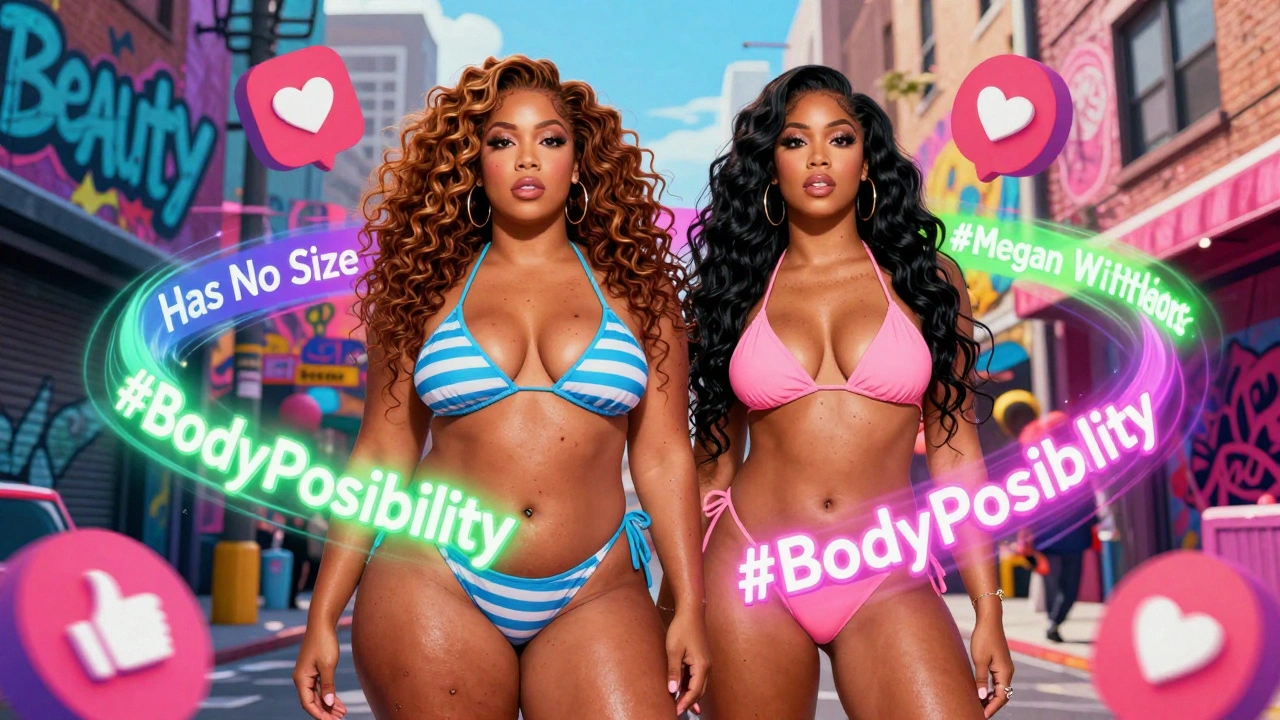
You won’t find most of these models in Vogue. You’ll find them on Instagram, TikTok, and YouTube. The most successful ones post daily-sometimes raw, sometimes polished, always real. One post from Megan Jayne Crabbe is a body positivity advocate and former anorexia survivor who started her Instagram account @bodyposipanda to share unedited photos of her body. Also known as Megan Jayne Crabbe, her account has over 1.5 million followers and she has published two best-selling books on self-love showing her in a bikini, with visible stretch marks and a soft stomach, got 876,000 likes in one day. No filters. No lighting tricks. Just her. And people responded because they saw themselves.Platforms like TikTok have turned glamour modeling into a community. Hashtags like #BodyPositivity, #RealBeauty, and #GlamourWithoutFilters now have billions of views. Brands are paying attention. In 2025, 68% of the top 50 lingerie brands ran campaigns featuring non-traditional models, up from just 22% in 2020. That’s not a trend. That’s a revolution.
They’re Breaking the Rules of Aging
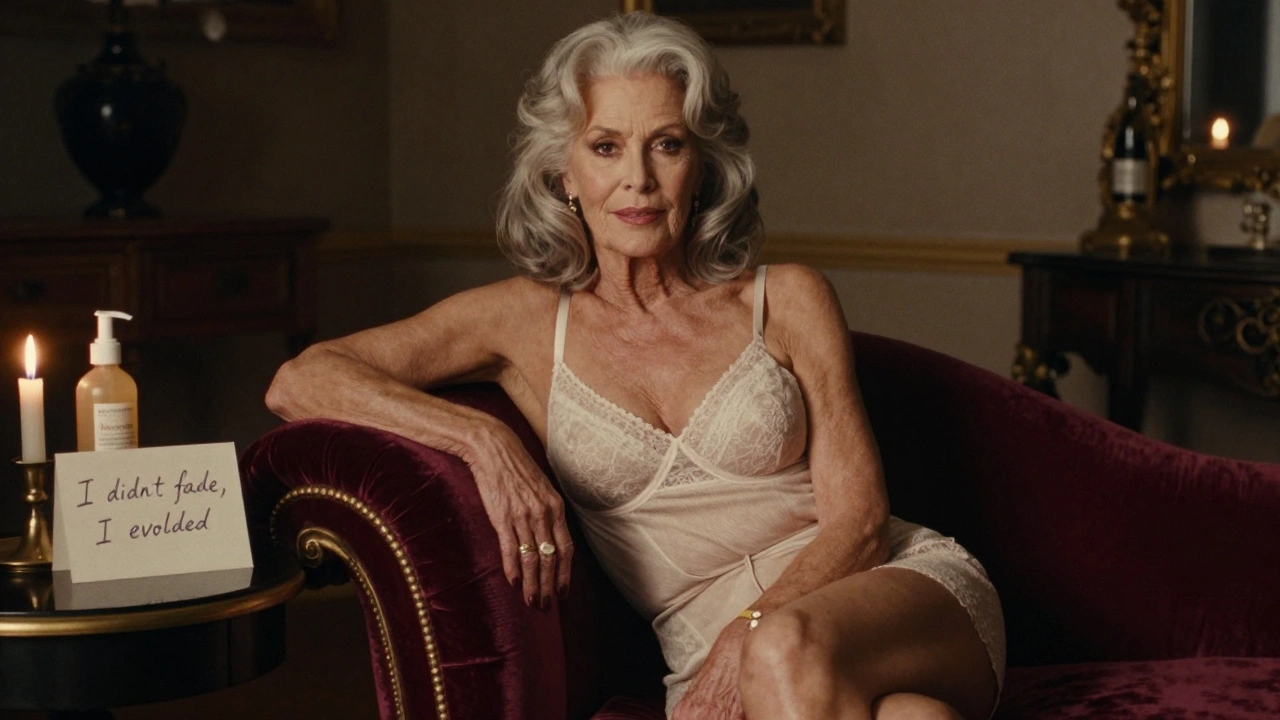
The glamour industry used to retire women at 30. Now, women in their 40s, 50s, and even 60s are leading campaigns. Naomi Campbell is a supermodel who, at 54, became the face of a major lingerie campaign for La Perla, proving that glamour has no expiration date. Also known as Naomi Campbell, she has been featured in campaigns for L’Oréal and has spoken publicly about ageism in fashion didn’t fade away. She redefined what glamour looks like at her age. Christie Brinkley is a former Sports Illustrated cover model who, at 70, still shoots lingerie campaigns and runs her own skincare line focused on women over 50. Also known as Christie Brinkley, her brand, Christie Brinkley Skincare, has generated over $200 million in sales since 2015 doesn’t hide her wrinkles. She highlights them. And brands are lining up to work with her.These women aren’t just proving they can still look good. They’re proving that glamour isn’t about youth-it’s about presence. About owning your story. About refusing to disappear because you’ve hit a certain birthday.
What’s Next?
The future of glamour modeling isn’t about who’s the skinniest or the most photogenic. It’s about who’s the most authentic. Who’s willing to speak up. Who’s willing to risk backlash for the sake of truth. The models changing the game now aren’t waiting for permission. They’re creating their own spaces, their own rules, and their own definitions of beauty.And it’s working. More women are booking jobs because they look like their neighbors, not their Instagram feed. More brands are hiring diverse teams behind the camera, not just in front of it. More young girls are looking at these women and thinking, ‘I can be that too.’ That’s not just a shift in fashion. That’s a shift in culture.
Who are the most influential glamour models in 2026?
The most influential glamour models in 2026 are those who use their platform to challenge beauty standards. Ashley Graham, Lizzo, Tess Holliday, Megan Jayne Crabbe, and Christie Brinkley are leading the charge. They’re not just posing-they’re speaking out about body image, aging, mental health, and inclusivity. Their influence comes from authenticity, not just looks.
Are glamour models still only for men’s magazines?
No. While men’s magazines were once the main platform for glamour modeling, today’s top glamour models reach millions through social media, brand campaigns, and their own businesses. Brands like Savage X Fenty, Lane Bryant, and L’Oréal now feature glamour models in mainstream advertising aimed at women, non-binary people, and all genders.
Can plus-size women be glamour models?
Absolutely. Plus-size models like Ashley Graham and Tess Holliday have redefined the industry. In 2025, over 60% of new lingerie campaigns included models size 12 and above. The demand isn’t just there-it’s growing. Brands are realizing that customers want to see real bodies, not airbrushed ideals.
Do glamour models still get retouched heavily?
Less than ever. Many top glamour models now refuse to allow retouching that alters body shape, skin texture, or natural features. Campaigns from brands like Aerie and Dove have gone completely unretouched. Social media has made it impossible to hide imperfections-followers call out fake edits instantly. Authenticity is now the selling point.
Is glamour modeling still a viable career in 2026?
Yes-but not the way it used to be. The old model of waiting for magazine shoots is gone. Today’s successful glamour models build personal brands. They launch products, write books, host podcasts, and create content. Income comes from sponsorships, merchandise, speaking engagements, and digital courses-not just photo fees. The career is more sustainable, more diverse, and more empowering than ever.
Final Thoughts
The glamour model of 2026 isn’t someone you admire from afar. She’s someone you relate to. She’s the woman who posts a photo after a hard day and says, ‘I didn’t work out today, and that’s okay.’ She’s the one who speaks up when a brand tries to photoshop her hips. She’s the one who’s tired of being told she’s not enough-and who’s decided to change the rules instead.This isn’t just about fashion. It’s about freedom. About being seen. About refusing to shrink yourself to fit someone else’s idea of beauty. And that’s why these women aren’t just changing the game-they’re winning it.
January 26, 2026 AT 13:33
Andy Haigh
Beauty is a social construct engineered by globalist media elites to keep women docile and spending. These so-called 'empowerment' campaigns are just neoliberal capitalism repackaging oppression as liberation. They sell you a bikini and call it freedom. The real revolution? Refusing to participate. Stop buying. Stop clicking. Stop feeding the machine.
They think they're changing the game? No. They're just new labels on the same old cage. The patriarchy doesn't need to control your body anymore-it just needs you to believe you're choosing it. Wake up.
Isabella Rossellini? A pawn. Lizzo? A product. Christie Brinkley? A corporate mascot with botox and a skincare line. None of them challenge the system. They monetize the illusion. Authenticity is the new advertising slogan. The real rebellion is silence.
And don't get me started on TikTok. A platform built on dopamine hijacking, now worshipped as a cathedral of self-love. The algorithm rewards outrage, not truth. These women aren't activists-they're influencers. The difference matters.
You think this is progress? This is commodified catharsis. The system absorbs dissent and turns it into quarterly earnings. The same conglomerates that once airbrushed curves now sell stretch marks as a lifestyle brand. Capitalism doesn't care what you believe. It only cares what you buy.
Real change doesn't come from Instagram captions. It comes from dismantling the industries that profit from your insecurity. Until then, you're just rearranging deck chairs on the Titanic while the ads keep rolling.
And yes-I'm calling it all performative. You can't be revolutionary while wearing a branded thong and tagging #BodyPositivity. The contradiction is the point. The system wins either way.
January 27, 2026 AT 19:40
Patrick Wan
It is, indeed, a profoundly alarming phenomenon-the complete and total erosion of aesthetic standards, under the guise of 'inclusivity,' which, as we all know, is merely the Trojan horse of cultural Marxism, infiltrating the very foundations of Western civilization through the manipulation of media narratives and the exploitation of psychological vulnerability in young women.
Where, pray tell, is the dignity in glorifying obesity, cellulite, and the visible signs of metabolic decay as 'natural beauty'? This is not liberation-it is the deliberate sabotage of biological truth, masquerading as moral progress. The human form, in its ideal state, has been the subject of artistic reverence for millennia-from the Venus de Milo to the Renaissance masters-and now, we are told that a 300-pound woman in a lace bra is 'empowered'? This is not empowerment. This is pathology.
And let us not forget the corporate collusion: L'Oréal, Savage X Fenty, Dove-these are not benevolent institutions. They are profit-driven behemoths, weaponizing identity politics to extract consumer dollars under the banner of 'authenticity.' The moment you equate moral virtue with body size, you have surrendered reason to sentimentality-and sentimentality is the currency of manipulation.
Furthermore, the claim that 'retouching is dead' is a lie. It has merely become more sophisticated. The filters are hidden. The lighting is 'natural.' The angles are curated. The same illusions persist-only now, they are sold with a wink and a hashtag. The digital realm is a hall of mirrors, and these 'activists' are merely the most gullible reflections.
And what of the men? Are they now expected to admire the physical degradation of the female form as an act of 'progress'? Is this the future we are building? A world where beauty is defined by mediocrity, where excellence is punished, and where the sacred standard of grace is replaced by the banality of the average?
I say this with sorrow, but also with clarity: We are not witnessing evolution. We are witnessing collapse.
January 29, 2026 AT 12:27
Dillon Diaz
Look, I get the performative activism. But let’s be real-this isn’t about body positivity. It’s about brand equity wrapped in woke semantics. The women who get the spotlight aren’t random real people-they’re curated, market-tested, media-savvy celebrities with PR teams.
Ashley Graham? She’s a former Sports Illustrated model who transitioned into a very profitable niche. Tess Holliday? Signed by Wilhelmina. That’s not rebellion-that’s corporate strategy. Same with Lizzo. She’s a pop star with a brand. Her 'authenticity' is a product line.
And don’t act like these campaigns are revolutionary. They’re just the new version of the Victoria’s Secret Angels-same playbook, different packaging. The industry didn’t change. It just rebranded.
Meanwhile, the real women-the ones without 10 million followers, without agents, without sponsored posts-are still being told they’re not glamorous enough. The revolution is a PR campaign. The real struggle? Still invisible.
And yes, I’m tired of the moral grandstanding. You don’t get bonus points for posting a photo with stretch marks. Real change doesn’t need a caption. It needs systemic reform. Not a new lingerie line.
So no. This isn’t progress. It’s capitalism learning how to sell guilt as virtue.
January 30, 2026 AT 17:54
Carl Grann
First off, the grammar in this post is a disaster. You say 'Isabella Rossellini is a retired model turned actress and activist who returned...' then immediately repeat the same sentence with 'Also known as Isabella Rossellini'-that’s not writing, that’s copy-paste vomit.
Also, you lump Lizzo in with 'glamour models.' She’s a singer. A performer. She doesn’t do lingerie shoots for Vogue. She does concerts. Stop conflating celebrity with profession.
And don’t act like these women are 'breaking the mold.' They’re the mold now. The new standard is just as manufactured. The only difference? Instead of airbrushed perfection, it’s 'flawed perfection'-a different filter, same algorithm.
Also, the claim that 'retouching is dead'? Bullshit. Every single one of these 'unretouched' photos? Lighting is manipulated. Skin is softened. Hips are angled. The camera lies. Always has.
And let’s not pretend this is about mental health. If it was, we’d see therapists in these campaigns, not models with 5 million followers getting paid $50K per post.
It’s not empowerment. It’s rebranding. And you’re all drinking the Kool-Aid.
Also-Tess Holliday? She’s been in rehab twice. The industry doesn’t care about her message. They care about her engagement rate. That’s not activism. That’s exploitation dressed as revolution.
January 31, 2026 AT 09:38
Colleen McGhan-Cox
YES. YES. YES. THIS IS WHAT WE’VE BEEN WAITING FOR!!!
Finally-real women, real bodies, real stories. No more hiding. No more shame. No more being told you’re not enough because you don’t look like a 17-year-old with a waist trainer and a photoshopped thigh gap.
I’m 42, I have stretch marks from three kids, I’m not size 6, and I just bought my first pair of lace lingerie because I saw a woman my age in a campaign and thought-‘Wait. That’s me.’
And it changed everything.
These women aren’t just models-they’re healers. They’re the ones holding up the mirror and saying, ‘Look. You’re beautiful. Not despite your body. Because of it.’
I’ve been in therapy for body dysmorphia since I was 16. I didn’t think I’d ever feel sexy again. Now? I take selfies in the mirror. I post them. I don’t delete them. I don’t filter them. I own them.
And I’m not alone. Look at the comments. Look at the DMs. Look at the stories. Women are crying, writing letters, saying ‘thank you’-because for the first time, they see themselves.
This isn’t fashion. This is healing. This is revolution. And I’m so damn proud to be part of it.
Keep going. Keep showing up. Keep being unapologetically YOU. The world needs your light.
WE SEE YOU. WE STAND WITH YOU. WE ARE YOU.