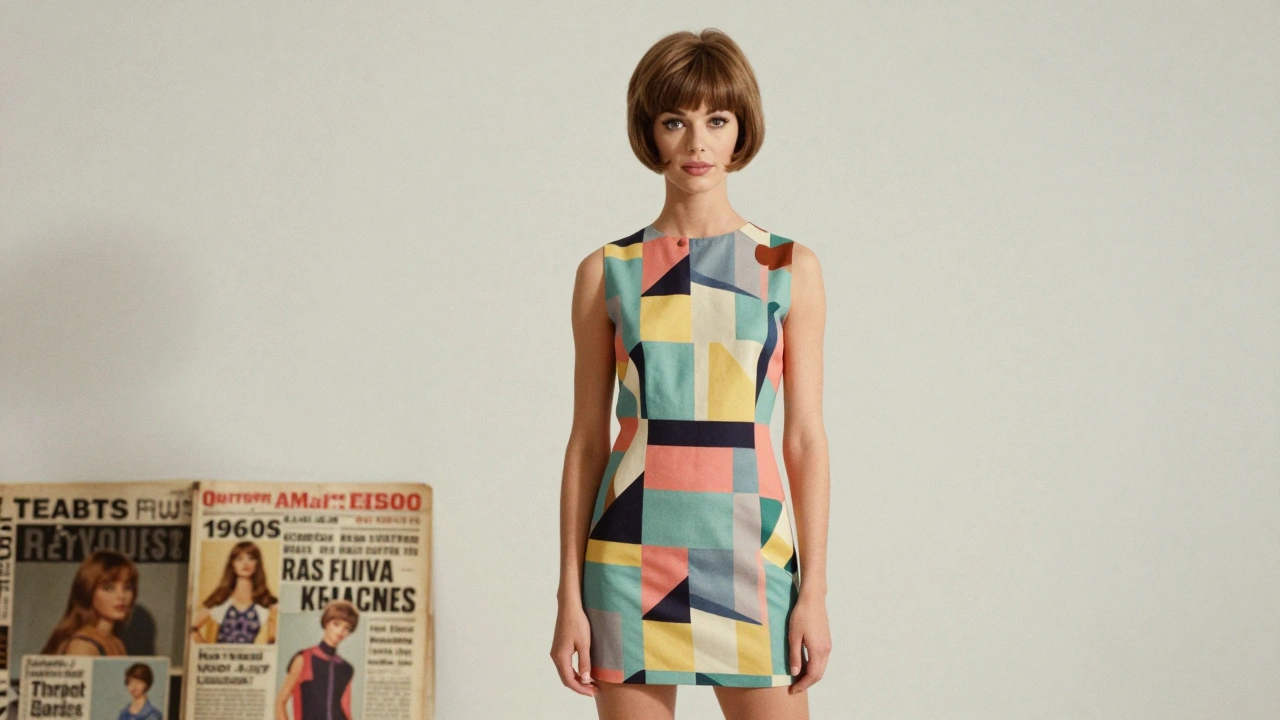
Some magazine covers don’t just sell issues-they shape culture. When a female model appears on the front of a major fashion magazine, it’s rarely just about the clothes. It’s about power, identity, rebellion, or a moment frozen in time. These aren’t just photos. They’re landmarks.
1964: Twiggy on Harper’s Bazaar
The year was 1964. The fashion world was still ruled by full-figured, statuesque women like Twiggy’s predecessor, Jean Shrimpton. Then came Twiggy-a 15-year-old London girl with big eyes, a slender frame, and a boyish cut. Her cover for Harper’s Bazaar didn’t just break the mold; it smashed it. She was 5’9”, weighed 92 pounds, and looked like a child playing dress-up. But that was the point. She represented youth, freedom, and a shift away from Hollywood glamour. Sales jumped 30% that month. Magazines started chasing the ‘Twiggy look’ for the next five years. She wasn’t just a model. She became the face of a generation.
1991: Naomi Campbell on the cover of British Vogue
Before 1991, Black women rarely graced the cover of top-tier fashion magazines in the UK or US. When Naomi Campbell appeared on the cover of British Vogue in January 1991, it was historic. She was 20, dressed in a simple black dress, staring straight into the camera with calm authority. No props. No flashy styling. Just her. This wasn’t a token gesture. It was a statement. The editor, Beatrix Miller, fought for it. Campbell later said she didn’t realize how big it was until she saw the headlines the next day. That cover didn’t just make her a star-it cracked open the door for every Black model who followed. By 2020, 18% of top fashion magazine covers featured women of color. That shift started with one image.
1996: Linda Evangelista for American Vogue
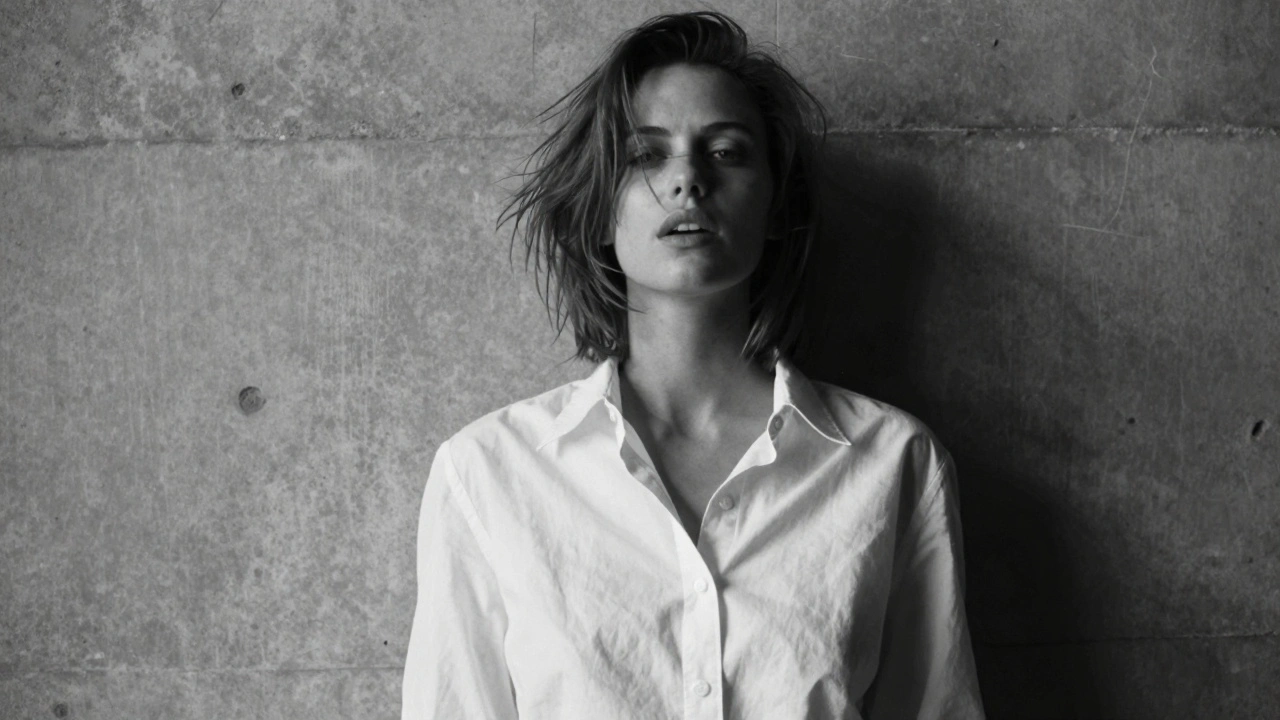
Linda Evangelista didn’t just wear clothes-she commanded them. Her 1996 cover for American Vogue, shot by Peter Lindbergh, was stark. Black-and-white. No makeup. No jewelry. Just her, in a simple white shirt, hair slightly messy, lips slightly parted. The lighting was raw. The mood was intense. She looked like a woman who had seen everything and wasn’t afraid to say it. That cover came at a time when the industry was obsessed with airbrushed perfection. Lindbergh’s work was a rebellion. And Linda? She was the face of it. She once said, “We don’t wake up for less than $10,000 a day.” That cover didn’t just sell magazines-it sold the idea that models could be artists, not just mannequins.
2007: Kate Moss on the cover of Elle
By 2007, Kate Moss had been a model for nearly two decades. She’d survived scandals, criticism, and the rise of a new generation of models. But her cover for Elle that year was different. She was 32, wearing a torn black t-shirt, no makeup, hair tied back. She looked tired. Real. Human. The photo, taken by Mario Testino, showed her leaning against a wall like she’d just gotten home from a long night. No retouching. No glam. Just her. The cover sparked a debate: Was this vulnerability? Or was it a calculated comeback? Either way, it worked. Sales soared. And it signaled a new era-the end of the unattainable supermodel and the rise of the relatable one. Women saw themselves in that image. That’s rare.
2015: Ashley Graham on the cover of Sports Illustrated Swimsuit Issue
Before Ashley Graham, plus-size women were rarely seen on the cover of major fashion or lifestyle magazines-especially not in swimwear. When she appeared on the Sports Illustrated Swimsuit Issue in 2015, it was the first time a model size 14 had ever been featured. She wore a red one-piece, standing confidently on a beach, sunlight catching her skin. No filters. No shrinking. No apology. The cover broke records. Online engagement spiked by 200%. Brands like Target and Aerie took notice. By 2023, 40% of swimwear ads featured models above size 12. That cover didn’t just change a magazine-it changed an industry’s definition of beauty.
2020: Adwoa Aboah on the cover of British Vogue
Adwoa Aboah’s 2020 cover for British Vogue was called “The New Normal.” She sat cross-legged on the floor, wearing a loose white shirt, no jewelry, no smile. Behind her, a wall was covered in handwritten notes: “I am worthy,” “I am not broken,” “I am enough.” The cover was shot by Nadine Ijewere, the first Black female photographer to shoot a British Vogue cover. It wasn’t just a fashion spread. It was therapy. Adwoa, who’s been open about her mental health struggles, turned the cover into a manifesto. The issue sold out in 48 hours. The notes on the wall became a viral meme. And for the first time, a fashion magazine didn’t just show a model-it showed a person. A real one.
2023: Gigi Hadid on the cover of Harper’s Bazaar
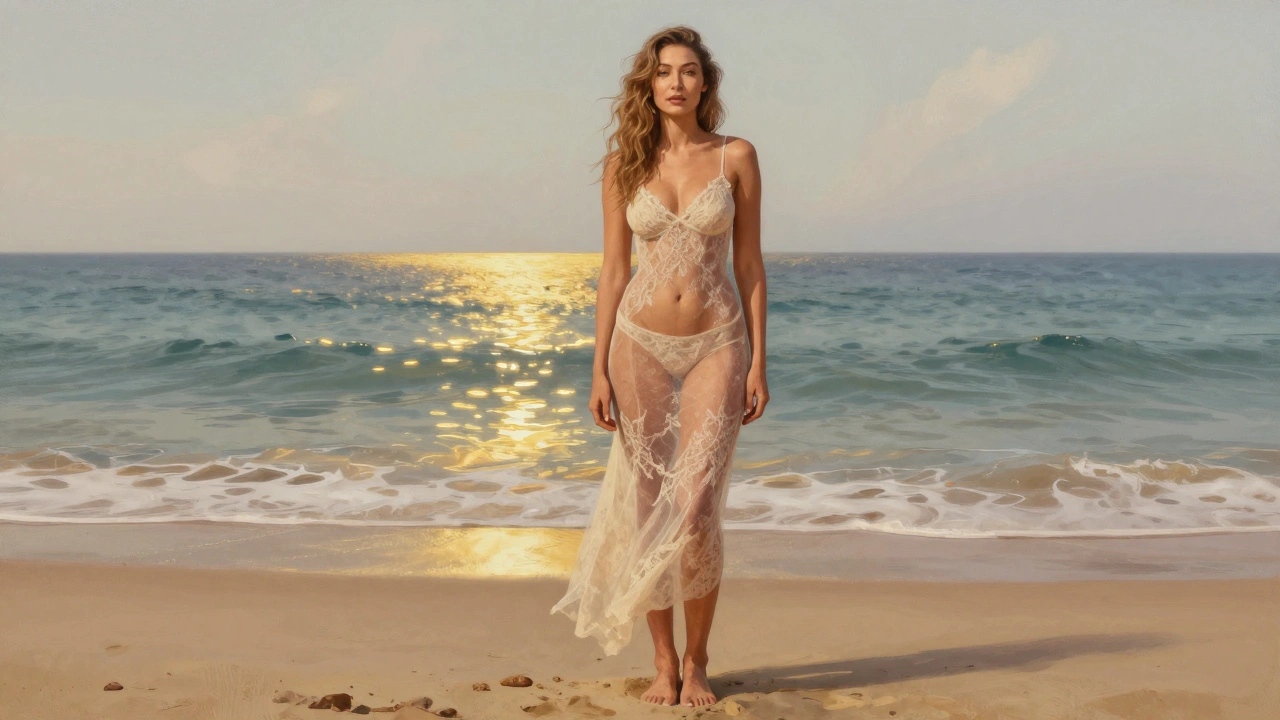
In 2023, Gigi Hadid appeared on the cover of Harper’s Bazaar wearing a sheer lace dress, no bra, no retouching. Her body was visible-stretch marks, cellulite, curves. The caption read: “This is me. Not filtered. Not fixed.” The photo was taken by Annie Leibovitz, who said she wanted to capture “the truth of a woman who’s lived, loved, and didn’t care to hide it.” The cover sparked outrage. Some called it “too raw.” Others called it revolutionary. It got 12 million impressions on Instagram in one week. The magazine’s website crashed from traffic. And for the first time in decades, a mainstream fashion magazine didn’t just show beauty-it showed authenticity.
Why These Covers Matter
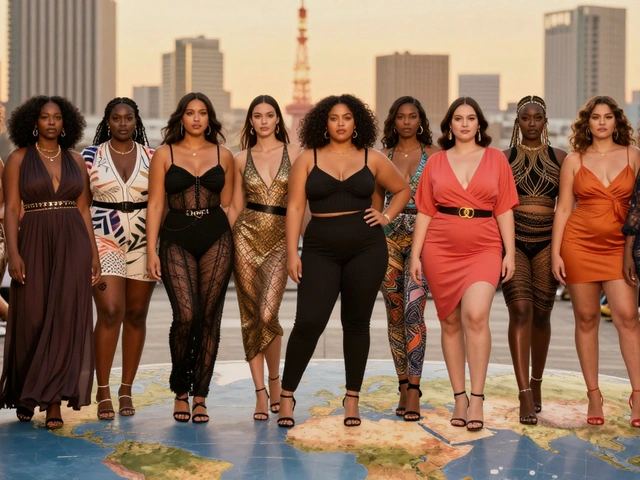
These aren’t just pretty pictures. They’re turning points. Each one challenged what society thought a woman should look like. Each one gave someone-somewhere-a reason to believe they belonged. The models on these covers didn’t just wear clothes. They carried messages. They stood for change. And they made people feel seen.
When you look at these covers now, you’re not just seeing fashion. You’re seeing history. You’re seeing the slow, messy, beautiful fight for representation. And you’re seeing women who refused to be small.
What’s Next?
The next landmark cover won’t be about size, skin tone, or age. It’ll be about something deeper: agency. The next iconic cover will show a woman not just posing-but choosing. Choosing her own story. Choosing her own light. Choosing to be more than a model. And that’s already happening. Look at the rising number of female photographers, stylists, and editors behind these covers. The future isn’t just about who’s on the cover. It’s about who’s holding the camera.
Who was the first Black woman to appear on the cover of British Vogue?
Naomi Campbell was the first Black woman to appear on the cover of British Vogue in January 1991. Her cover broke longstanding racial barriers in fashion media and paved the way for greater diversity in top-tier magazines.
Which magazine cover sparked the body positivity movement in fashion?
Ashley Graham’s 2015 cover of the Sports Illustrated Swimsuit Issue is widely credited as the moment body positivity entered mainstream fashion. As the first plus-size model on the cover, she challenged narrow beauty standards and led to a 40% increase in plus-size representation in swimwear advertising by 2023.
Why was Peter Lindbergh’s photography so influential on magazine covers?
Peter Lindbergh rejected heavy retouching and artificial lighting. His black-and-white images, like the 1996 cover of American Vogue featuring Linda Evangelista, emphasized raw emotion and natural beauty. He helped shift fashion photography from fantasy to realism, influencing dozens of covers in the 1990s and 2000s.
How did Twiggy change the modeling industry?
Twiggy redefined beauty standards in the mid-1960s by introducing a youthful, slender, androgynous look that broke away from the curvaceous Hollywood ideal. She became the first teen model to achieve global fame, proving that youth and simplicity could sell fashion-and inspired a generation of models who didn’t fit the traditional mold.
What made Gigi Hadid’s 2023 Harper’s Bazaar cover controversial?
Gigi Hadid’s 2023 cover featured her in a sheer lace dress with no retouching, showing stretch marks and natural body texture. Critics called it too raw, but supporters praised it as a bold rejection of digital perfection. The cover went viral, breaking the magazine’s website traffic records and sparking global conversations about authenticity in fashion.
Final Thoughts
The most powerful magazine covers don’t make you want to buy the issue. They make you want to change something. Maybe your view of beauty. Maybe your idea of worth. Maybe your own reflection in the mirror. These covers were never just about models. They were about who we let ourselves see-and who we let the world see.
January 17, 2026 AT 00:23
Chris Lombardo
They’re all just mind control. The magazines are owned by the same five corporations. They pick who gets on the cover to make you feel bad about yourself so you buy more stuff. Twiggy? Programmed. Naomi? Programmed. Gigi? Definitely programmed. They want you to hate your body so you’ll buy the next diet, the next cream, the next filter.
It’s not empowerment. It’s exploitation with better lighting.
January 18, 2026 AT 05:58
Frank ZHANG
Let’s be real-this whole ‘representation’ narrative is just corporate virtue signaling dressed up as progress. Naomi Campbell in ’91? Great. But she was still skinny. Ashley Graham in ’15? Still a size 14, which is not ‘plus-size’ in most of the world. And Gigi’s ‘raw’ cover? She’s got a 23-inch waist. This isn’t diversity-it’s rebranding the same narrow ideal with new labels.
Real change would be showing a 60-year-old woman with a prosthetic leg on the cover of Vogue. But that wouldn’t sell perfume.
January 18, 2026 AT 18:38
Sheri Gilley
Every single one of these covers gave someone permission to exist. I was 13 when I saw Twiggy. I thought I was broken because I didn’t look like the girls in Seventeen. Then I saw her-and I realized maybe I didn’t have to be perfect to be beautiful.
When Ashley Graham showed up? I cried. Not because I wanted to look like her-but because I finally felt like I could be seen.
These aren’t just photos. They’re lifelines. And if you don’t get that, maybe you’ve never felt invisible.
January 19, 2026 AT 00:24
samir nassif
One must contemplate, with the gravitas of a scholar gazing upon the ruins of Carthage, the ontological implications of these covers as cultural sigils. The model, in her corporeal manifestation, becomes not merely a vessel of fashion but a semiotic cipher for the collective unconscious of late capitalism.
Twiggy: the infantilization of femininity as commodity. Campbell: the tokenization of the Black body within Eurocentric hierarchies. Evangelista: the apotheosis of the androgynous sublime. Graham: the commodification of ‘body positivity’ as neoliberal resilience. And Hadid? Ah-the final act: the performative authenticity of the neoliberal subject, stripped bare not by liberation, but by the algorithm’s demand for ‘realness.’
Thus, we arrive at the paradox: the more they show us ‘truth,’ the more they obscure it. The camera does not reveal-it constructs. And we, the viewers, are complicit in our own surveillance.
January 20, 2026 AT 04:08
Nitin Murali
Interesting how everyone acts like these covers were revolutionary. But let’s not pretend the industry ever stopped controlling the narrative. Campbell was the first Black woman on British Vogue? Sure. But she was also the first to be pushed into the ‘exotic’ archetype. Graham? Still wore a one-piece. Still posed in a bikini. Still had a team of stylists and photographers making sure she looked ‘palatable.’
True representation would mean letting a woman with vitiligo, or a trans woman, or a disabled woman be the cover without it being a ‘moment.’
These are not milestones. They’re PR stunts with better lighting.
January 20, 2026 AT 17:28
Timothy Mayle
There’s something deeply human about these images. Not because they’re beautiful, but because they’re honest.
Twiggy looked scared. Naomi looked tired. Linda looked like she’d just won a war. Kate looked like she’d been up all night. Ashley looked like she knew she was breaking something. Adwoa looked like she was healing. Gigi looked like she was done pretending.
These aren’t fashion covers. They’re portraits of women who stopped apologizing for taking up space.
And maybe that’s the real revolution-not the clothes, not the lighting, but the silence after they stopped smiling for the camera.
January 21, 2026 AT 11:06
David Blair
Let’s contextualize this within the broader sociocultural framework of visual representation in media. The evolution from Twiggy to Gigi Hadid reflects a paradigmatic shift in the construction of femininity-from the idealized silhouette to the embodied authenticity movement.
Each cover represents a node in a network of cultural resistance: the rejection of airbrushed perfection (Lindbergh), the normalization of diverse body types (Graham), the elevation of marginalized creators (Ijewere), and the reclamation of agency (Hadid).
What’s often overlooked is the infrastructure behind these images: the female photographers, the inclusive casting directors, the editors who fought for these covers against corporate resistance. This isn’t happenstance-it’s institutional labor.
The next frontier? Not just who’s on the cover, but who owns the lens, the platform, and the distribution. Representation without power is just aesthetics.
January 22, 2026 AT 16:37
Stephen Robinson
Wait-so Gigi’s cover was ‘revolutionary’ because she showed stretch marks? Bro, every 20-something woman has stretch marks. This isn’t radical. It’s just a trend. Remember when everyone was posting their ‘natural’ selfies with filters? This is just the next version.
Also, why is everyone acting like no one’s ever seen a real body before? I’ve seen my grandma’s body. I’ve seen my sister’s body. We’ve all seen real bodies.
This isn’t a breakthrough. It’s a marketing pivot.
January 23, 2026 AT 23:48
anne tong
One cannot help but observe the recursive nature of this phenomenon: each so-called ‘revolutionary’ cover is predicated on the erasure of the previous paradigm, only to be subsumed into the very system it sought to dismantle. The model becomes a symbol, then a commodity, then a meme, then a stock image for diversity campaigns. The body is liberated, then repackaged, then monetized. The gaze shifts-from the male gaze to the performative gaze of the ally-but the structure remains unchanged. We celebrate the image while ignoring the labor behind it: the unpaid emotional labor of the model, the exploitative contracts, the racialized casting hierarchies that still exclude most women of color from these ‘historic’ moments. The cover is not the end. It is the first sentence of a story we are still too afraid to finish.
And yet… perhaps that is the point. The cover is not meant to be solved. It is meant to be stared at. And in that staring, we are reminded that we are still looking.