Five years ago, a top model’s job was simple: show up, wear the clothes, walk the line, smile for the camera. Today, some of them never step onto a physical runway. Instead, they move through digital worlds, wearing clothes that don’t exist in reality, posing for photos that only live on screens, and walking virtual runways that no human eye has ever seen in person. The fashion industry isn’t just changing-it’s being rebuilt in code.
Digital Fashion Isn’t Just a Trend-It’s a New Medium
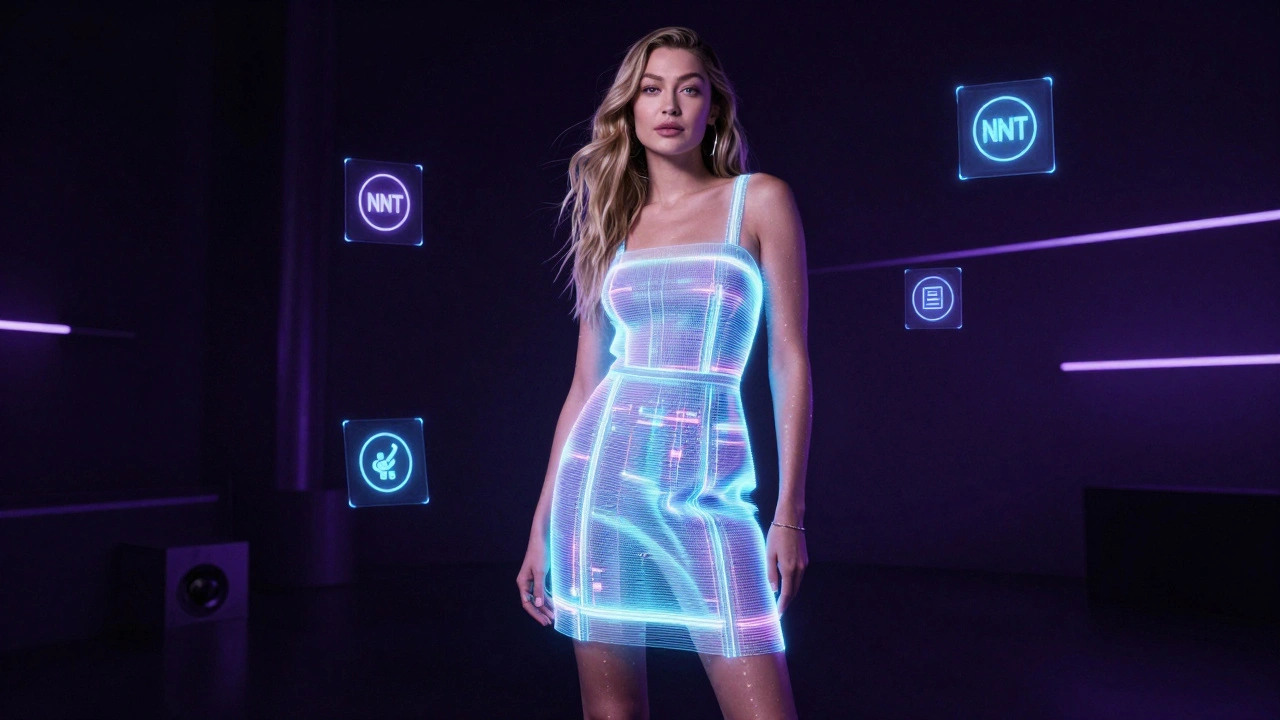
When Gigi Hadid wore a digital-only dress from The Fabricant at London Fashion Week in 2023, it didn’t just make headlines-it made history. That dress cost nothing to produce, used zero fabric, and was sold as an NFT for $9,500. It never touched a mannequin, never hung in a store, never got wrinkled in transit. And yet, it was worn by one of the world’s most recognizable faces.
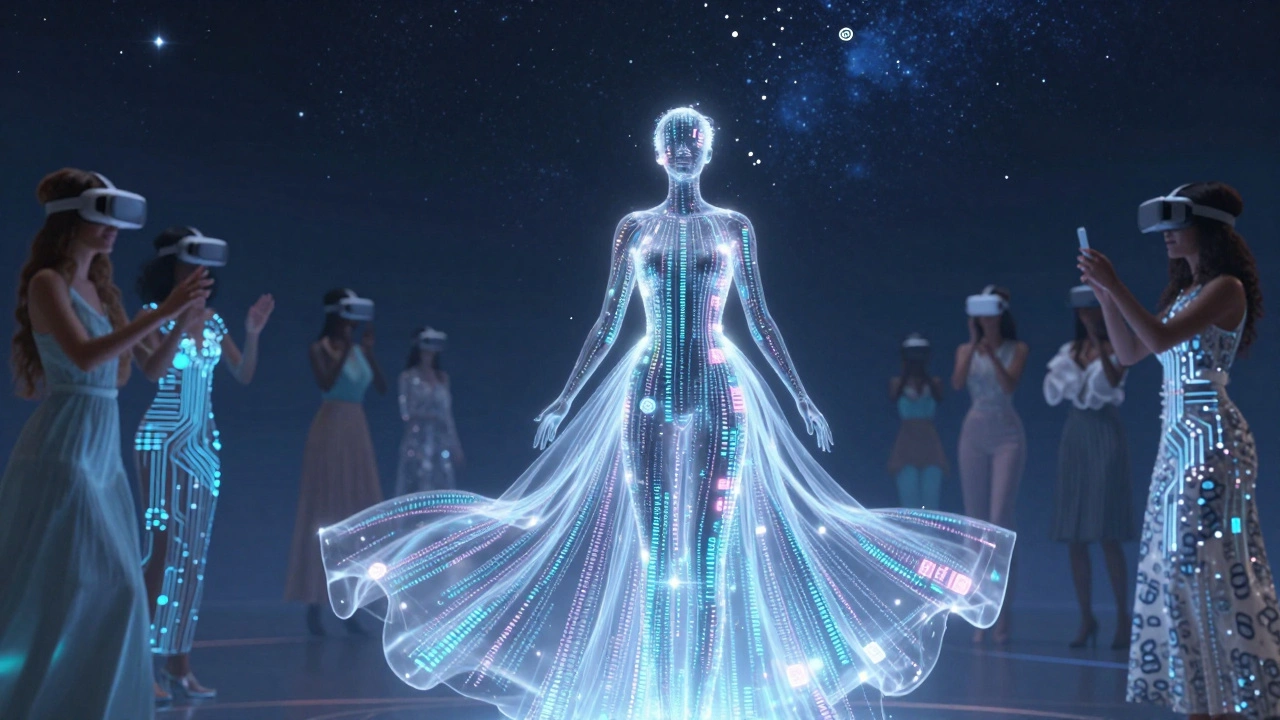
Digital fashion isn’t about replacing physical clothes. It’s about expanding what fashion can be. Brands like DressX, Auroboros, and RTFKT are creating garments that only exist in augmented reality (AR) or as 3D files. These aren’t filters or Snapchat effects. These are fully designed, high-resolution, physics-simulated garments that can be worn on avatars, in video calls, or in virtual concerts.
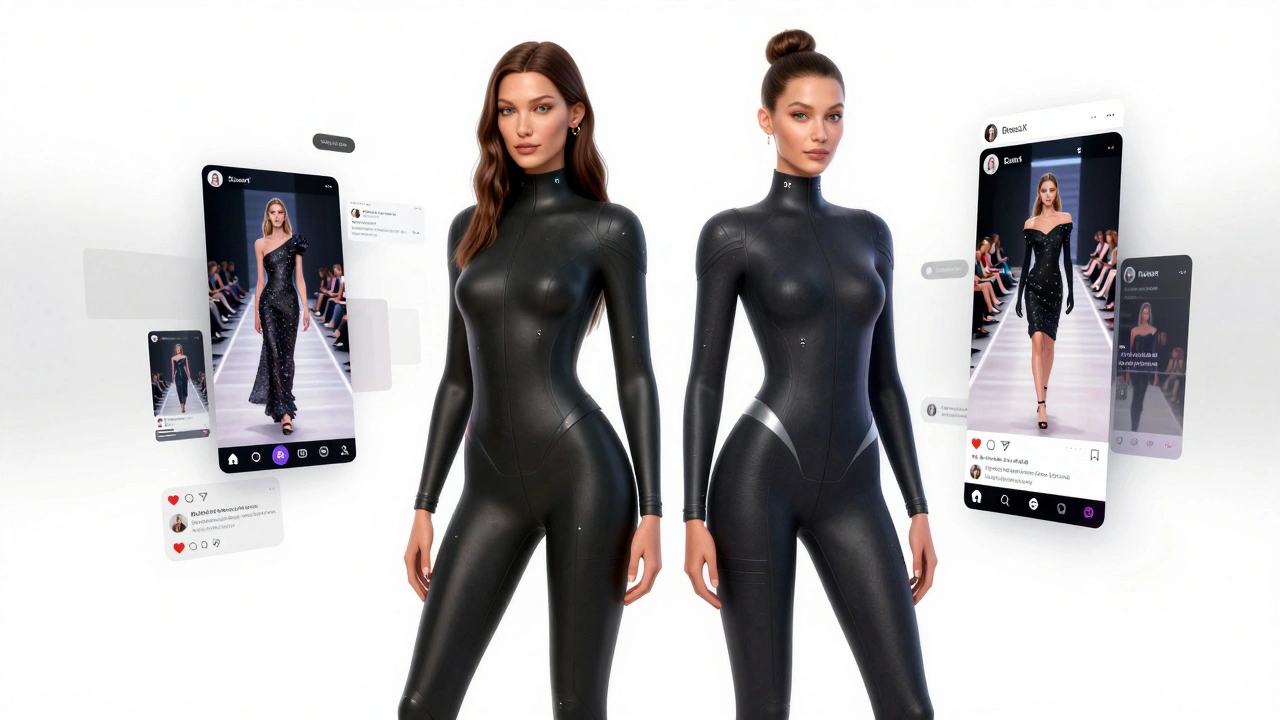
Top models like Bella Hadid, Kaia Gerber, and Adwoa Aboah now have digital twins-3D scanned versions of themselves-that can wear these clothes in photorealistic renderings. The models don’t need to fly to Milan or Paris. They just need a motion capture suit and a studio with green screens. Their faces, their movements, their energy are captured once-and then reused across dozens of digital campaigns.
Why Top Models Are Leading the Charge
Why are top models the first to adopt this? Because they’re the ones with the most to gain-and the most to lose.
Physical fashion is expensive. A single runway look can cost over $100,000 to produce, ship, and store. Garments often sit in warehouses for years. Models get paid per shoot, but the industry wastes millions on clothes that are worn once.
Digital fashion changes that. A digital garment can be sold 10,000 times. A model can wear the same virtual jacket in campaigns for Gucci, Balenciaga, and H&M-all without ever leaving their home studio. Their value isn’t tied to how many physical shows they walk. It’s tied to how many digital worlds they can inhabit.
Models like Irina Shayk and Emily Ratajkowski now have digital wardrobes. They log into apps like Zepeto or Decentraland and change outfits in seconds. Their Instagram posts aren’t just photos-they’re interactive 3D experiences. Tap the dress in their feed? It opens a page where you can buy it as an NFT.
The Tech Behind the Transformation
It’s not magic. It’s a mix of tools that are now cheap, fast, and accessible.
- 3D body scanning: Companies like CLO3D and Marvelous Designer can scan a model’s body in under 15 minutes using just a smartphone and AI. The result? A digital twin that moves exactly like the real person.
- Real-time rendering: Engines like Unreal Engine and Unity let designers create hyper-realistic digital fashion shows in hours, not months. In 2024, Balenciaga’s digital show had 12 million viewers-more than its live event.
- AR try-on apps: Snapchat, Instagram, and Shopify now let users try on digital clothes using their phone’s camera. Top models are the faces of these apps. Their digital avatars are used to test fit, movement, and lighting before a single stitch is sewn.
- NFT marketplaces: Platforms like OpenSea and LooksRare let models sell digital garments as collectibles. Some have earned over $500,000 from single digital pieces.
It’s not just about selling clothes. It’s about owning identity. When a model sells a digital dress as an NFT, they’re not just selling fabric-they’re selling a piece of their brand. Fans aren’t buying a shirt. They’re buying access to the model’s world.
Real Impact: Numbers That Matter
Here’s what’s actually happening:
- According to McKinsey, digital fashion sales hit $1.7 billion in 2024-up from $140 million in 2021.
- Top models who use digital fashion in their campaigns report 3x higher engagement on social media.
- Brands using digital prototypes reduce sample production costs by 80% and cut waste by 90%.
- In 2025, 47% of luxury fashion brands said they’d stop producing physical samples for campaigns entirely.
Models like Naomi Campbell have partnered with digital studios to create NFT collections that include not just clothes, but digital experiences: a 3D walk through a virtual Parisian atelier, a video of her designing a garment in VR, a digital autograph that unlocks exclusive content.
It’s Not Without Controversy
Not everyone is cheering. Critics say digital fashion is elitist-only accessible to those with high-end phones, fast internet, and crypto wallets. Others worry it’s replacing real jobs: seamstresses, tailors, warehouse workers.
But the models themselves aren’t ignoring the human cost. Many are using their platforms to push for change. Adwoa Aboah launched a digital fashion initiative that donates 15% of NFT sales to textile workers in Bangladesh. Bella Hadid partnered with a blockchain startup to ensure every digital garment has a transparent supply chain-even if the fabric doesn’t physically exist.
There’s also the question of identity. If a model’s digital twin can be bought and sold, who owns it? Can a brand use a model’s likeness without permission? Laws are still catching up. In 2025, the UK’s Intellectual Property Office issued new guidelines: digital avatars are protected as personal likenesses. Unauthorized use is now legally actionable.
What This Means for the Future of Modeling
The next generation of top models won’t be chosen just for their face or walk. They’ll be chosen for their digital presence too.
Agencies now ask: Can you move naturally in a motion capture suit? Do you understand how AR filters work? Can you explain NFTs to a 14-year-old fan? Some models are taking coding classes. Others are learning Blender and ZBrush to design their own digital garments.
Physical modeling isn’t disappearing. But it’s no longer the only path to fame. A model in Lagos can now walk a digital runway for Dior and earn more than a model in Milan who only walks live shows. The gatekeepers aren’t agencies anymore-they’re algorithms, social platforms, and blockchain networks.
For the top models who’ve embraced this, it’s not about replacing the old world. It’s about building a new one where fashion is faster, fairer, and limitless.
What’s Next?
By 2027, expect to see:
- Models signing exclusive digital contracts with brands-no physical shoots required.
- Virtual fashion weeks where every model is a digital avatar, and audiences vote on which looks go into production.
- AI-generated digital twins that can work 24/7, appearing in ads while the real model sleeps.
- Models earning royalties every time their digital clothes are worn in games, metaverses, or social media.
The runway is no longer a physical space. It’s a server. The catwalk is a line of code. And the new supermodels? They don’t just wear clothes-they invent them.
Can digital fashion replace physical clothing entirely?
No-not yet, and probably not completely. Digital fashion is best for social media, virtual events, and online expression. But people still need to wear clothes in the real world. The future isn’t digital OR physical-it’s digital AND physical. Many brands now release both: a physical version you can buy in stores, and a digital version you can wear in apps or games.
Do models get paid for digital fashion work?
Yes, and often more than for traditional shoots. A digital-only campaign can pay between $50,000 and $500,000, depending on the brand and how many times the digital garment is sold. Plus, models earn royalties every time their digital avatar wears the garment in a video game or social app.
Is digital fashion environmentally friendly?
Yes, compared to traditional fashion. Producing one physical garment creates about 10kg of CO2 emissions. A digital garment creates less than 0.1kg-mostly from the energy used to render it. But the real win is in reducing waste. Digital fashion eliminates overproduction, unsold inventory, and landfill-bound samples.
Can regular people buy digital fashion?
Absolutely. Platforms like DressX, Meta, and Snapchat let anyone buy digital clothes for their social media profiles. Prices range from $5 for a simple filter to $5,000 for a limited-edition NFT gown designed by a top model. You don’t need crypto-many use credit cards.
What skills do aspiring models need to work in digital fashion?
Basic comfort with technology. You don’t need to code, but you should understand how AR works, how to pose for motion capture, and how to interact with digital tools. Many agencies now offer free digital modeling workshops. The biggest advantage? Being comfortable in front of a green screen and open to experimenting with your image in new ways.


January 12, 2026 AT 10:52
Deepak Raj Aryan
This is wild! I just bought a digital hoodie that only exists on Instagram and I feel like a god. No more laundry, no more size issues - just tap and it’s on me. Fashion finally caught up with the future and I’m here for it.
January 12, 2026 AT 12:15
Aradhana Agarwal
I love how this is opening doors for models everywhere, not just the ones in Milan or Paris. My cousin in Jaipur just did her first digital campaign - no plane ticket, no visa stress. Just her phone, a green screen, and some confidence. That’s real progress.
January 12, 2026 AT 22:54
Keily sophie
Wait - so you’re telling me that a $5,000 digital gown can be worn by 10,000 people… and yet, I can’t get a decent pair of jeans that don’t fall apart after two washes?!! This is insane! The fashion industry is literally burning money on cotton while selling pixels for a fortune! Where’s the logic?! The ethics?! The common sense?!?!?!?
January 14, 2026 AT 18:19
Matthew Lukas
This isn’t just about fashion - it’s about identity, ownership, and the redefinition of value. Physical garments were always about scarcity. Digital fashion flips that: value comes from uniqueness, expression, and access. The model isn’t selling a dress - they’re selling a moment, a vibe, a piece of their soul encoded in code. That’s profound.
And yes, the environmental math checks out. One digital garment = 0.1kg CO2. One physical one = 10kg. The math isn’t close. The question isn’t whether this will replace physical fashion - it’s whether we’ll have the courage to let it evolve.
January 16, 2026 AT 15:22
Aashi Aggarwal
Oh wow, so now rich people are buying digital clothes so they can flex on their phone instead of in real life? How revolutionary. Meanwhile, real seamstresses in Bangladesh are losing jobs because some influencer thinks wearing a virtual Balenciaga makes her ‘ahead of the curve.’
And don’t even get me started on ‘royalties’ - like, congrats, you made a digital shirt that someone wore once in a VR concert. Now you’re a millionaire? Sweet. Meanwhile, my aunt still stitches 16 hours a day for $2 a piece. But hey - at least your avatar looks cute.
January 16, 2026 AT 18:18
Lovie Dovies
So… we’re all just digital ghosts now? Wearing clothes that don’t exist, in worlds that aren’t real, to impress people who are also ghosts? And we call this progress? Huh. I guess the only thing more empty than a mannequin is a 3D scan of a human being.
January 17, 2026 AT 11:06
Santiago Castiello
AI twins working 24/7? Cool. So the model’s likeness is now a corporate asset. No consent? No cap? Just code and capitalism. Also - ‘digital fashion’ is just branded AR filters with a fancy name. And yes, the CO2 math is right. But so what? You’re still feeding the machine.
January 18, 2026 AT 02:00
Marissa Conrady
To everyone saying this is elitist - you’re right, but only if we let it be. The real win here? This tech is getting cheaper every day. A $5 digital shirt on Snapchat? That’s not for the rich - that’s for a 14-year-old in rural India who just wants to feel cool online. This isn’t replacing humanity - it’s giving it new tools to express itself. And if we use this to fund real-world textile workers, like Adwoa’s doing? That’s not just innovation - that’s justice.
Don’t fear the avatar. Fear the silence. The real danger isn’t digital fashion - it’s letting the old system keep crushing people while pretending it’s ‘the way things have always been.’