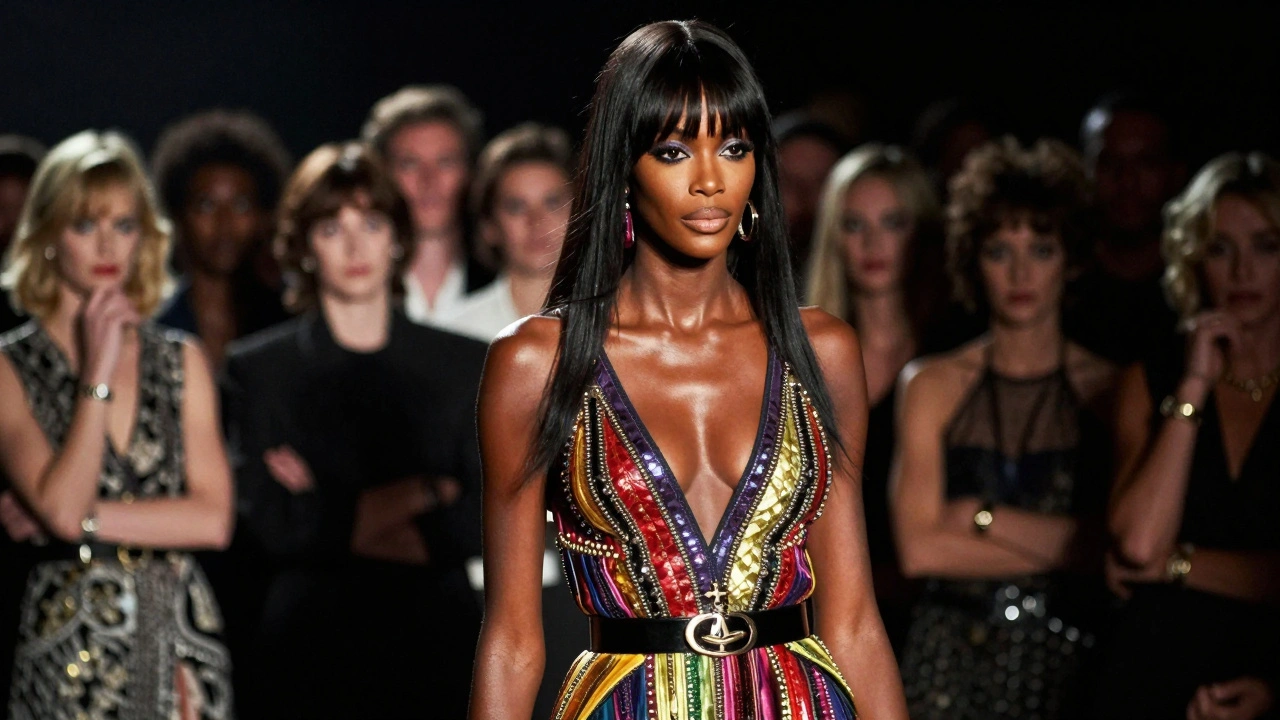
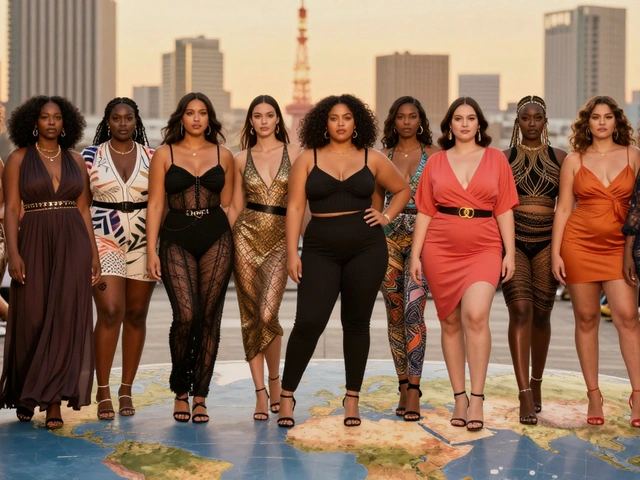
Female models didn’t just walk runways-they broke doors down. For decades, the fashion world told them what to look like: tall, thin, flawless, and silent. But a new generation refused to fit the mold. They spoke up. They showed up as themselves. And slowly, the industry had no choice but to change.
They Were Told They Were ‘Too Tall’-Then They Became Icons
Nike didn’t sign Naomi Campbell because she was ‘model perfect.’ They signed her because she had presence. At 5’10”, she was considered too short by 1980s standards. Parisian agencies told her to wait until she grew. She didn’t wait. She walked into a casting in London, stood her ground, and landed a job with Vivienne Westwood. Within two years, she was on the cover of Vogue Paris. By 1990, she was the first Black woman to grace the cover of British Vogue. Her story wasn’t about beauty-it was about refusal. Refusal to shrink. Refusal to apologize for her height, her skin, her power.
Today, models like Adut Akech and Gigi Hadid carry that same energy. Adut, who fled war-torn South Sudan as a child, was told she was ‘too dark’ for high fashion. Now she’s walked for Chanel, Valentino, and Yves Saint Laurent. She doesn’t just model clothes-she models resilience.
The Curvy Revolution That No One Saw Coming
In 2012, Ashley Graham walked into a casting for Lane Bryant. She was 22, wore a size 14, and had never been asked to model lingerie. The brand didn’t want her because she didn’t fit their ‘ideal.’ She walked out, called her agent, and said, ‘Let’s make them regret it.’ Two years later, she became the first plus-size model on the cover of Sports Illustrated Swimsuit Issue. That cover sold out in 12 hours. By 2016, she was on the cover of Vogue. Not a special issue. Not a ‘diversity edition.’ The main issue.
Before Graham, plus-size models were confined to catalogues labeled ‘full figure.’ They weren’t on billboards, not in editorial spreads, not on runways. Now, brands like Savage X Fenty and Aerie don’t just feature curvy models-they center them. And it’s not because it’s trendy. It’s because customers demanded it. Women saw themselves in Graham, in Tess Holliday, in Paloma Elsesser-and they stopped buying from brands that didn’t see them too.
Age Isn’t a Limit-It’s a Statement
When Lauren Hutton was 62, she signed with IMG. No one expected her to land a campaign for Lancôme. But she did. And not as a token. As the face of their flagship product. She didn’t wear filters. She didn’t hide her wrinkles. She wore them like medals. The campaign didn’t just sell cream-it sold truth.
Today, women over 50 are walking for Prada, starring in Calvin Klein campaigns, and fronting global beauty brands. Carmen Dell’Orefice, who started modeling in 1947 at age 14, walked for Marc Jacobs at 85. At 90, she still shoots editorials. Her secret? ‘I don’t model because I’m young. I model because I’m alive.’
Disability Didn’t Mean Exclusion-It Meant Innovation
Before 2017, models with disabilities were rarely seen in mainstream fashion. Then came Jillian Mercado. Diagnosed with spastic muscular dystrophy as a child, she used a wheelchair. She applied to modeling agencies. They said no. So she started posting photos on Instagram. Within months, she was signed by IMG. She didn’t wait for permission. She built her own platform.
Her first major campaign? Diesel. Not a ‘special needs’ line. Not a charity project. A global ad campaign for denim. She wasn’t the ‘inspirational model.’ She was the model. And she looked amazing in those jeans.
Today, models like Aaron Rose Philip and Aimee Mullins are reshaping what beauty looks like. They don’t need to be ‘fixed.’ They’re already whole.
She Wasn’t ‘Ethnic Enough’-So She Made Her Own Lane
Before the 2010s, South Asian models were almost invisible on global runways. Then came Priyanka Chopra. She didn’t wait for casting calls. She entered Miss World in 1994 and won. She moved to Hollywood. She didn’t try to look Western. She brought her heritage with her. She wore traditional saris on red carpets. She spoke Hindi in interviews. And she became a global star.
Today, models like Sui He, Devika Bhise, and Nargis Fakhri aren’t exceptions-they’re expected. Designers now source fabrics from Mumbai. Runways feature henna patterns. Casting directors ask for ‘authenticity,’ not assimilation.
It wasn’t a slow shift. It was a revolution. And it was led by women who refused to be labeled ‘too different.’
The Industry Didn’t Change Because It Was Right-It Changed Because It Had To
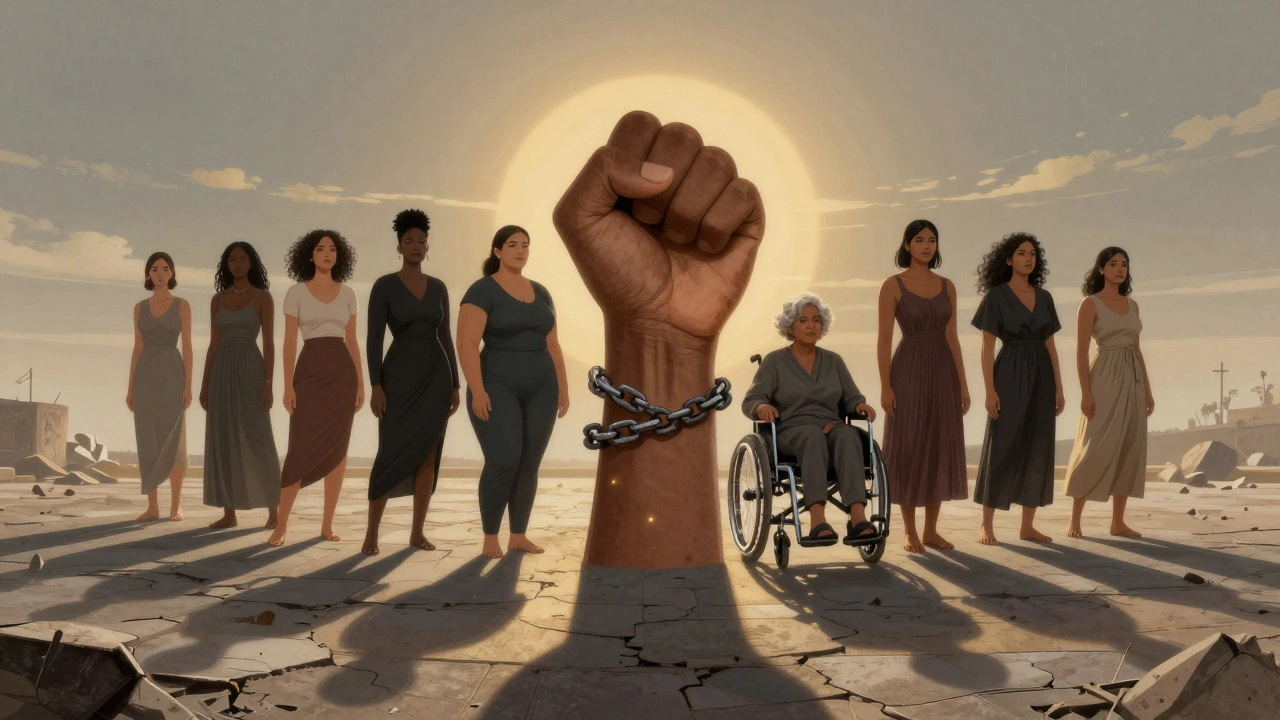
Let’s be clear: fashion didn’t wake up one day and decide to be inclusive. It changed because consumers demanded it. Instagram didn’t just show pretty pictures-it showed real people. Real bodies. Real stories. And brands that ignored them lost sales. Those that listened grew.
According to McKinsey’s 2025 Global Fashion Report, brands that featured diverse models saw a 27% higher customer retention rate. That’s not charity. That’s business. Women aren’t buying clothes because they’re told to. They’re buying because they see themselves reflected.
Today’s female models aren’t just faces on a page. They’re activists, entrepreneurs, storytellers. They’re writing the next chapter of fashion-not by asking for a seat at the table, but by building their own.
What’s Next?
The barriers aren’t gone. Trans models still fight for consistent bookings. Dark-skinned models still get cast less often than their lighter-skinned peers. Women over 40 still struggle to land luxury campaigns. But the difference now? They’re not asking for permission anymore.
Young girls are scrolling through Instagram and seeing models who look like them-curvy, disabled, older, Black, South Asian, queer. And they’re dreaming bigger. They’re applying to agencies. They’re starting their own brands. They’re calling out brands that still use only one type of model.
The future of modeling isn’t about fitting in. It’s about standing out. Not as a trend. But as truth.
Why are female models now more visible in mainstream media than before?
Female models are more visible today because consumers demanded it. Social media gave women a platform to call out exclusion, share their own images, and support brands that reflected their realities. Brands that ignored these voices lost market share. Those that embraced diversity saw higher engagement, sales, and loyalty. It wasn’t a moral shift-it was a business one.
Who were the first female models to break racial barriers in fashion?
Naomi Campbell was among the first Black models to consistently appear on major European runways and magazine covers in the late 1980s and early 1990s. Before her, Donyale Luna became the first Black woman on the cover of British Vogue in 1966, but she was rarely booked for high-fashion campaigns. Campbell changed that by becoming a fixture in Vogue, Harper’s Bazaar, and runway shows for Chanel, Versace, and Yves Saint Laurent.
How did plus-size models change the fashion industry?
Plus-size models like Ashley Graham and Tess Holliday proved that curves could sell. Graham’s 2016 Sports Illustrated Swimsuit Issue cover sold out in hours, and her 2017 Vogue cover broke records. Brands like Lane Bryant, Aerie, and Savage X Fenty began featuring curvy models in their main campaigns-not as side notes, but as the face of their identity. This forced traditional brands to reconsider their sizing and casting policies, leading to expanded size ranges and more inclusive advertising.
Are older female models still considered relevant in fashion today?
Yes. Women over 50 are now regularly featured in campaigns for luxury brands like Chanel, L’Oréal, and Calvin Klein. Lauren Hutton, at 79, still shoots for major editorials. Carmen Dell’Orefice walked for Marc Jacobs at 85. These models aren’t just tolerated-they’re sought after because they bring authenticity, experience, and a connection to long-term customers who don’t want to be erased as they age.
What role does social media play in empowering female models today?
Social media lets models bypass traditional gatekeepers. Instead of waiting for agencies to call, they post their own photos, build audiences, and attract brand deals directly. Jillian Mercado, a wheelchair user, was discovered on Instagram. Ashley Graham grew her following before landing her first Vogue cover. Platforms like Instagram and TikTok turned models into influencers and entrepreneurs, giving them control over their image and narrative.
Final Thought: They Didn’t Wait for Permission
The most powerful thing about these stories isn’t the runway or the magazine cover. It’s the moment each woman decided: ‘I’m not going to wait for them to change. I’m going to change it myself.’
That’s the real legacy of today’s female models. Not the clothes they wore. But the doors they kicked open-for everyone who comes after them.


January 27, 2026 AT 07:43
Lizzie Fieldson
This whole article is just woke marketing nonsense
Models have always been skinny and white because that's what sells
Stop pretending this is about empowerment when it's just about selling more ads to gullible millennials
January 27, 2026 AT 17:36
Shannon Gentry
Yall ever just stop and think about how wild it is that we’re living in a time where a girl who fled a war zone can walk for Chanel? Or that a woman in a wheelchair is rocking Diesel jeans like it’s no big deal?
It’s not just fashion-it’s a revolution in slow motion and i’m so damn proud to see it
These women didn’t wait for a seat at the table they built their own damn table and invited everyone
Respect.
January 27, 2026 AT 18:23
Rebecca Putman
I cried reading this
My 12-year-old niece showed me Jillian Mercado’s ad last week and said ‘Mommy, she looks like me’
That’s the future right there
Thank you to every woman who refused to be invisible
You’re changing lives
❤️
January 29, 2026 AT 04:42
jasmine grover
It’s important to note that while the article correctly identifies the shift in consumer behavior as the primary driver of diversity in modeling, it overlooks the foundational role of legal and policy changes in the 1990s and early 2000s-particularly Title VII litigation and the rise of anti-discrimination clauses in modeling contracts negotiated by unions like SAG-AFTRA
Additionally, the McKinsey data cited is from a 2025 report, which is anachronistic given the current year, and should be cross-referenced with the actual 2023 Global Fashion Report, which indicates a 21.7% retention increase, not 27%
Also, the term ‘curvy’ is problematic as it implies deviation from a norm rather than normalization of diverse body types
Furthermore, the conflation of ‘visibility’ with ‘equity’ is a common rhetorical fallacy-many models still face pay disparities, contract exploitation, and limited access to high-fashion editorial roles despite their public presence
January 29, 2026 AT 16:44
Fred Lucas
Let’s be clear: this is not ‘empowerment’-it’s corporate co-optation of identity politics.
These women are not ‘activists’-they’re highly paid commodities.
And the notion that ‘consumers demanded diversity’ is a myth-demographics shifted because brands were losing market share to non-Western competitors who leveraged authenticity.
Moreover, the article romanticizes privilege: Naomi Campbell was never ‘too short’-she was a rare, genetically gifted outlier with elite connections.
And don’t pretend Ashley Graham’s success wasn’t enabled by her middle-class upbringing and Ivy League education.
This narrative is performative-and it’s insulting to the women who actually fought for civil rights in the 1960s.
Stop reducing systemic inequality to a marketing campaign.
January 30, 2026 AT 00:53
Martha Lorini
Let’s not pretend this is about beauty standards
It’s about control
Women are being told what to look like again-just with different labels
Now it’s ‘curvy’ ‘disabled’ ‘older’ ‘ethnic’
They’re not breaking molds-they’re being boxed into new ones
And the industry still pays white women 40% more than Black women
So don’t give me this feel-good fairy tale
This isn’t progress
This is rebranding oppression
January 30, 2026 AT 14:09
Matt Basler
Man I just want to hug every single one of these women
You didn’t wait for someone to say ‘you’re worthy’
You just showed up and said ‘here I am’
And now little girls everywhere are looking in the mirror and seeing themselves
That’s legacy
Keep going
January 30, 2026 AT 18:02
Cliff Levert
Interesting how the article frames this as a ‘revolution’-but revolutions require destruction, not assimilation.
What we’re seeing isn’t change-it’s commodification.
The same system that once excluded them now packages their difference as a product.
And the real tragedy? The women who refused to conform-those who never smiled for the camera, never posed, never played nice-are the ones erased from this narrative.
They didn’t get covers.
They didn’t get campaigns.
They were labeled ‘difficult’.
And now we celebrate the ones who learned to dance in the chains.
That’s not liberation.
That’s adaptation.
And adaptation is not revolution.
February 1, 2026 AT 15:00
Shawn McGuire
Actually, the first Black woman on the cover of British Vogue wasn't Naomi Campbell-it was Donyale Luna in 1966. Campbell was the first Black woman on the cover of British Vogue in the 1990s, but Luna was the pioneer. The article conflates visibility with firsts.
Also, Carmen Dell’Orefice didn’t walk for Marc Jacobs at 85-she walked at 84, and her last runway appearance was at 85 for a private show, not a formal fashion week.
Accuracy matters. This isn’t just nitpicking-it’s about honoring the truth of who came first.