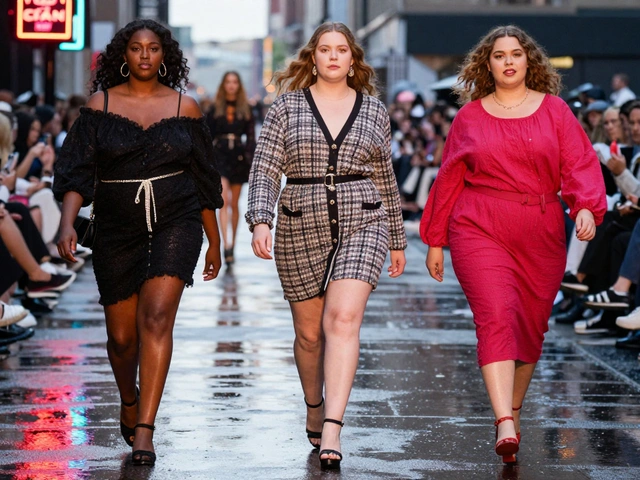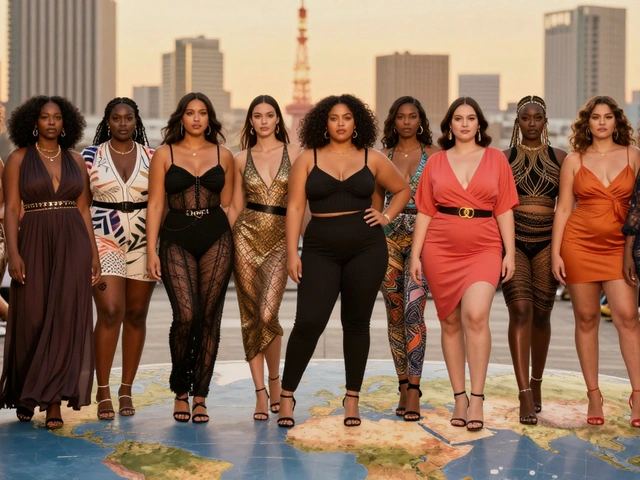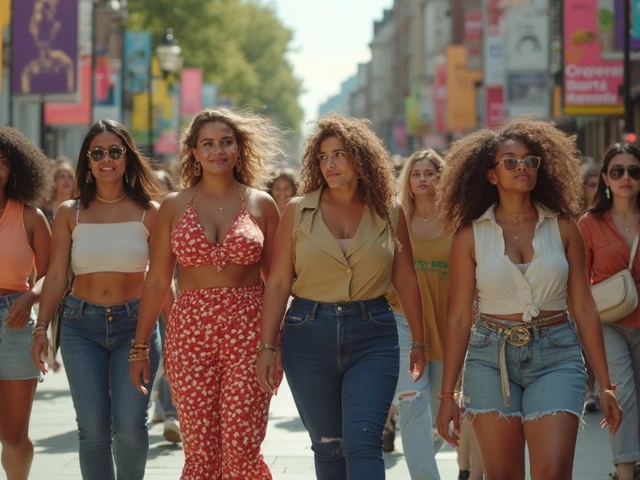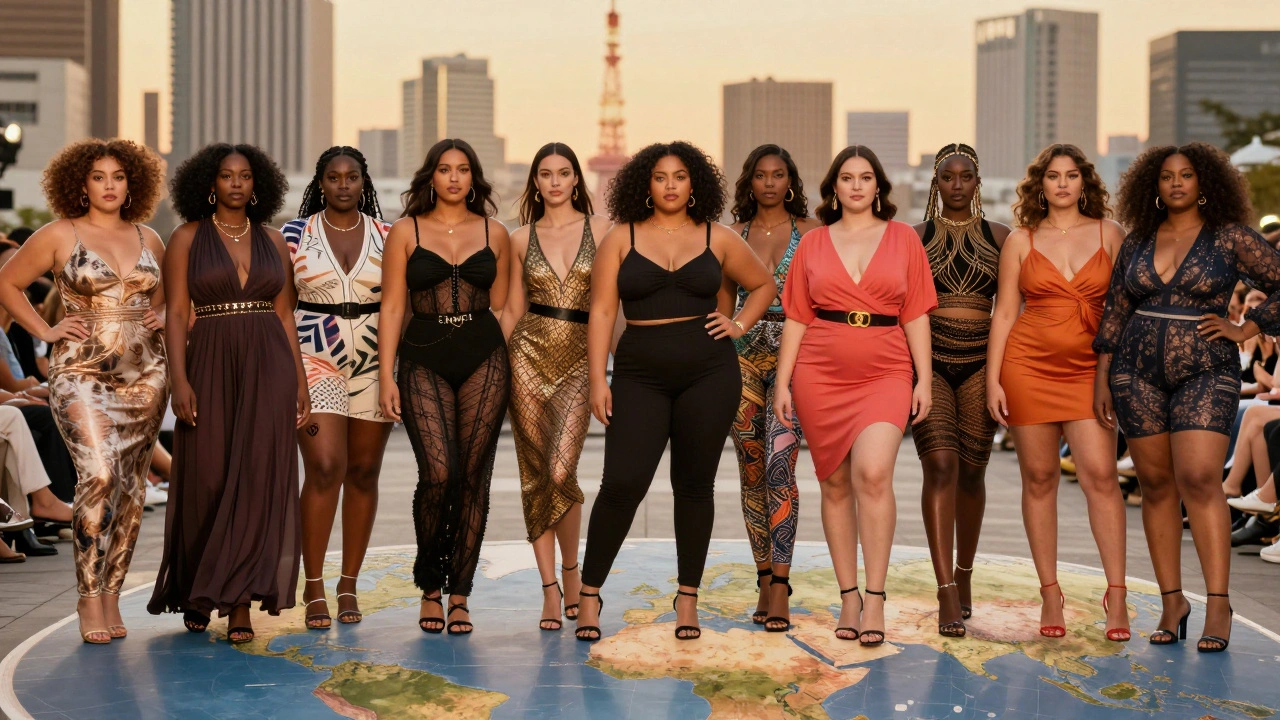
For years, the fashion world told women there was only one way to be beautiful: tall, thin, and symmetrical. But something’s changed. Curvy models aren’t just walking runways anymore-they’re reshaping what beauty means, one photo shoot at a time. From Lagos to Tokyo, women are looking in the mirror and seeing themselves for the first time-not as flaws to fix, but as strength to celebrate.
They’re Not Just Models, They’re Movement Makers
Curvy models like Ashley Graham, Tess Holliday, and Lizzo didn’t wait for permission. They showed up in size 14, 18, and 22-and the industry had to catch up. These women didn’t just model clothes; they modeled confidence. When Ashley Graham appeared on the cover of Seventeen in 2016, she became the first plus-size model to do so in the magazine’s 100-year history. That wasn’t a milestone. It was a wake-up call.
Today, brands like Savage X Fenty, Aerie, and Universal Standard don’t just feature curvy models-they build entire collections around them. Aerie’s #AerieREAL campaign stopped using photoshopped models in 2014. Since then, their sales jumped 30%. Why? Because women stopped buying what looked perfect. They started buying what looked real.
Real Women, Real Impact
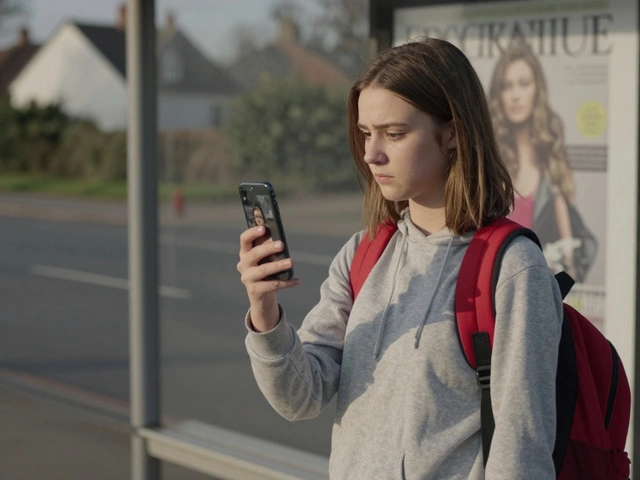
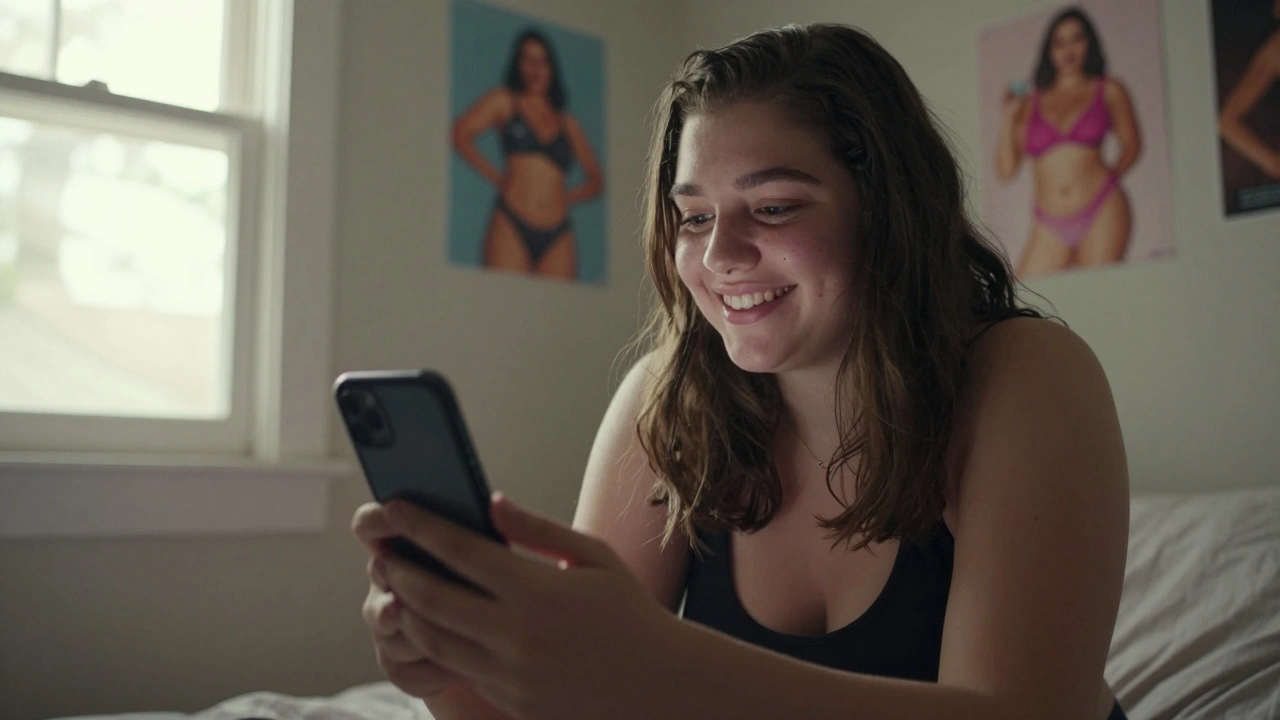
It’s not just about clothes. It’s about identity. A 2023 study from the University of London found that girls aged 12 to 17 who regularly saw curvy models on social media were 40% more likely to say they felt good about their bodies. That’s not coincidence. It’s cause and effect.
Think about it: when was the last time you saw a curvy woman in a swimsuit ad without being airbrushed into invisibility? Now imagine a 14-year-old girl scrolling past that same image. She doesn’t see a "problem" to fix. She sees someone who looks like her-and that changes everything.
In Brazil, curvy model Mariana Valente runs a nonprofit that teaches teenage girls to model while also teaching them about nutrition, mental health, and self-worth. In South Africa, the #CurvesAndConfidence movement started as a hashtag and grew into a national campaign that got curvy women featured in mainstream magazines like Elle and Harper’s Bazaar. These aren’t outliers. They’re proof that representation isn’t just nice to have-it’s necessary.
How the Industry Changed (And Why It Matters)
The old rules said curvy meant "limited." Limited to plus-size sections. Limited to niche brands. Limited to being "inspirational" instead of glamorous.
That’s over.
Now, curvy models appear in campaigns for Victoria’s Secret, Chanel, and Calvin Klein. They walk for Marc Jacobs and Anna Sui. They’re not just in the back row-they’re front and center. In 2025, over 30% of runway shows at New York Fashion Week featured models who wore size 12 or larger. That’s up from 7% in 2018.
And it’s not just about size. It’s about skin tone, hair texture, disability, age. Curvy models are leading the charge for intersectional representation. A model who’s curvy, Black, and uses a wheelchair isn’t a "diversity hire." She’s the future.
What This Means for Everyday Women
You don’t have to be on a runway to feel the impact. Curvy models have changed how we shop, how we dress, how we talk to our daughters.
Before, women were told to hide. Now, they’re told to own it. A woman in her 40s who never bought a bikini because she thought her stomach wasn’t "good enough"? Now she’s wearing one on a beach in Bali, posting the photo with #MyBodyMyRules.
Brands that still cling to the old standards are losing. Brands that embrace real bodies are winning. The message is clear: beauty isn’t a size. It’s a feeling. And curvy models are teaching the world how to feel it.

The Ripple Effect
It’s not just fashion. It’s mental health. It’s parenting. It’s how we talk to ourselves in the mirror.
A mother in Chicago told The Guardian that after her daughter saw a curvy model on TV, she stopped asking to be "thin" before school pictures. "She said, ‘Mom, she’s beautiful. And I’m beautiful too.’" That’s the power of seeing yourself reflected.
Therapists report a drop in body dysmorphia cases among teens who follow diverse influencers. Schools in Canada and Australia have started body positivity programs based on real models’ stories. Even fitness apps now offer workouts labeled "for every body," not just "for weight loss."
Change doesn’t happen because someone in a boardroom decided to be nice. It happens because women refused to stay silent. Because curvy models said: "I’m not here to fit in. I’m here to change the game."
What’s Next?
The movement isn’t finished. There are still brands that refuse to size up. There are still magazines that airbrush out curves. There are still girls who believe they’re too much-or not enough.
But the tide has turned. The next generation won’t remember a time when curvy wasn’t celebrated. They’ll wonder why we ever thought otherwise.
For now, every time a curvy model steps in front of a camera, she’s doing more than modeling. She’s giving permission. Permission to wear the dress. Permission to take the photo. Permission to believe you’re worthy-not despite your shape, but because of it.
Why are curvy models suddenly so visible?
They’re not suddenly visible-they’ve always been here. What changed is that social media gave them a platform. Consumers demanded real representation, and brands had to respond. When customers stopped buying from companies that didn’t reflect them, sales dropped. When brands started featuring diverse bodies, sales rose. It’s simple economics-and human psychology.
Do curvy models face discrimination in the industry?
Yes, but less than before. Many agencies still don’t represent sizes above 16, and some designers refuse to dress curvy models. But the pressure from consumers and activists is forcing change. In 2025, 8 out of the top 10 modeling agencies in the U.S. added size-inclusive divisions. The fight isn’t over, but the momentum is real.
How do curvy models affect body image in young girls?
Studies show a direct link. Girls who see diverse body types in media report higher self-esteem and lower rates of dieting. A 2024 study from Oxford University found that exposure to curvy models reduced body dissatisfaction by 35% in girls aged 11-16 over six months. Seeing yourself represented isn’t just nice-it’s healing.
Is there a difference between "plus-size" and "curvy" models?
Yes. "Plus-size" is a technical term based on clothing sizes, usually size 14 and up. "Curvy" refers to body shape-hourglass, pear, apple-with curves in the hips, waist, or bust. A woman can be curvy and wear size 8, or be plus-size without prominent curves. The term "curvy" is more about shape and confidence than size.
What brands are leading in curvy model representation?
Savage X Fenty, Aerie, Universal Standard, Girlfriend Collective, and Reformation are leading the way. They feature models of all sizes, shapes, and skin tones without apology. Even luxury brands like Chanel and Gucci now regularly cast curvy models in campaigns. These companies don’t just include curvy women-they design for them.