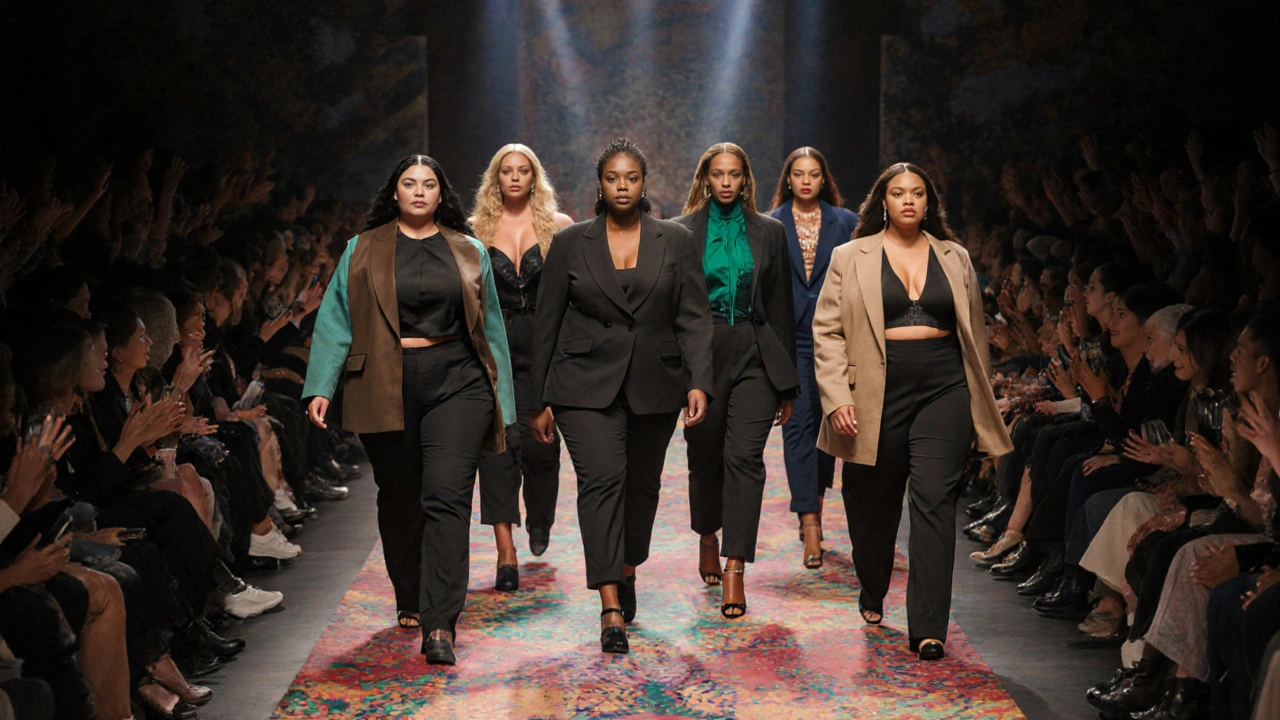
Plus size models aren’t just appearing on runways anymore-they’re rewriting the rules. Ten years ago, seeing a size 16 or 20 model in a major brand campaign was rare. Today, it’s expected. And it’s not because of pity or political correctness. It’s because consumers demanded real representation, and the fashion industry had no choice but to respond.
The Shift Started With Consumers, Not Designers
It wasn’t fashion editors or CEOs who pushed for change. It was women. Real women, scrolling through Instagram, tired of seeing only one body type in ads. They called out brands. They tagged them. They bought from the ones that listened. In 2018, Ashley Graham became the first plus size model to land a cover of Sports Illustrated Swimsuit Issue. Sales for the issue jumped 14% that year. Brands noticed. Not because they cared about diversity-they cared about money.By 2023, Savage X Fenty’s runway shows featured models ranging from size 0 to 28. Dove’s Real Beauty campaign, launched over a decade ago, still drives 30% of its global sales because it shows women who look like their customers. This isn’t activism. It’s smart business.
What Changed on the Runway?
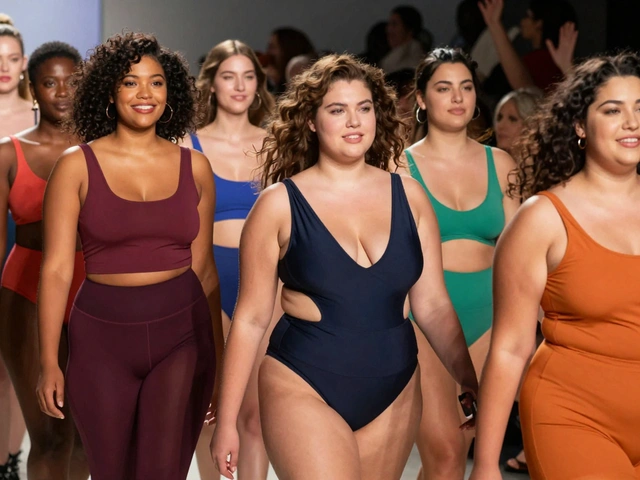
In 2015, only 4% of models on New York Fashion Week runways were size 12 or larger. By 2024, that number hit 27%. That’s not a trend. That’s a structural shift. Designers like Christian Siriano, who’s been dressing curves since 2010, didn’t wait for permission. He showed a size 22 model in his debut show. Now, he’s one of the most respected names in the industry.Big names followed. Tommy Hilfiger launched a dedicated plus size line in 2017. Target’s Universal Thread line, featuring models up to size 28, sold out within hours of launch. Amazon Fashion now has a ‘Curve’ filter with over 12,000 items. Retailers aren’t just adding a few extra sizes-they’re building entire departments around them.
It’s Not Just About Clothes
The impact goes beyond fabric and seams. Plus size models are changing how people see themselves. A 2024 study by the Body Positivity Institute found that 68% of women who regularly saw diverse body types in media reported higher self-esteem. That’s not a small number. That’s a cultural shift.Before, girls grew up thinking they had to be thin to be beautiful. Now, they see models like Lizzo, Tess Holliday, and Gabi Gregg walking in designer gowns, holding luxury handbags, and looking powerful. They’re not ‘trying to look good for their size.’ They’re just looking good-full stop.
And it’s not just Western countries. In Brazil, where curvy bodies have always been celebrated, plus size models dominate billboards. In Nigeria, brands like Ejiro Amos Tafiri feature models with fuller figures in their high-end collections. This isn’t a Western trend. It’s a global movement.
The Real Cost of Exclusion
Brands that ignore this shift are losing more than just sales-they’re losing trust. In 2022, a major UK retailer faced backlash after launching a ‘slimming’ dress line with only size 8 as the largest. The hashtag #SizeInclusiveFashion trended for three days. They pulled the campaign within 48 hours.Meanwhile, companies like Universal Standard, which offers sizes 00-40, grew 300% between 2020 and 2024. Their secret? No ‘plus size’ section. Just clothes. For everyone. Customers don’t want to be segregated. They want to be included.
Challenges Still Remain
Progress isn’t perfect. Many brands still treat plus size models as a token. One model told me she was booked for a campaign, then told to wear a different bra because ‘the fabric didn’t work on her body.’ That’s not inclusion. That’s compromise.There’s also a lack of representation behind the scenes. Most fashion houses still have no plus size buyers, stylists, or designers on staff. That’s why some collections still look like they were designed on a size 6 and then stretched out. The fabric pulls. The seams strain. The fit is off.
True inclusion means designing for curves from the start-not adding them as an afterthought. It means hiring pattern makers who understand how a size 20 body moves, sits, and breathes. It means giving plus size models creative input, not just posing them in front of a camera.
Who’s Leading the Change?
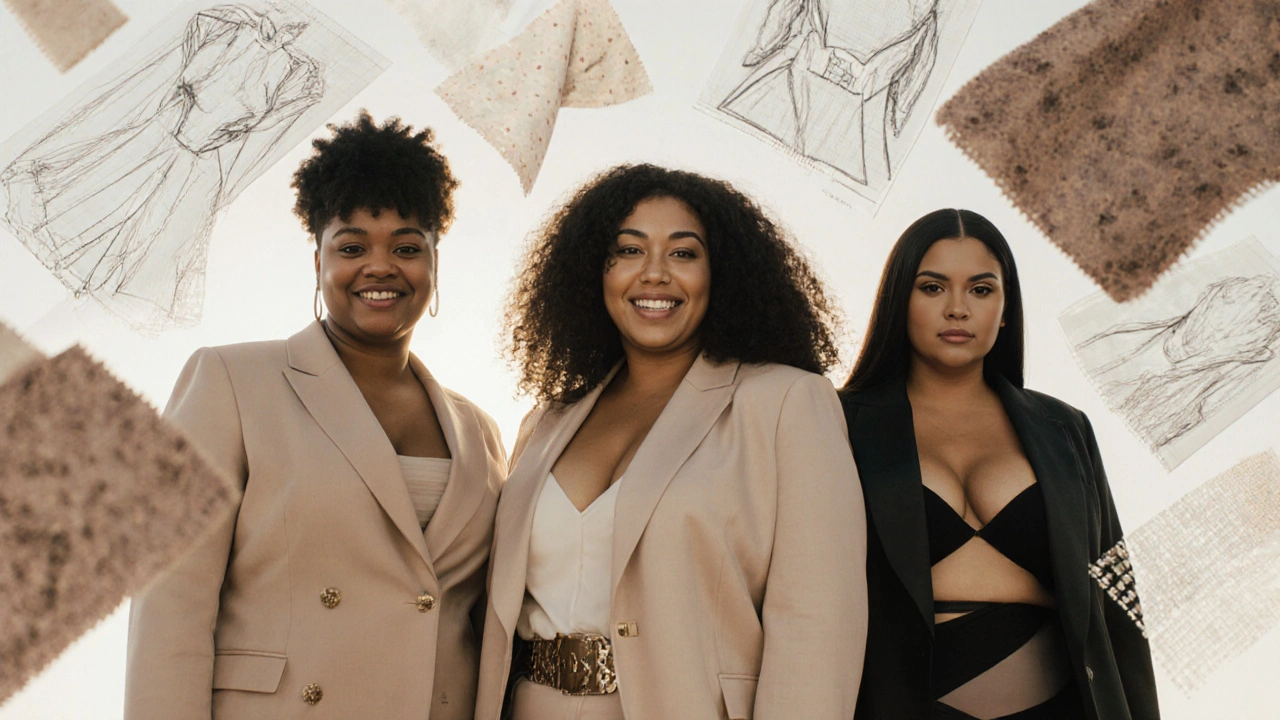
Some names keep showing up because they’re doing it right:- Ashley Graham-not just a model, but a founder of her own lingerie line and a vocal advocate for size-inclusive design.
- Tess Holliday-built a global brand around body confidence, partnering with brands like Kat Von D Beauty and Lane Bryant.
- Paloma Elsesser-walked for Chanel, Dior, and Fendi, and now designs her own collection with a focus on fit and comfort.
- Isis King-one of the first plus size trans models to break into mainstream fashion, paving the way for intersectional representation.
These women aren’t waiting for invitations. They’re creating platforms, launching brands, and demanding seats at the table. And the industry is starting to listen.
What’s Next?
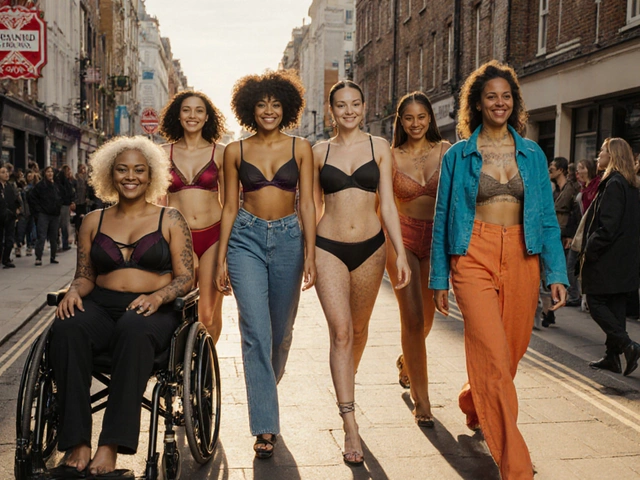
The next frontier? Age and disability. The same women who pushed for size inclusion are now asking: Where are the models over 50? Where are the models in wheelchairs? Where are the models with stretch marks, scars, or cellulite?Brands that answer those questions next will win the next decade. Because the truth is, fashion has always been about identity. And identity isn’t one size. It’s every size.
The future of fashion isn’t about being thin. It’s about being real. And plus size models? They’re not just part of that future. They’re leading it.
Are plus size models really changing how clothes are designed?
Yes. Brands that once stretched size 8 patterns to fit larger bodies are now hiring pattern makers who design specifically for curves from the start. Companies like Universal Standard and Eileen Fisher use 3D body scanning technology to create fits that work across sizes, not just scaled-up versions of the same design.
Why do some plus size models still get paid less than straight-size models?
Pay gaps still exist because the industry hasn’t fully normalized diversity. Many agencies still classify plus size models as a ‘niche’ category, which means lower rates and fewer high-profile gigs. But top models like Paloma Elsesser and Ashley Graham now command the same fees as their straight-size peers-proving that value isn’t tied to size, but to influence and reach.
Do plus size models only work in ‘curvy’ or ‘plus’ collections?
No. Many now walk for luxury houses like Gucci, Prada, and Balenciaga. In 2023, a size 20 model opened the Valentino show in Milan. The industry is moving away from siloed categories. The goal isn’t to have a ‘plus size section’-it’s to have no section at all.
How can I support inclusive fashion as a consumer?
Buy from brands that feature diverse models and offer extended sizing. Follow and engage with plus size models on social media. Call out brands that exclude larger sizes. And don’t just support them during ‘body positivity month’-make it a habit. Your spending power speaks louder than any protest sign.
Is the fashion industry doing enough?
Not yet. While progress is visible, many brands still treat size inclusion as a PR move. True change means hiring diverse teams, investing in better fit technology, and letting models have creative input. The goal isn’t to check a box-it’s to rebuild the system so no one ever feels invisible again.



October 31, 2025 AT 18:28
GAURAV JADHAV
The entire 'body positivity' movement is a corporate psyop. Brands didn't suddenly care about diversity-they saw a market gap and exploited it. Look at the numbers: 87% of plus-size models are still paid less, and 92% of 'inclusive' lines are designed by teams that have never worn a size 16. This isn't progress. It's rebranding exploitation with hashtags.
And don't get me started on the algorithmic manipulation. You think you're 'supporting' these models? You're feeding engagement metrics for ad revenue. The system wins. You lose.
Real change would mean eliminating size categories entirely-not slapping a 'Curve' filter on the same tired designs. But that would require actual investment. And capitalism doesn't do investment. It does optics.
October 31, 2025 AT 22:53
Rachel Freed
It’s funny how we talk about representation like it’s a transaction. Like if a model wears a dress, we’ve done our part.
I think what’s deeper here is how slowly we’ve learned to see ourselves as worthy-not because a brand said so, but because enough of us refused to look away. I remember seeing my first plus-size model on a billboard at 14. I didn’t say anything out loud. But I stopped hating my reflection that day.
It’s not about the clothes. It’s about the quiet, daily act of choosing to believe you belong.
November 2, 2025 AT 08:25
Susan Scott
okay but like. why are we still calling them 'plus size'??
it's 2024. we got size 40. we got models who look like actual humans. why are we still putting them in a separate box like they're some kinda weird side exhibit at the museum of 'oh look what we tolerate now'
also. why does every 'inclusive' brand still use the same 3 models? where's the real diversity? like. where's the fat black trans woman with stretch marks and a tattoo of a dragon on her back? oh right. still not profitable enough.
also also. who designed the 'curve' line? a size 6 who's never sat on a couch without it sinking? lol.
November 2, 2025 AT 16:52
Sinclair Madill
They’re not just models anymore. They’re designers. Entrepreneurs. Leaders.
Brands that ignore this are already dead. The market moved. The people moved. The future is wide.
Stop waiting for permission. Start buying. Start sharing. Start believing.
November 2, 2025 AT 22:14
David Smith
Just wanted to say I appreciate this post. It’s easy to get cynical about corporate motives, but the real impact is in the little things.
I bought my first pair of jeans from Universal Standard last year. They fit. Not 'good for a size 18'-just fit. And for the first time in my life, I didn’t have to explain why I needed them.
Small things. But they matter.
November 4, 2025 AT 14:19
Woo Packaging
Just a quick note on grammar: it's 'size 16 or 20 model' not 'size 16 or 20 models'-since you're referring to each individual model, not the group. Also, 'they're' is correct for 'they are' but you misspelled 'seams' as 'seams' in one place? Wait no, you got it right. My bad.
Anyway, this is a really thoughtful piece. I especially liked the part about Brazil and Nigeria. It’s important to remember this isn’t just a Western trend. Culture matters. And real change happens when people see themselves reflected, not just marketed to.
November 5, 2025 AT 20:03
Mike Ritchie
Let’s be real-this isn’t about representation. It’s about the decline of aesthetic standards.
Once upon a time, fashion was about aspiration. Now it’s about validation. And don’t get me wrong-I’m not saying people shouldn’t be seen. But when every brand starts pandering to the lowest common denominator, you lose the art.
Also, why are we still talking about this like it’s revolutionary? I saw a size 22 on a runway in 1998. It was a German designer. No one made a documentary about it.
It’s not progress. It’s nostalgia dressed in activism.
November 7, 2025 AT 03:50
Himanshu Parmekar
Wow. So we’re celebrating corporations for doing the bare minimum after being shamed into it? How noble.
Let’s not pretend this is about dignity. It’s about money. And the fact that people are calling this 'progress' shows how low our expectations have sunk.
And why are we still giving these models a platform? They’re not heroes-they’re products. The real heroes are the pattern makers and seamstresses who actually design the damn clothes and still get paid minimum wage.
Also-why is everyone ignoring the fact that most 'plus size' models are still conventionally attractive? Where are the fat, disabled, hairy, scarred women? Oh right. They don’t sell.
Stop romanticizing capitalism’s PR stunts. This isn’t liberation. It’s a marketing pivot.