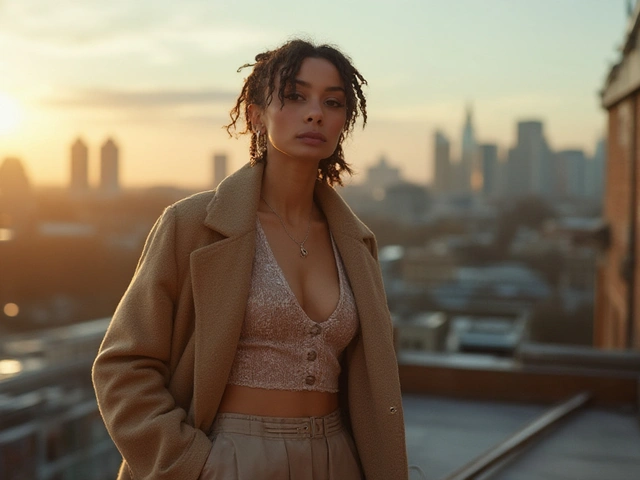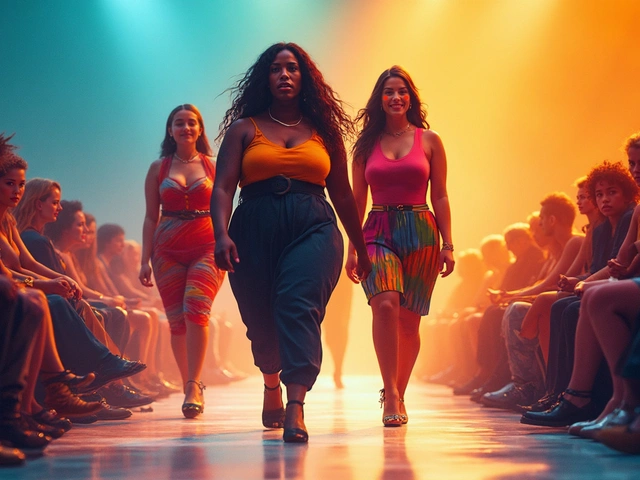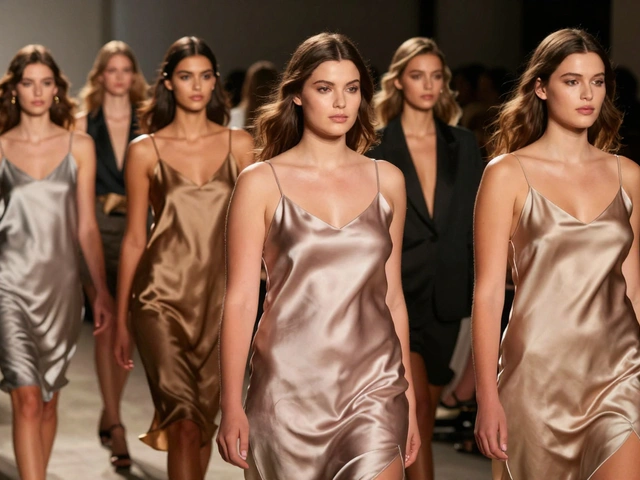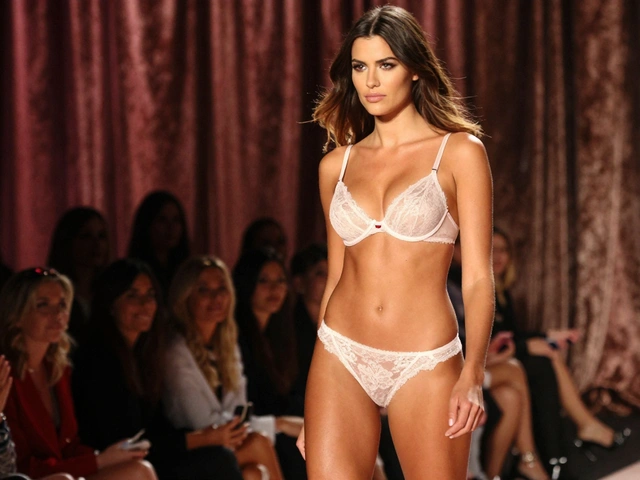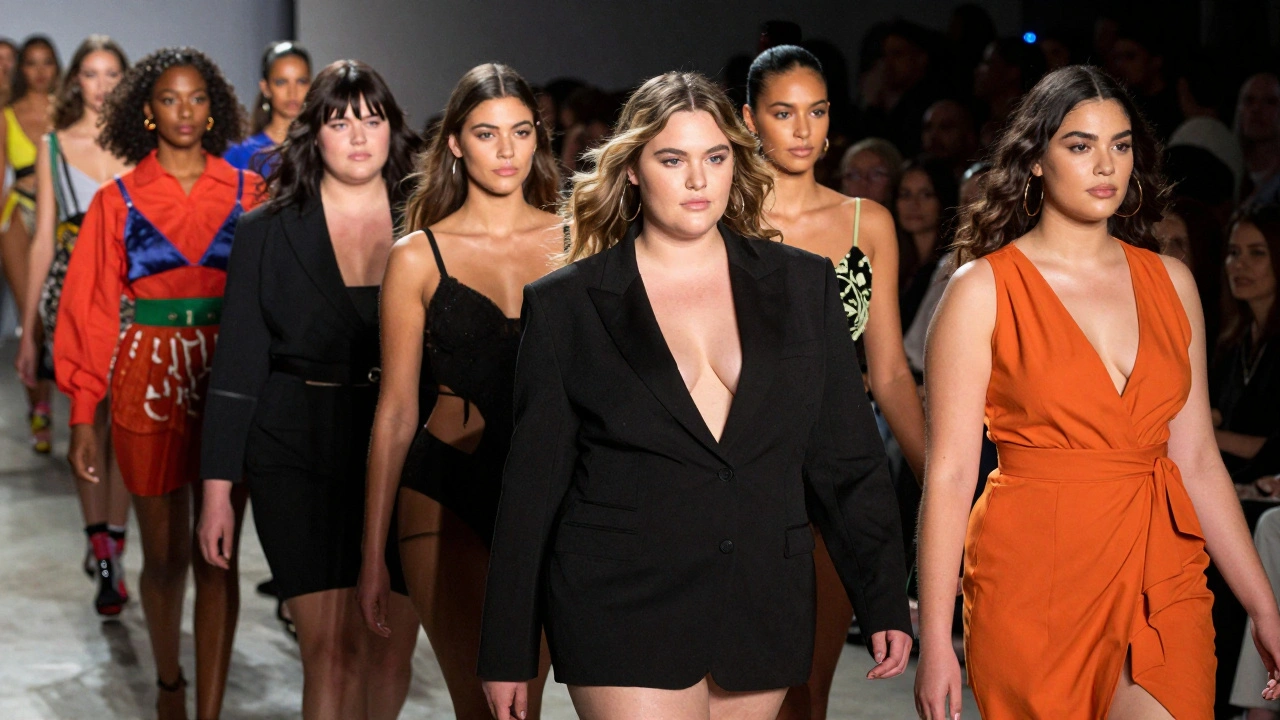
Curvy models aren’t just breaking stereotypes-they’re rewriting the rules of fashion. For decades, the industry told us beauty had one shape: tall, thin, and narrow. But that story is over. Today, curvy models walk runways in New York, star in campaigns for major brands, and fill social media feeds with unapologetic confidence. They’re not outliers. They’re the new normal.
What Exactly Is a Curvy Model?
A curvy model isn’t defined by a single number. It’s not about being ‘plus-size’ or ‘large’-it’s about having a body with noticeable curves, typically with a waist-to-hip ratio that falls outside the traditional runway standard. In the U.S., many agencies consider models curvy if they wear a size 12 or above. In the UK, it’s often size 14 and up. But these numbers don’t tell the whole story.
What matters is how the body moves, how clothing drapes, and how confidence shines through. Curvy models often have fuller hips, thighs, busts, and waists that create an hourglass or pear shape. They’re not trying to look like skinny models in larger sizes-they’re showcasing what real bodies look like when they’re healthy, strong, and celebrated.
Brands like Savage X Fenty, Aerie, and Lane Bryant have built entire campaigns around curvy models who look like the women shopping in their stores. Not airbrushed. Not Photoshopped. Just real.
The Rise of Curvy Models in Mainstream Fashion
The shift didn’t happen overnight. It started with a few bold women refusing to wait for permission. Ashley Graham became the first plus-size model on the cover of Vogue in 2016. That moment wasn’t just symbolic-it was seismic. Sales for brands featuring her jumped 20% within weeks.
By 2023, over 40% of major fashion campaigns in the U.S. and UK included models who wore size 12 or higher, according to the Fashion Spot’s annual diversity report. That’s up from just 6% in 2015. Brands like Target, H&M, and Zara now have dedicated curvy lines. Even high-end designers like Christian Siriano and Rihanna’s Savage X Fenty regularly feature curvy models on their runways.
This isn’t just about representation-it’s about money. Women who wear size 14 and up spend over $300 billion annually on clothing in the U.S. alone. Brands that ignore them are leaving billions on the table.
Why Curvy Models Matter Beyond the Runway
When a teenage girl sees a curvy model in a magazine, it changes something inside her. She doesn’t feel broken. She doesn’t feel like she needs to lose weight to be worthy. She sees herself reflected-and that’s powerful.
Studies from the University of Pennsylvania show that exposure to diverse body types reduces body dissatisfaction by up to 34% in young women. That’s not just a feel-good statistic. It’s a mental health win. When media stops treating curvy bodies as ‘special’ or ‘brave’ to feature, and starts treating them as normal, it heals generations.
And it’s not just women. Men are starting to see their own bodies reflected too. Male curvy models like Lyle Hutson and James Kaliardos are gaining visibility in swimwear and underwear campaigns, challenging the idea that masculinity only looks one way.
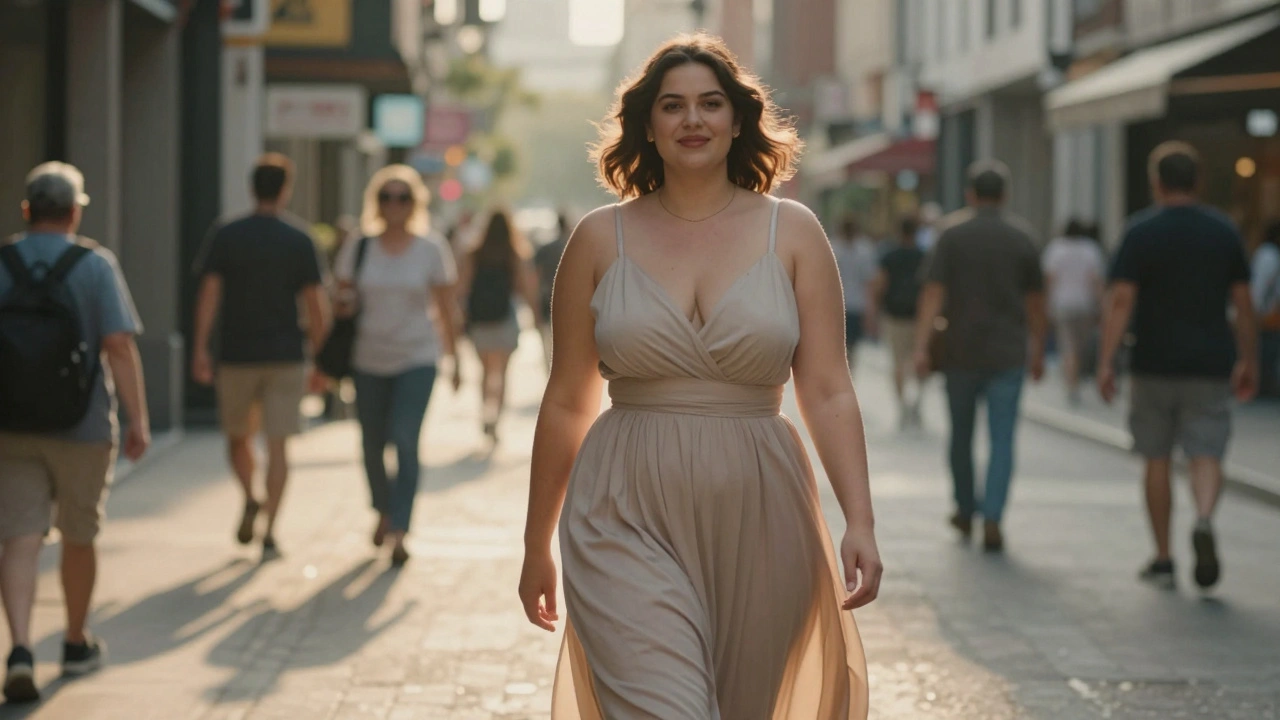
How Curvy Models Are Changing the Industry
It’s not enough to just cast curvy models. The industry had to change how it works.
Designers now hire fit models who match real customer sizes instead of using sample sizes that only fit a tiny fraction of the population. Pattern makers are adjusting seams, darts, and proportions to accommodate curves instead of forcing the same template onto every body. Fabric suppliers are developing stretchier, more durable materials that hold shape without digging in or gaping.
Even runway shows have changed. Shows like Chromat and Universal Standard don’t just include curvy models-they design clothes specifically for them. That means no more ‘extended sizing’ afterthoughts. No more hiding curves in baggy clothes. Just well-fitted, stylish pieces that celebrate the body they’re made for.
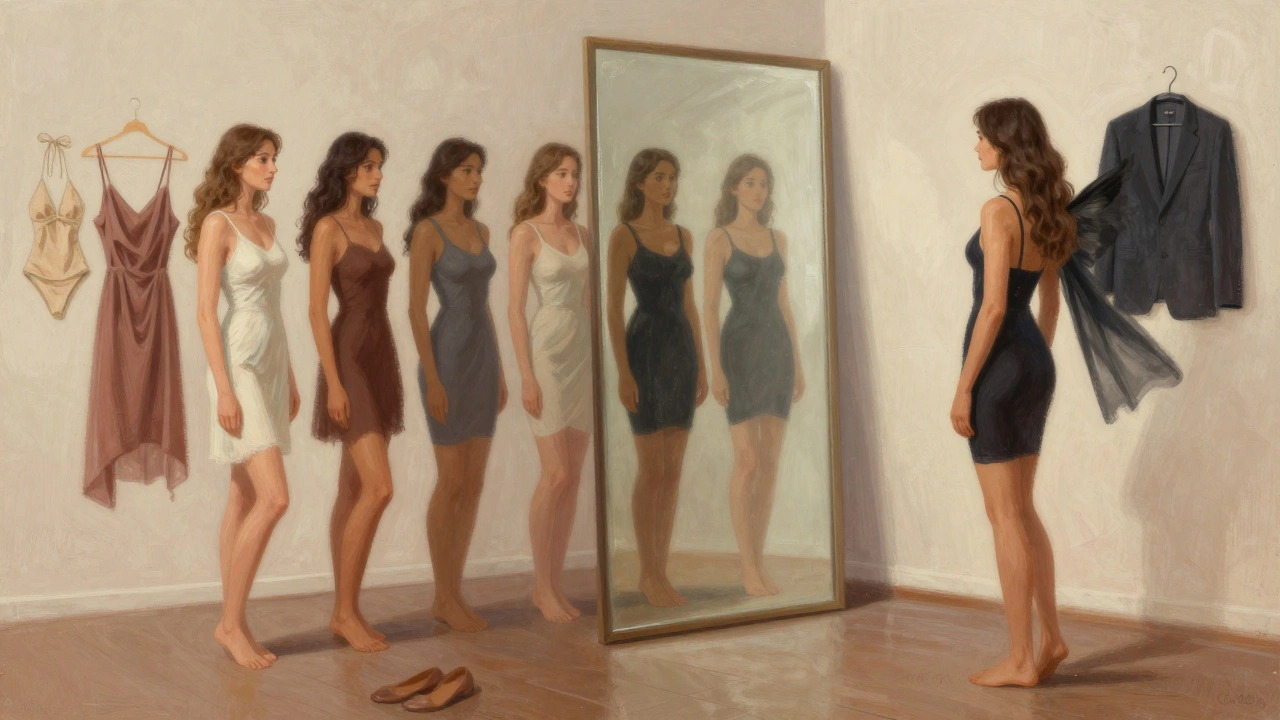
One designer told me, ‘We stopped designing for the mannequin. We started designing for the woman in the mirror.’ That’s the shift.
Top Curvy Model Agencies Today
Not all agencies understand curvy modeling. But the ones that do are changing the game.
- Wilhelmina Plus (New York) - One of the oldest and most respected, representing Ashley Graham and Tess Holliday.
- Next Model Management (Curvy Division) (London, Milan, Paris) - Signed models like Paloma Elsesser and Precious Lee.
- BMG Model Management (London) - Focuses on size-inclusive talent across fashion, editorial, and commercial work.
- Shhh Model Agency (Australia) - Known for ethical representation and diverse body types.
- Model One (Curvy Division) (Germany) - Leading in Europe with a strong focus on high-fashion curvy talent.
These agencies don’t just book jobs-they train their models on how to negotiate pay, handle media, and avoid exploitative shoots. They’re building careers, not just gigs.
What It Takes to Be a Curvy Model Today
Becoming a curvy model isn’t about having the ‘perfect’ body. It’s about having presence, personality, and professionalism.
Here’s what actually matters:
- Confidence - You have to walk into a room like you belong there. No apologies.
- Consistency - Brands want models who look the same in photos as they do in person. No drastic weight fluctuations.
- Portfolio - You need at least 15 high-quality shots showing different looks: editorial, commercial, swimwear, and lifestyle.
- Understanding your worth - Curvy models often get paid less than straight-size models. Know your market rate. In the UK, top curvy models earn £1,500-£5,000 per day for major campaigns.
- Advocacy - The best curvy models aren’t just faces-they’re voices. They speak up about body image, fair pay, and inclusive sizing.
Many curvy models start by building a strong Instagram following. But don’t confuse popularity with professionalism. Agencies look for discipline, reliability, and the ability to take direction-not just likes.
Challenges Still Left to Overcome
Progress isn’t perfect. Curvy models still face barriers.
Some designers still refuse to make clothes above size 16. Some magazines still label curvy models as ‘plus-size’ in a way that feels othering. Some agencies still pay them 30% less than their straight-size counterparts.
And the pressure doesn’t disappear. Curvy models are often told to ‘tone down’ their curves for ‘more marketable’ looks. They’re asked to lose weight for shoots. They’re told they’re ‘too curvy’ for some jobs, then ‘not curvy enough’ for others.
It’s exhausting. But the women pushing through? They’re not doing it for fame. They’re doing it so the next girl doesn’t have to fight the same battles.
How You Can Support Curvy Models
You don’t need to be a model to make a difference.
- Buy from brands that feature curvy models - Support companies that show real bodies in their ads.
- Call out body-shaming - If you see a comment saying ‘she’s too big for that dress,’ say something.
- Follow and engage with curvy models - Engagement tells brands their audience matters.
- Ask for size inclusivity - Email brands and ask them to expand their sizing. They listen when enough people speak up.
- Don’t call it ‘inspiration’ - Curvy models aren’t ‘brave’ for existing. They’re professionals. Treat them that way.
Beauty isn’t a size. It’s a feeling. And curvy models are showing the world that feeling comes in every shape, every curve, every stretch mark, every dimple, every scar.
Are curvy models only for lingerie and swimwear?
No. Curvy models are now featured in high-fashion editorials, luxury brand campaigns, corporate ads, and even tech product launches. Brands like Apple, Nike, and Sephora regularly use curvy models for everything from athleisure to skincare. Their presence isn’t limited to one category-it’s expanding across every sector of fashion and advertising.
Do curvy models have to be tall?
Not at all. While traditional runway models are often 5’9” or taller, curvy modeling values diversity in height too. Many successful curvy models are between 5’4” and 5’8”. Commercial and editorial work rarely requires a specific height-what matters is how you carry yourself and how the clothes look on you.
Can someone become a curvy model if they’re not a size 14?
Yes. The definition of ‘curvy’ varies by region and agency. In some places, size 10 or 12 qualifies. What matters is proportion and shape, not just the number on the tag. Many agencies now use body measurements rather than standard sizes to determine fit.
How do curvy models handle body shaming online?
Many curvy models use their platforms to shut down hate with facts, humor, or quiet confidence. Some block and report. Others turn comments into teachable moments. Top models like Lizzo and Ashley Graham have spoken openly about ignoring trolls and focusing on their community. Their message? Your worth isn’t determined by strangers on the internet.
Is curvy modeling just a trend?
No. This isn’t a trend-it’s a correction. The fashion industry spent decades excluding the majority of its customers. Now, it’s catching up. With data showing that 67% of women in the UK wear size 14 or above, brands can’t afford to ignore this market. Curvy modeling is here to stay because it’s profitable, ethical, and human.
Where Do We Go From Here?
The next step isn’t just more curvy models on runways. It’s more curvy designers, curvy photographers, curvy editors, curvy executives.
Change doesn’t happen because someone puts a curvy model in a magazine. It happens when the people behind the scenes-stylists, art directors, brand managers-start seeing diversity as standard, not special.
Every time you buy from a brand that includes curvy models, you’re voting with your wallet. Every time you share a post that celebrates real bodies, you’re shifting culture. And every time you tell a young person they’re beautiful exactly as they are, you’re helping build a future where no one has to shrink themselves to fit in.
Beauty has always come in all shapes and sizes. We just needed to learn how to see it.