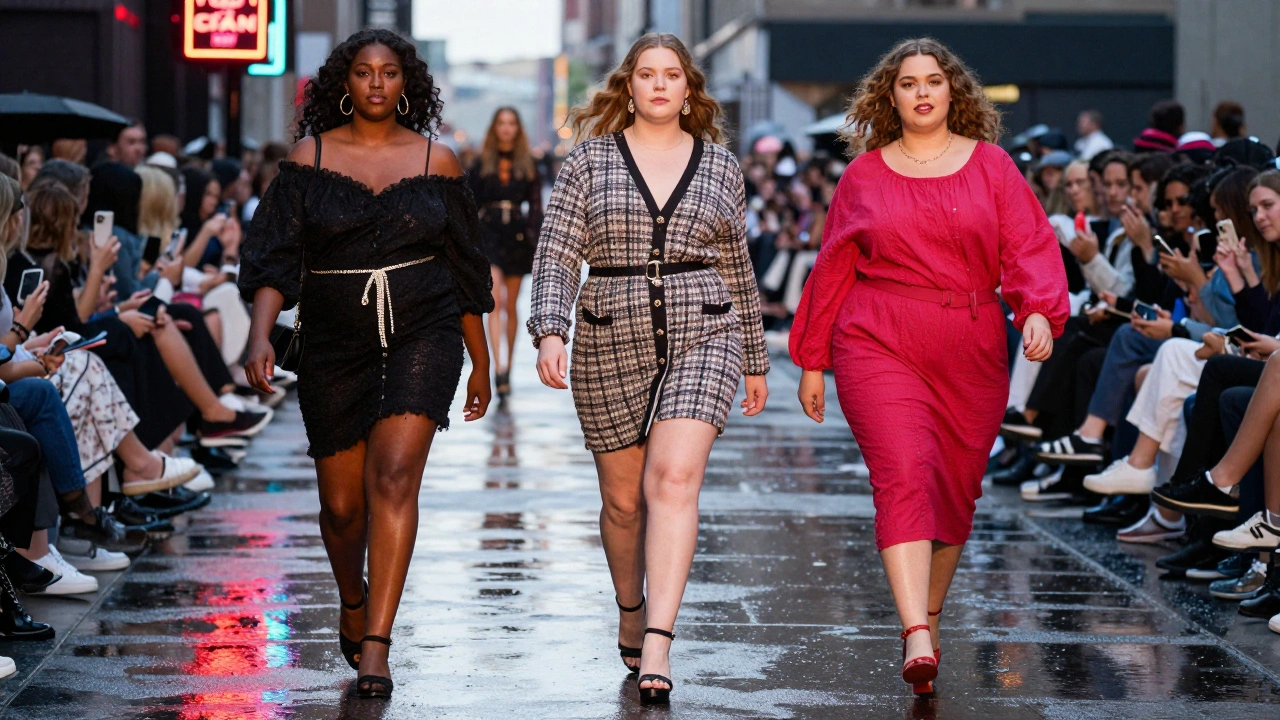
For years, the fashion world told us there was only one kind of beauty - thin, tall, and narrow. But that story is changing. Today, plus size models aren’t just breaking into runways and magazine spreads - they’re reshaping the entire industry. From New York to London, these women are proving that confidence, talent, and presence don’t come in one size. And they’re not asking for permission anymore.
They Were Never Invisible - Just Ignored
Think back to the early 2010s. If you saw a curvy model in a major campaign, it was a headline. Now? It’s normal. But it didn’t happen by accident. It happened because women like Ashley Graham, Tess Holliday, and Lizzo refused to wait for someone else to invite them in. They walked into studios, sent in their portfolios, and kept showing up - even when doors stayed shut.
Brands like Savage X Fenty, Aerie, and Universal Standard didn’t just hire plus size models - they built their entire business around them. Savage X Fenty’s 2023 show featured 78 models of all sizes, skin tones, genders, and abilities. No tokenism. No ‘plus size section.’ Just models - full stop. That shift didn’t come from pity. It came from profit. Consumers noticed. Sales rose. And suddenly, the industry had to listen.
More Than Just Clothes
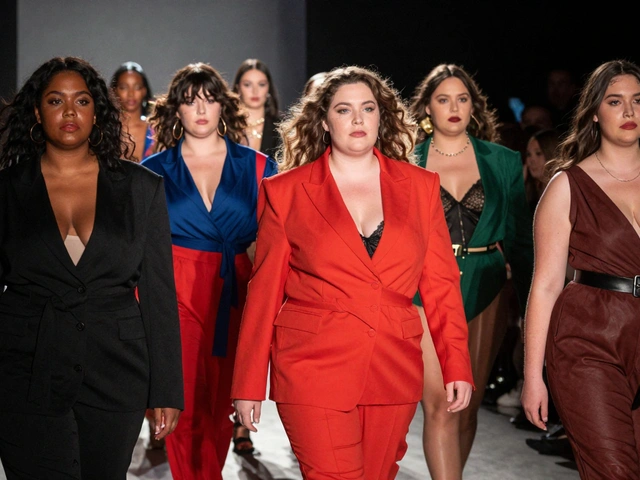
Plus size models aren’t just wearing clothes. They’re wearing visibility. Every time a curvy woman stands on a runway in a designer gown or poses in a swimwear ad, she’s telling another woman: You belong here.
Studies from the University of California, San Francisco found that when young girls see diverse body types in media, their self-esteem improves by up to 37% over six months. That’s not just feel-good stuff - that’s measurable change. And it’s happening because models like Gabi Gregg and Emme are talking openly about their journeys - not just posing in front of cameras.
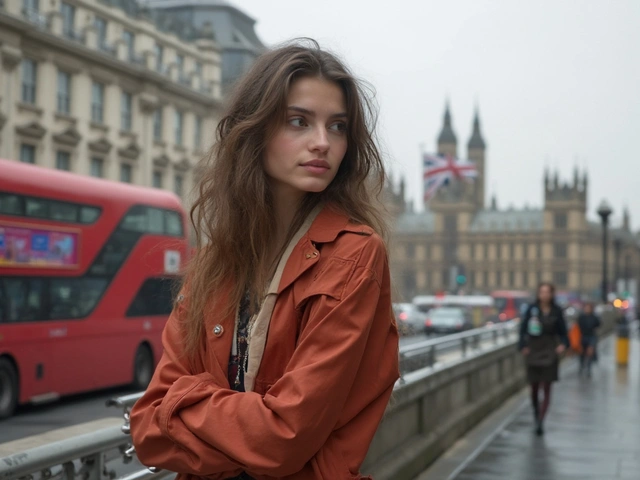
One model in London, Shanice, shared how she got her first big campaign after posting a simple photo of herself in a vintage dress with the caption: ‘I’m not waiting for someone to tell me I’m beautiful.’ That post went viral. Three weeks later, she was on the cover of Elle UK. No agent. No PR team. Just truth.
The Real Barriers Still Exist
Let’s be clear - progress isn’t perfect. Many agencies still don’t have a dedicated plus size division. Some still list size 14 as the upper limit. And while major brands have made public commitments, smaller ones still avoid curvy models out of fear - fear of backlash, fear of losing ‘tradition,’ fear of not knowing how to shoot them.
Photographers still ask, ‘Can you stand closer to the camera?’ as if curves are a flaw to hide. Designers still say, ‘We don’t make this style above size 16.’ And too often, plus size models are booked only for ‘body positivity’ campaigns - never for luxury fashion, high-end beauty, or editorial spreads that aren’t explicitly about size.
But the tide is turning. In 2025, the British Fashion Council launched its first-ever inclusive model training program, partnering with 12 agencies to ensure plus size models get the same coaching, casting access, and contract support as their straight-size peers. That’s not charity. That’s equity.
Who’s Leading the Charge in 2026?
Here are a few names you should know - not because they’re ‘inspirational,’ but because they’re working, winning, and changing the game:
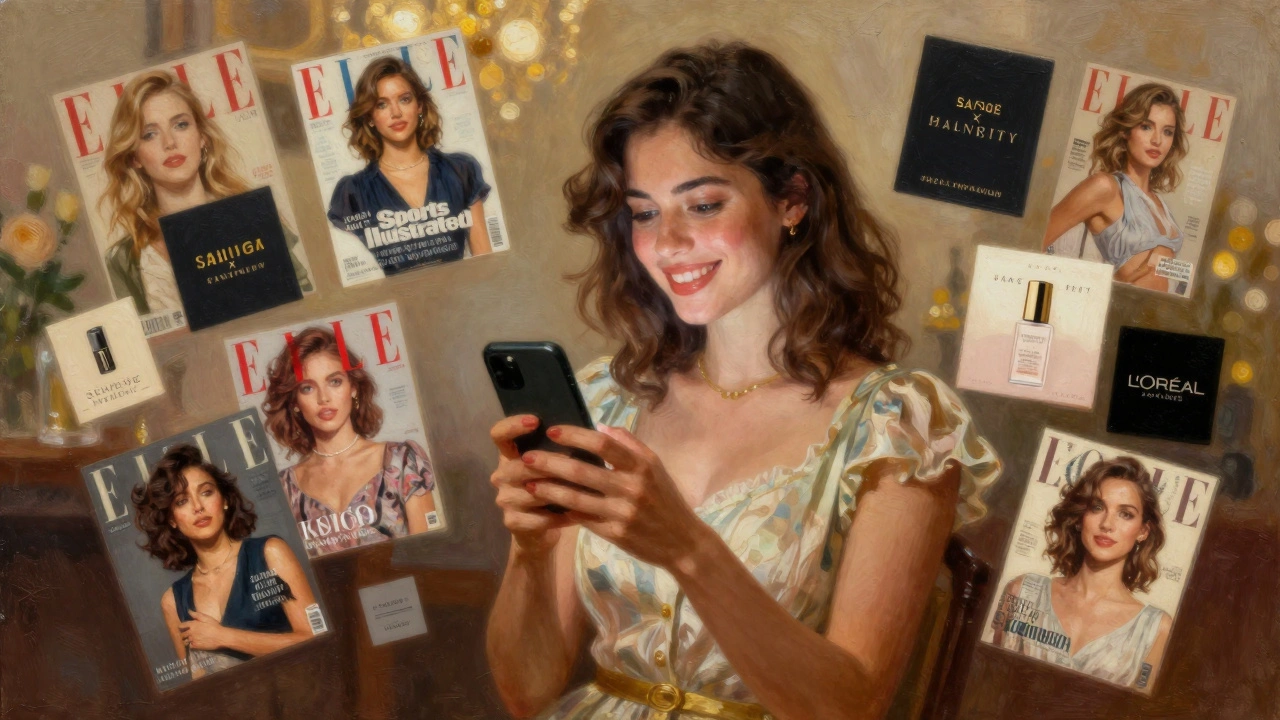
- Paloma Elsesser - Walked for Chanel, Fendi, and Prada. She’s also a choreographer and activist, pushing for better representation behind the scenes.
- Jasmine Sanders - First plus size model to land a global campaign with L’Oréal Paris. She’s now a creative director at a major beauty brand.
- Camille Kostek - From Sports Illustrated Swimsuit to Victoria’s Secret, she’s redefined what a ‘sports model’ looks like - and proved you don’t need to be thin to be athletic.
- Rebecca Minkoff’s in-house team - The designer doesn’t just hire plus size models - she designs her collections to fit sizes 0-32, and films her shows with zero retouching.
These women aren’t exceptions. They’re proof that talent doesn’t come in a size range. It comes in courage.
What This Means for You
Whether you’re a young woman wondering if you’ll ever see yourself in a magazine, a parent teaching your daughter to love her body, or a brand trying to do better - this movement matters. It’s not about making everyone look the same. It’s about making everyone feel seen.
And if you’re a plus size model reading this? You’re not just a face in an ad. You’re part of a revolution. Every time you say no to a job that asks you to shrink yourself - physically or emotionally - you make space for someone else to walk through the door.
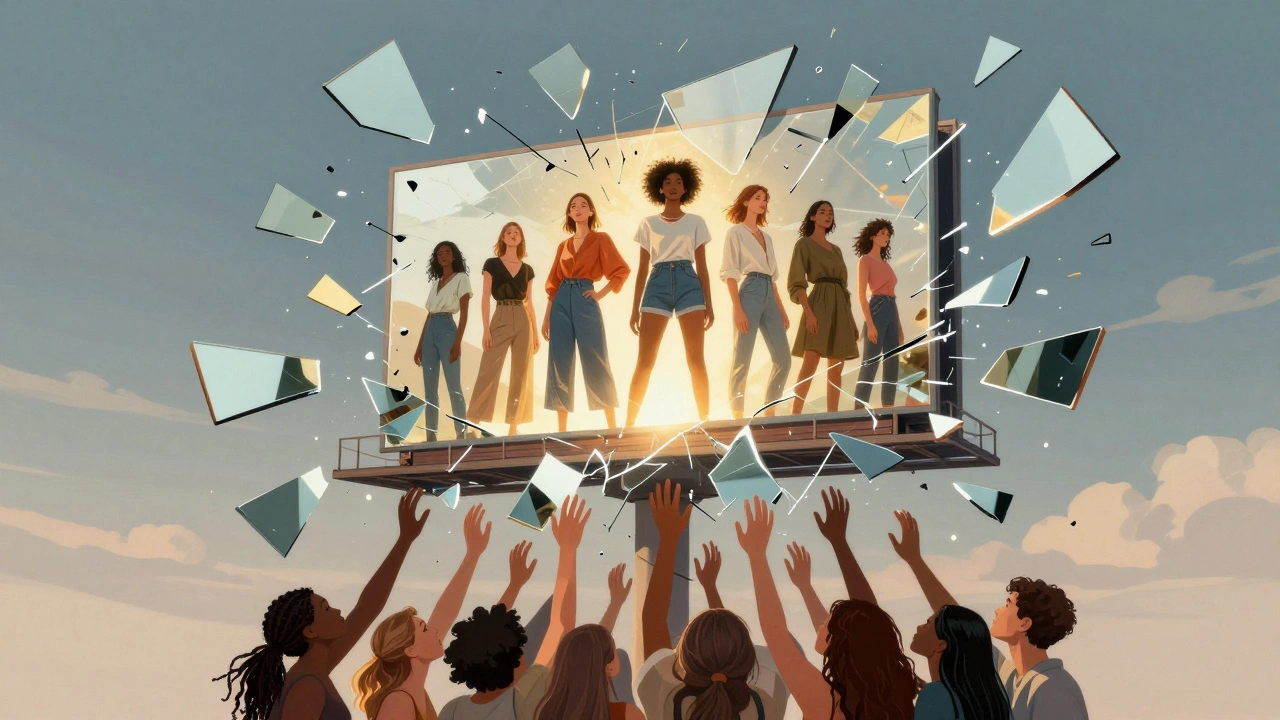
Some people still say fashion is superficial. But when a girl sees a model who looks like her on a billboard and finally believes she deserves to be photographed, that’s not superficial. That’s life-changing.
How to Support the Movement
You don’t need to be a model to be part of this. Here’s how you can help:
- Follow and share work by plus size models - not just when it’s ‘body positivity month,’ but all year.
- Call out brands that only feature curvy models in ‘special’ campaigns. Demand they be included in mainstream ones too.
- Support brands that design for all sizes - and don’t just market them as ‘plus size lines.’
- Buy from independent designers who size inclusively. Many small brands offer sizes up to 40 and don’t charge extra.
- Teach kids that beauty isn’t tied to a number. Show them real bodies - in ads, on TV, in books.
Change doesn’t happen because someone in a boardroom decides to be ‘woke.’ It happens because enough people stop looking away.
What’s Next?
The next frontier? Representation behind the camera. More plus size photographers, stylists, art directors, and casting agents. Because you can’t fix a system if the people running it only see one kind of beauty.
Organizations like Model Alliance and Curvy Girl Collective are already training women of all sizes to become industry leaders. In 2026, the goal isn’t just to have more plus size models on runways - it’s to have more curvy women in charge of the whole show.
And that’s the real victory. Not just being seen - but being in charge of how you’re seen.
Are plus size models paid the same as straight-size models?
In top-tier campaigns and major brands, yes - many now pay equally. But disparities still exist, especially in smaller agencies and regional markets. A 2024 survey by the Fashion Industry Association found that 62% of plus size models reported being offered lower rates than straight-size peers for the same work. That gap is narrowing, but it hasn’t closed yet.
What size is considered plus size in modeling?
There’s no universal standard, but in the UK and US, plus size modeling typically starts at UK size 14 (US size 10) and goes up. Many agencies now use the term ‘curvy’ to describe sizes 14-24, and ‘extended size’ for 26 and above. The key is that the industry is moving away from rigid labels and toward inclusive sizing across the board.
Can you become a plus size model if you’re not a size 14?
Absolutely. Many models start at size 10 or 12 and are still considered part of the movement if they challenge narrow beauty standards. The focus isn’t on the number - it’s on representation. If you’re not a size 14 but carry curves and want to be seen, agencies are actively seeking diverse body types across the spectrum.
Do plus size models get booked for high fashion shows?
Yes - and more than ever. Designers like Christian Siriano, Chromat, and Harris Reed have made inclusive casting standard. In 2025, 41% of all runway shows at New York Fashion Week featured models size 14 and above. That’s up from 8% in 2018. High fashion no longer sees curves as a limitation - they’re seen as art.
How do I find a reputable agency for plus size models?
Look for agencies with dedicated curvy divisions and a public track record. In the UK, agencies like Models 1, Premier Model Management, and Select Model Management have active plus size books. Check their past campaigns - if they’ve worked with brands like Savage X Fenty, ASOS Curve, or Lane Bryant, they’re serious. Avoid agencies that charge upfront fees - legitimate ones only earn when you book work.
Final Thought
The next time you see a curvy model on a billboard, don’t think, ‘Oh, that’s nice.’ Think: ‘That’s progress.’ Because every time a woman steps into the light - not despite her size, but because of it - the world gets a little wider. And that’s worth celebrating.

January 12, 2026 AT 06:47
Eugene Stanley
This movement means so much to me. I used to skip fashion magazines because I didn’t see anyone who looked like me. Now? I save screenshots of curvy models in designer gowns and send them to my niece. She says she feels ‘bigger’ in a good way. That’s not just fashion - that’s healing.
And props to the photographers who stop cropping out thighs. Real change starts when the lens stops lying.
January 13, 2026 AT 05:14
Rutuja Patil
Okay but… like… why do we even need to ‘celebrate’ this? It’s just… modeling. Not a revolution. Also, why do they always pick the ‘hot’ curvy girls? What about the girls who are actually, like, fat? This whole thing feels performative. And why is everyone so obsessed with size numbers? Ugh. Can we just… stop talking about it? 😒
January 13, 2026 AT 20:56
Laura Swan
Let me be real - this isn’t ‘progress.’ This is woke capitalism. Brands didn’t suddenly get a conscience - they saw dollar signs. And now they’re cashing in on ‘body positivity’ while still paying these women less than half of what a thin model makes for the same shoot. 🤡
Also, why is every ‘plus size’ model still tall? Where are the short, curvy, hairy, stretch-marked, cellulite-dusted women? They’re still invisible. This is just a new kind of exclusion - with better PR.
And don’t even get me started on how they call it ‘curvy’ like it’s some cute little adjective. We’re not talking about a wine glass. We’re talking about real bodies. Stop sanitizing it.
Also, why is Lizzo always the poster child? She’s a superstar. Not a representative. We need more everyday women, not celebrities pretending to be relatable. 😤
January 15, 2026 AT 15:11
Nikita Arora
Bro I saw this one girl on Instagram - size 26, no filter, wearing a crop top and jeans, just vibin’ at a coffee shop - and like… I cried. Not because she was ‘inspiring’ - because I realized I’ve spent 15 years hating my body because I thought I was the only one who looked like this.
And then I saw a comment under her post saying ‘you’re not beautiful, you’re just fat’ - and I replied with a heart emoji and said ‘you’re just jealous.’
She got a deal with ASOS the next week. That’s the power of showing up. 🫶
January 16, 2026 AT 15:30
Kendra Joiner
While the sentiment expressed herein is ostensibly laudable, the underlying ideological framework remains empirically unsound. The notion that representation in fashion inherently correlates with psychological well-being is a fallacy predicated upon conflating correlation with causation. The referenced UCSF study, while methodologically sound in its sample selection, fails to account for confounding variables such as socioeconomic status, media literacy, and pre-existing self-concept.
Moreover, the elevation of individual models as ‘revolutionary’ perpetuates a celebrity-centric narrative that obscures structural economic inequities within the industry. The persistent wage gap, as cited, is not a function of bias per se, but rather of market-driven supply-and-demand dynamics, wherein the perceived ‘marketability’ of curvilinear forms remains statistically inferior to the traditional archetype.
Furthermore, the conflation of ‘inclusivity’ with ‘size diversity’ is a semantic reductionism that ignores other critical axes of representation - namely, age, disability, and neurodiversity. To privilege body size above all else is not progress - it is a new orthodoxy.
Lastly, the suggestion that ‘being in charge of how you’re seen’ constitutes liberation is a romanticized illusion. True agency lies not in being photographed, but in dismantling the systems that dictate visibility itself - a task unaddressed herein.
One may admire the courage of the individuals profiled, but admiration does not constitute systemic reform.