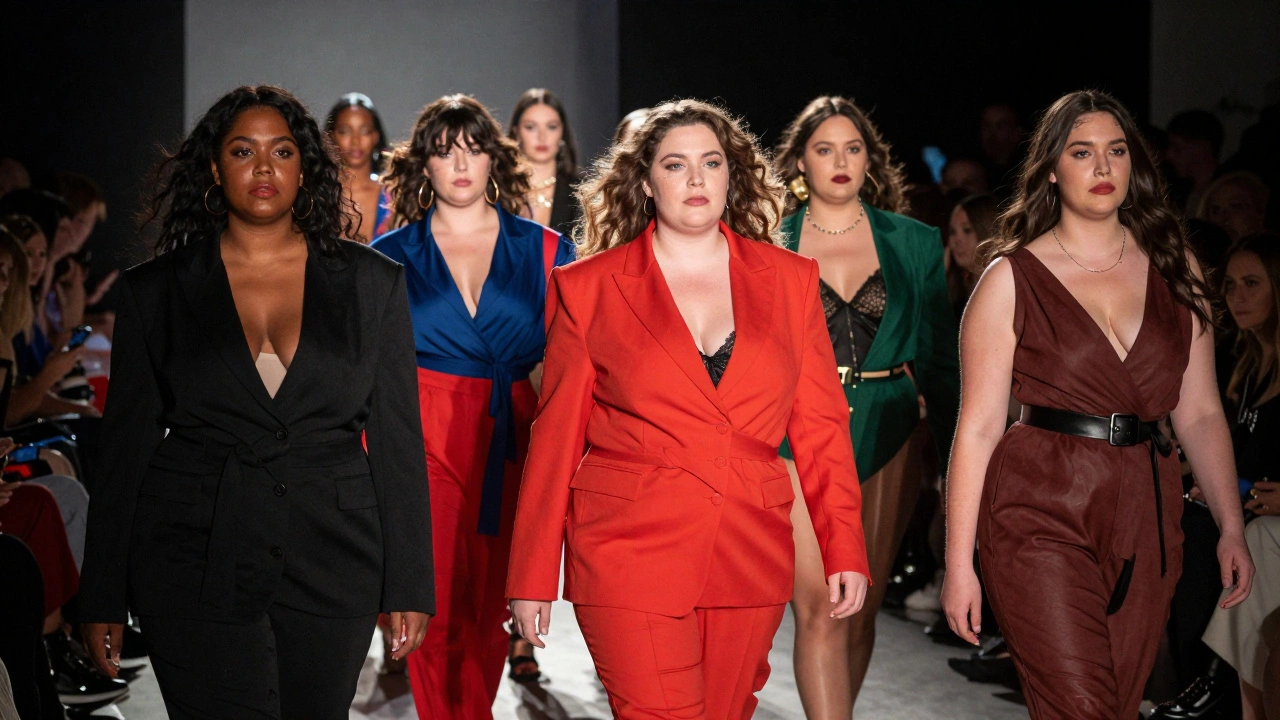
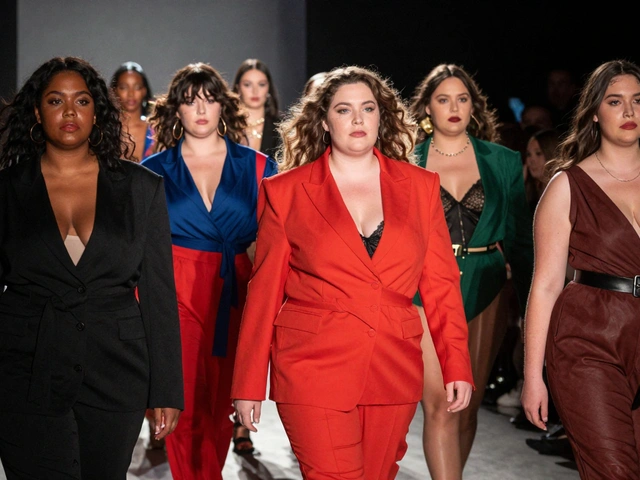
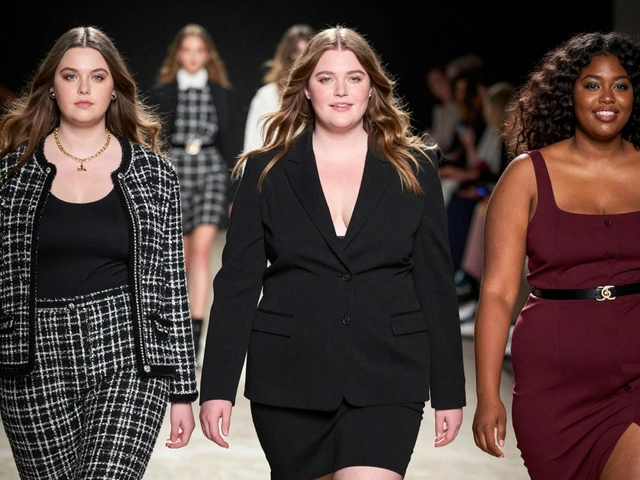
For years, the fashion industry showed one kind of model: tall, thin, and narrow-hipped. If you didn’t fit that mold, you weren’t considered for runway shows, magazine covers, or major brand campaigns. But things are shifting. Today, plus-size fashion models aren’t just breaking into the industry-they’re reshaping it. Their presence isn’t a trend. It’s a movement. And behind every runway walk, every campaign shot, and every magazine spread is a story of struggle, resilience, and hard-won victory.
What It Really Means to Be a Plus-Size Model Today
A plus-size model isn’t just someone who wears a size 14 or above. That label carries weight-literally and figuratively. In the U.S., plus-size typically starts at size 14, but in Europe, it often begins at size 16. Some brands use 18+. The definition varies, but the common thread is this: these models don’t fit the traditional ‘sample size’ standard that designers have used for decades.
Today’s plus-size models are more than just body types. They’re advocates, entrepreneurs, and role models. They walk for Savage X Fenty, appear in Sports Illustrated Swimsuit Issue, and star in campaigns for Target, Lane Bryant, and even high-end houses like Chromat and Anna Sui. Their job isn’t just to wear clothes-it’s to prove that beauty exists across every size.
And yet, even with visible progress, the path isn’t smooth. Many still face rejection before they even get to the audition room. Designers sometimes refuse to alter garments to fit larger bodies. Agencies still push models to lose weight to ‘fit more jobs.’ The industry talks about inclusion-but too often, it’s performative.
The Roadblocks: Rejection, Bias, and Unrealistic Expectations
One of the biggest hurdles? Being told you’re ‘too big’-even when you’re within the industry’s own definition of plus-size. A 2023 survey by the Model Alliance found that 68% of plus-size models reported being asked to lose weight by agents or clients within their first year. Some were told to drop 10 pounds just to ‘look better in photos.’ Others were told their hips were ‘too wide’ for a dress that was designed for a size 0.
Even when they land jobs, the work isn’t always fair. Plus-size models often get paid less than their straight-size counterparts. A 2024 report by Fashion Spot showed that the average pay for a plus-size model on a major brand campaign was 32% lower than for a size 2-6 model doing the same job. And while straight-size models get multiple outfit changes, plus-size models are often given just one look-because, as one designer admitted in an off-record interview, ‘we don’t have time to tailor for bigger bodies.’
Then there’s the mental toll. Social media doesn’t help. Comments like ‘Why are you promoting obesity?’ or ‘You’re setting a bad example’ still flood the feeds of plus-size models. Some have had death threats. Others have been doxxed. It’s exhausting. And it’s not something they signed up for.
Triumphs: When the Industry Finally Looked Up
But change didn’t happen because someone asked nicely. It happened because models refused to stay silent.
Isis Davis-Marks, a plus-size model and activist, walked the runway for New York Fashion Week in 2019 wearing a custom gown designed for her curves. The photo went viral-not because it was glamorous, but because it was real. She didn’t photoshop her stomach. She didn’t hide her arms. She stood tall. That moment sparked a wave. Brands started noticing.
Then came Ashley Graham. Not just a model-she became a force. In 2016, she graced the cover of Sports Illustrated Swimsuit Issue. That wasn’t a one-off. She’s been on the cover three times since. Her contract with Lane Bryant was the first of its kind: a six-figure deal with full creative control. She didn’t just model clothes-she helped design them. Her line, Ashley Graham for Lane Bryant, includes adaptive pieces, extended sizes, and real fabric choices that flatter diverse bodies.
And it’s not just about celebrities. Everyday models like Tess Holliday, Gabi Gregg, and Harnaam Kaur have built empires on Instagram-not by hiding their bodies, but by celebrating them. Holliday’s #EffYourBeautyStandards campaign has over 2 million followers. Gregg’s YouTube channel has helped thousands of women learn how to style their bodies with confidence. Kaur, who has polycystic ovary syndrome and facial hair, became the first bearded woman to walk in London Fashion Week.
These women didn’t wait for permission. They built platforms, created communities, and forced the industry to pay attention.
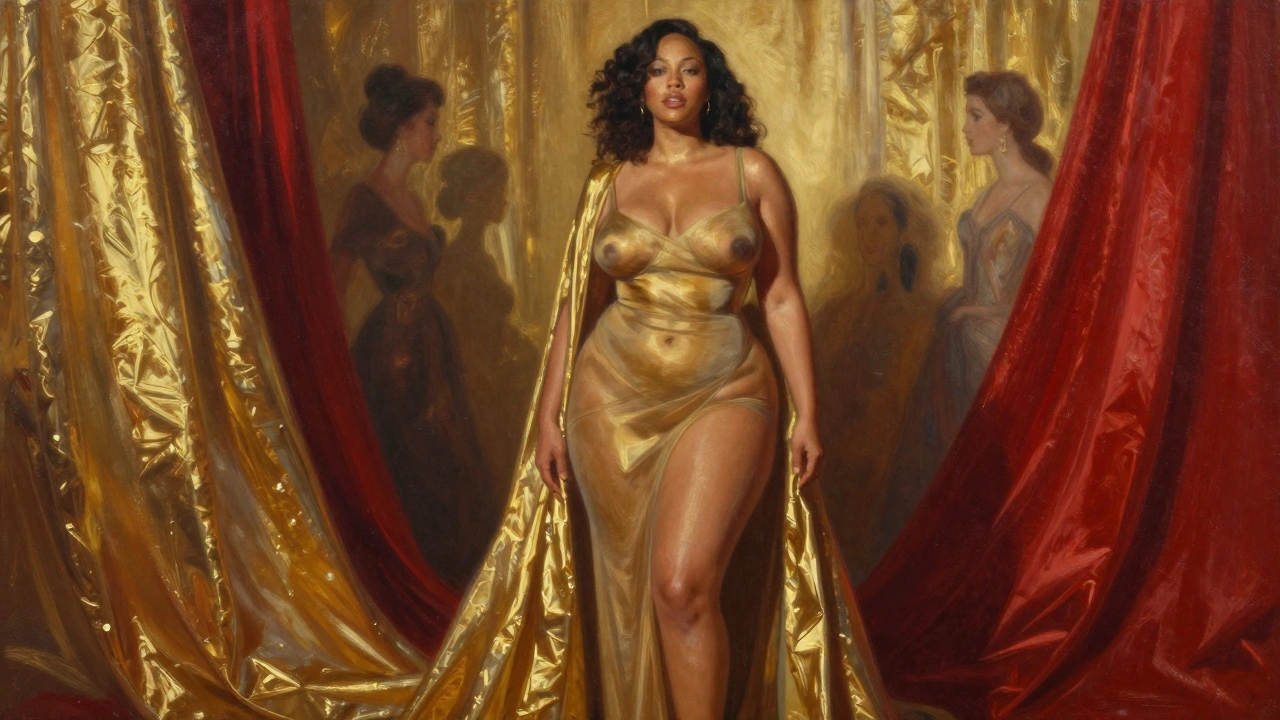
Progress, But Not Perfection
Yes, you’ll see more size diversity on runways now. In 2025, 37% of major fashion shows during New York, London, Milan, and Paris Fashion Weeks included at least one model above size 14. That’s up from just 8% in 2015. Brands like Universal Standard, ELOQUII, and Good American now offer up to size 40. Retailers like Nordstrom and Macy’s have expanded their plus-size sections.
But here’s the truth: representation is still shallow. Most of the plus-size models you see are still slim-thick-curvy but toned, with defined abs and narrow waists. The industry still struggles to feature models who are truly full-figured: those with rolls, stretch marks, cellulite, or who don’t fit the ‘athletic curvy’ stereotype. The real diversity hasn’t arrived yet.
And while there are more plus-size models on runways, there are still almost none in editorial spreads for Vogue or Harper’s Bazaar unless they’re already famous. The gatekeepers are still mostly the same people who once said, ‘No one wants to see that.’
What’s Next? The Real Work Begins
The next phase isn’t about more models on runways. It’s about systemic change.
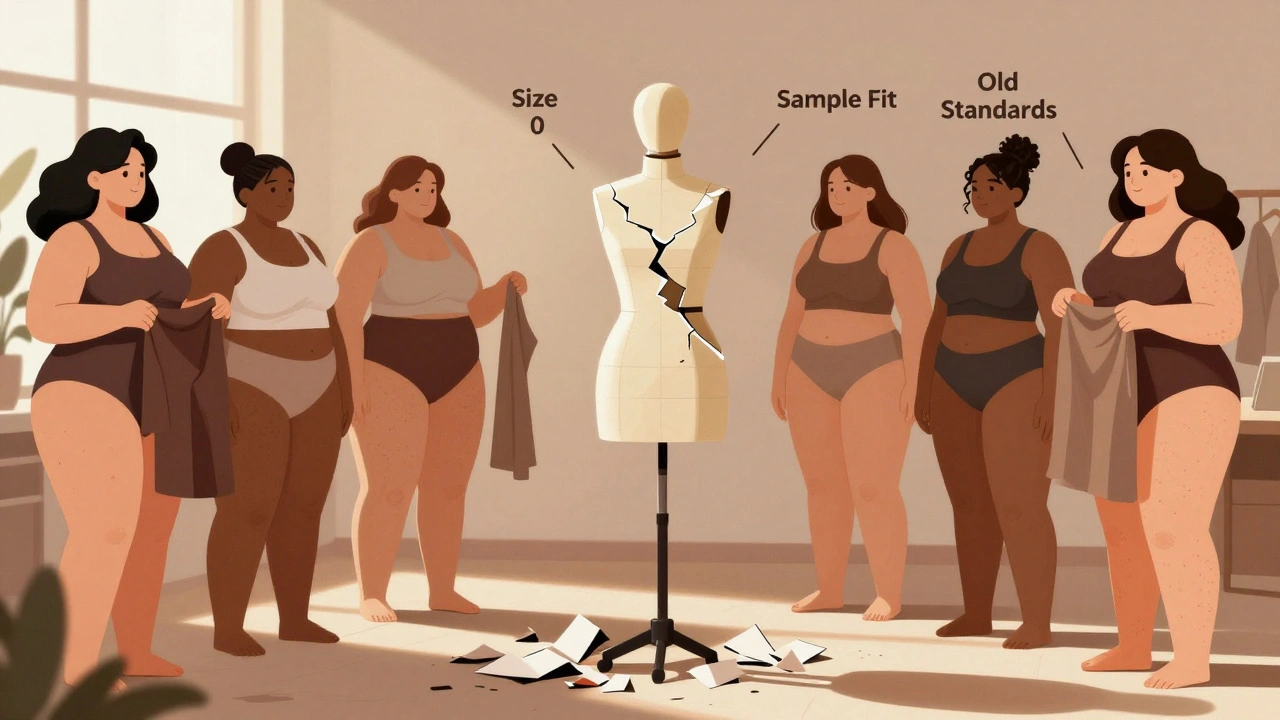
Designers need to stop designing for a size 0 and then ‘adapting’ for larger bodies. They need to design for all sizes from day one. That means using real-size mannequins in studios, hiring pattern makers who understand different body shapes, and paying for proper fittings-not just tossing on a size 18 and calling it done.
Agencies need to stop pressuring models to lose weight. They need to stop treating plus-size models as a ‘niche’ and start treating them as equals. Pay parity matters. Equal opportunity matters. And so does representation behind the scenes-more plus-size casting directors, more plus-size photographers, more plus-size editors.
And consumers? They need to keep buying from brands that do it right. When you support companies that feature real bodies, you send a message louder than any protest sign: inclusion is profitable.
The rise of plus-size models isn’t about pity. It’s not about charity. It’s about justice. These women aren’t asking to be seen-they’re demanding to be valued. And slowly, the fashion world is starting to listen.
Real Stories, Real Impact
Take Morgan, a 38-year-old model from Atlanta. She’s a mom of two, wears a size 24, and has stretch marks from pregnancy. In 2023, she landed a campaign for a national underwear brand. The shoot was in a studio with no air conditioning. She was sweating, tired, and proud. After the campaign launched, she got hundreds of messages. One read: ‘I never thought I’d see someone who looks like me on a billboard. I cried.’
That’s the power of visibility. It doesn’t just change how fashion looks-it changes how people feel about themselves.
Another example: Lizzo didn’t just sing about self-love-she walked the runway in a custom Balmain gown at the 2024 Met Gala. She didn’t wear a size 0 dress. She wore a size 22. And she owned it. That moment wasn’t just fashion. It was a statement: you don’t have to shrink to be worthy.
Final Thoughts: This Isn’t Over
There’s still a long way to go. But the progress made in the last decade is real. Plus-size models aren’t just tolerated anymore-they’re celebrated. They’re not just ‘a step toward diversity.’ They’re the future of fashion.
And the next generation? They’re already here. Teen models like 17-year-old Aaliyah James, who just signed with IMG at size 18, are walking red carpets before they even graduate high school. They’re not waiting for permission. They’re rewriting the rules.
If you’re a young woman wondering if you belong in fashion-yes, you do. If you’re a designer wondering if you should design for more sizes-yes, you should. If you’re a brand wondering if plus-size customers are worth targeting-yes, they are. They’re not a niche. They’re 67% of American women.
The runway is no longer just for the thin. It’s for the real. And that’s a victory worth celebrating.
What defines a plus-size fashion model?
A plus-size fashion model typically wears a size 14 or higher in the U.S., though definitions vary by country and brand. More importantly, they represent bodies that fall outside the traditional ‘sample size’ standard historically used in fashion. Their role is to showcase clothing on diverse body types and challenge narrow beauty standards.
Do plus-size models get paid the same as straight-size models?
Not always. In 2024, industry reports showed that plus-size models earned, on average, 32% less than straight-size models for the same campaigns. Pay disparities persist due to outdated assumptions about market demand and limited access to high-paying editorial jobs. However, top plus-size models like Ashley Graham and Tess Holliday now command rates equal to or higher than their straight-size peers.
Why do some plus-size models still face pressure to lose weight?
Despite progress, many agencies and designers still cling to outdated ideals. Some believe larger bodies won’t sell clothes, or that clients expect a certain ‘look.’ Others don’t know how to adapt garments properly. This pressure often comes from a place of ignorance, not malice-but it’s still harmful. The rise of body-positive agencies and models speaking out is slowly changing this.
Are there enough plus-size models in high fashion?
Not yet. While 37% of major fashion weeks in 2025 featured plus-size models, most were still slim-thick figures. True diversity-models with rolls, cellulite, stretch marks, or who don’t fit the ‘curvy fitness’ mold-is still rare in editorial fashion. High fashion still lags behind retail and social media in embracing full-body representation.
How can consumers support plus-size models?
Buy from brands that feature diverse models. Follow and engage with plus-size creators on social media. Call out brands that tokenize size diversity. Demand inclusive sizing in stores. When you vote with your wallet, you tell the industry what matters. Real change happens when customers refuse to accept the old standards.
December 12, 2025 AT 18:34
diana c
It’s not just about size-it’s about systemic exclusion disguised as ‘aesthetic standards.’ The fashion industry still operates like a 1980s country club where only certain bodies are allowed to RSVP. The fact that plus-size models are now in Sports Illustrated and on runways doesn’t mean equity-it means visibility has become marketable. But the real test? When a size 24 model gets the same editorial budget as a size 4, and when designers stop treating curves like an afterthought. Until then, it’s performative inclusion with a price tag.
And don’t get me started on how agencies still push models to ‘tone down’ their bodies. That’s not empowerment. That’s coercion wrapped in glitter.
December 13, 2025 AT 01:40
Susan Baker
Let’s deconstruct the economic architecture of this ‘progress.’ The 32% pay gap isn’t accidental-it’s structural. Fashion’s supply chain is built on economies of scale, and larger sizes are treated as non-core SKUs. Designers don’t want to retool patterns because it increases lead time and reduces margin. The entire system is optimized for homogeneity. Plus-size models are used as PR props to appease woke consumers while the backend remains unchanged. The real innovation isn’t in the runway-it’s in the supply chain, and that’s still dominated by white, cis, size-zero decision-makers who’ve never had to buy a pair of jeans that fit their hips.
Until we see size-inclusive pattern libraries, standardized grading systems, and unionized fit models, this is just aesthetic theater with a hashtag.
December 14, 2025 AT 05:21
Haseena Budhan
why do u even care so much? its just clothes lol. people should just be happy with themselves instead of blaming fashion for their insecurities. also obesity is bad for ur health so why are u promoting it??
December 15, 2025 AT 05:36
Michaela Bublitz
I just want to say thank you to every model who’s walked in a size larger than 0. You didn’t wait for someone to give you permission-you just showed up. And that’s powerful. I’m a mom of three, wear a size 20, and I finally bought a dress last year that didn’t have to be altered three times. It felt like the first time I was seen as a person, not a problem to fix.
Keep going. We see you.
December 15, 2025 AT 23:39
mariepierre beaulieu
Love this so much 🌸 I’ve been following Harnaam Kaur since 2018 and she literally changed how I see beauty. Also, Lizzo at the Met Gala? Iconic. Not just because she wore a gown, but because she wore it like she owned the whole damn palace. 💪❤️
Also, Marie, your comment about the underwear campaign? That’s the real win. Not the runway. The everyday moments where someone sees themselves and breathes a little easier.
December 17, 2025 AT 20:24
Shelley Ploos
This movement isn’t about fashion. It’s about dignity. For decades, our bodies were treated like mistakes-something to be hidden, corrected, or apologized for. Now, we’re reclaiming space not by shrinking to fit in, but by expanding until the room makes room for us.
And it’s not just about models. It’s about the little girl in rural Kansas who sees a billboard and realizes she’s not broken. It’s about the teenager who stops skipping meals because she saw someone like her on a magazine. It’s about the grandmother who finally buys a swimsuit that doesn’t feel like a costume.
This isn’t a trend. It’s a return to humanity.
And if you think it’s ‘too much,’ ask yourself: why does it feel so threatening to see bodies that aren’t designed to please you?
December 18, 2025 AT 22:18
gaia quinn
Oh please. Let’s be real-this is just capitalism repackaging guilt as virtue. You think brands suddenly care about ‘body positivity’? No. They saw a market of 67% of American women who were tired of being ignored, and they smelled profit.
And don’t pretend these models are ‘real.’ Most of them still have the waist of a size 4 and the abs of a fitness influencer. They’re not ‘full-figured’-they’re ‘curvy but still toned.’ The industry didn’t change. It just found a new way to sell you the same lie: ‘You can be beautiful if you look like this.’
Meanwhile, the women who actually need representation-the ones with rolls, stretch marks, and cellulite-are still invisible. This isn’t liberation. It’s selective inclusion with a marketing budget.
December 20, 2025 AT 03:43
BETHI REDDY
One must observe with intellectual rigor that the commodification of corporeal diversity constitutes a dialectical inversion of aesthetic hegemony. The Western sartorial paradigm, rooted in Cartesian ideals of proportion, has been subverted not through ontological revolution, but through performative spectacle orchestrated by neoliberal branding strategies.
One cannot overlook the paradox: the very institutions that once excluded now co-opt, thereby neutralizing dissent. The model’s body, once a site of marginalization, is now a branded asset. The emancipatory potential of this movement is thus compromised by its integration into the spectacle economy.
One might ask: is this liberation-or merely a rebranding of oppression?
December 20, 2025 AT 04:22
Bing Lu
they're all fakes. the whole thing is a deep state plot to normalize obesity so the government can control food prices. watch the next video i'll post. the models are all CGI. they're not even real people. 😡
December 21, 2025 AT 01:05
Frank PIOBLI
Someone needs to tell these models to stop being so loud. I’m not against diversity, but why does every single post have to be about body politics? Can’t we just enjoy clothes without turning every runway into a therapy session?
Also, why are we celebrating someone who looks like they’re about to collapse from a heart attack? This isn’t empowerment-it’s dangerous.