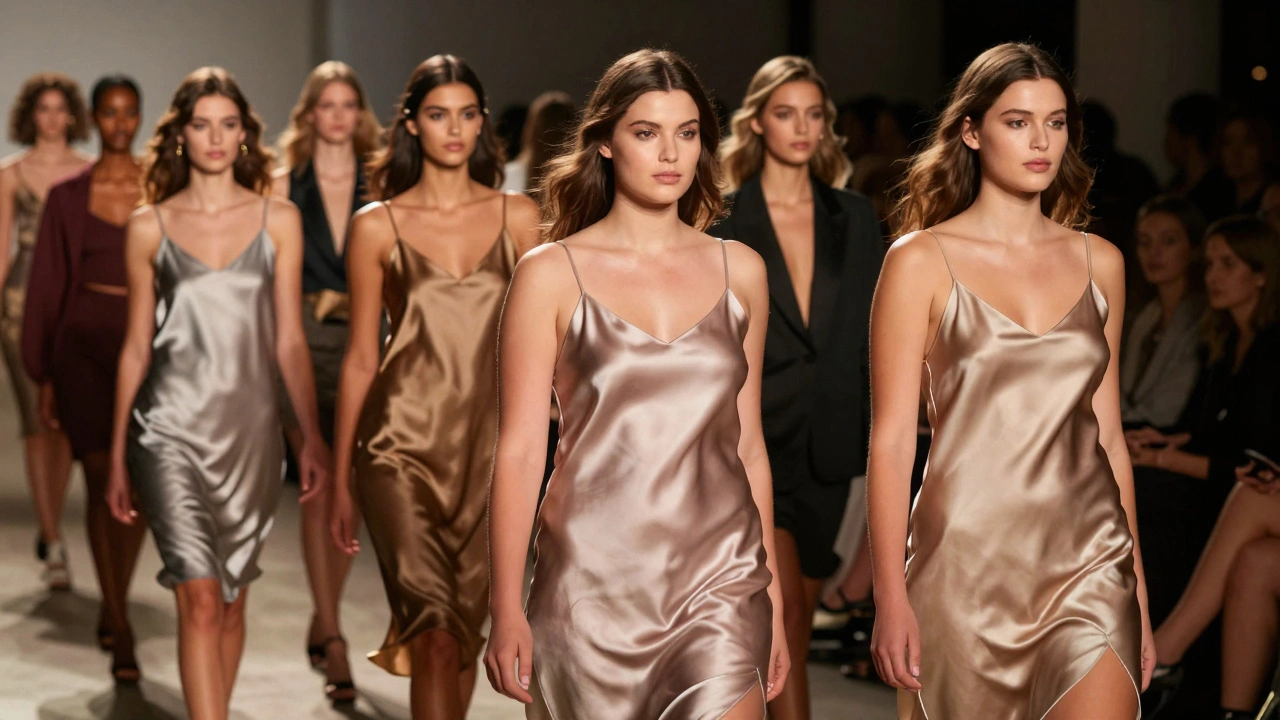
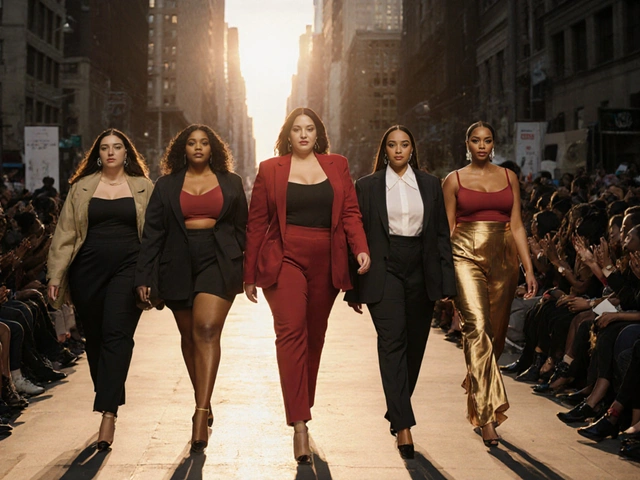
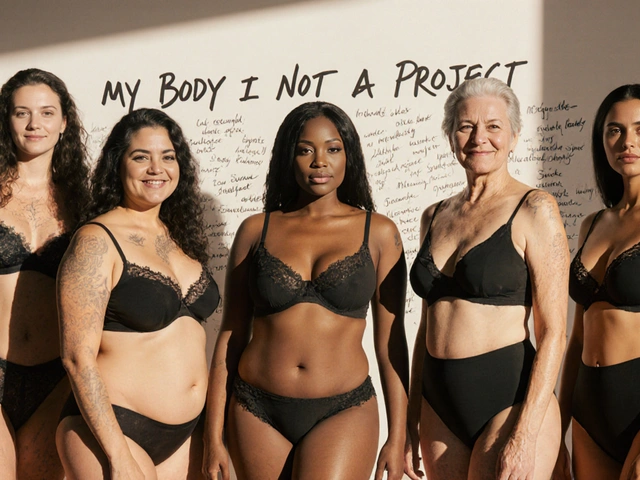
Plus size models aren’t just breaking stereotypes-they’re rewriting the rules of beauty. Ten years ago, seeing a size 16 or 20 model on a major runway was rare. Today, they’re front and center in campaigns for brands like Savage X Fenty, Universal Standard, and even Chanel. This isn’t a trend. It’s a cultural shift-and it’s here to stay.
What Exactly Is a Plus Size Model?
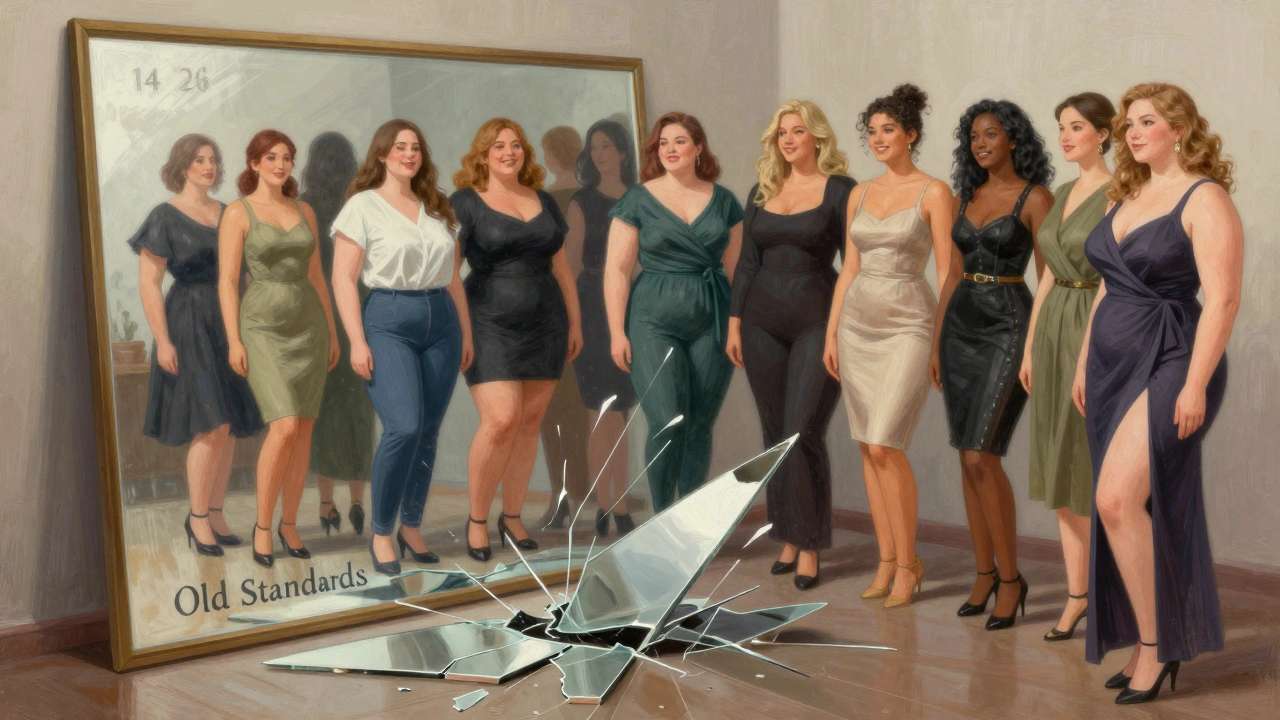
A plus size model is typically defined as someone who wears a size 14 or above in the U.S., or a size 16 and up in the UK. But labels like that miss the point. The real definition? A model who represents bodies that have been historically excluded from fashion media. These models aren’t just standing in front of a camera-they’re challenging decades of narrow beauty standards.
Brands used to say, ‘We don’t have customers in larger sizes.’ Then they looked at the data. In the U.S. alone, over 68% of women wear a size 14 or higher, according to the National Institutes of Health. Yet until the mid-2010s, less than 5% of runway models were plus size. That gap didn’t close because someone had a change of heart. It closed because consumers demanded change.
The Rise of Real Representation
Before 2015, most fashion magazines only featured one or two plus size models per year. Now, magazines like Vogue, Harper’s Bazaar, and Elle regularly feature them on covers. Ashley Graham became the first plus size model to grace the cover of Sports Illustrated Swimsuit Issue in 2016. By 2023, she was one of the highest-paid models in the world, with campaigns for Lane Bryant, Tommy Hilfiger, and Nordstrom.
It’s not just about visibility-it’s about dignity. When a size 22 model wears a silk slip dress in a high-end editorial, it sends a message: elegance isn’t tied to a number. That dress doesn’t look ‘bold’ or ‘courageous’ on her. It looks like fashion. And that’s the point.
How Plus Size Models Are Changing Design
Designers used to make clothes in sample sizes-usually 0 to 6-and then ‘scale up’ for larger bodies. The result? Ill-fitting seams, awkward draping, and garments that didn’t account for real body shapes. Plus size models changed that.
When Ashley Nell Tipton became the first plus size designer to show at New York Fashion Week in 2017, she didn’t just model clothes-she designed them. Her collections were built on the actual proportions of curvy bodies: wider hips, fuller busts, longer torsos. Brands like Eloquii, Dia & Co, and Good American followed suit, hiring plus size models not just to wear clothes, but to help design them.
Today, many brands run fit sessions with real customers. They bring in models who wear sizes 14 to 26, test how fabric moves, where stress points form, and how zippers sit. The clothes that come out of those sessions don’t just fit better-they last longer.
Breaking Barriers Beyond the Runway
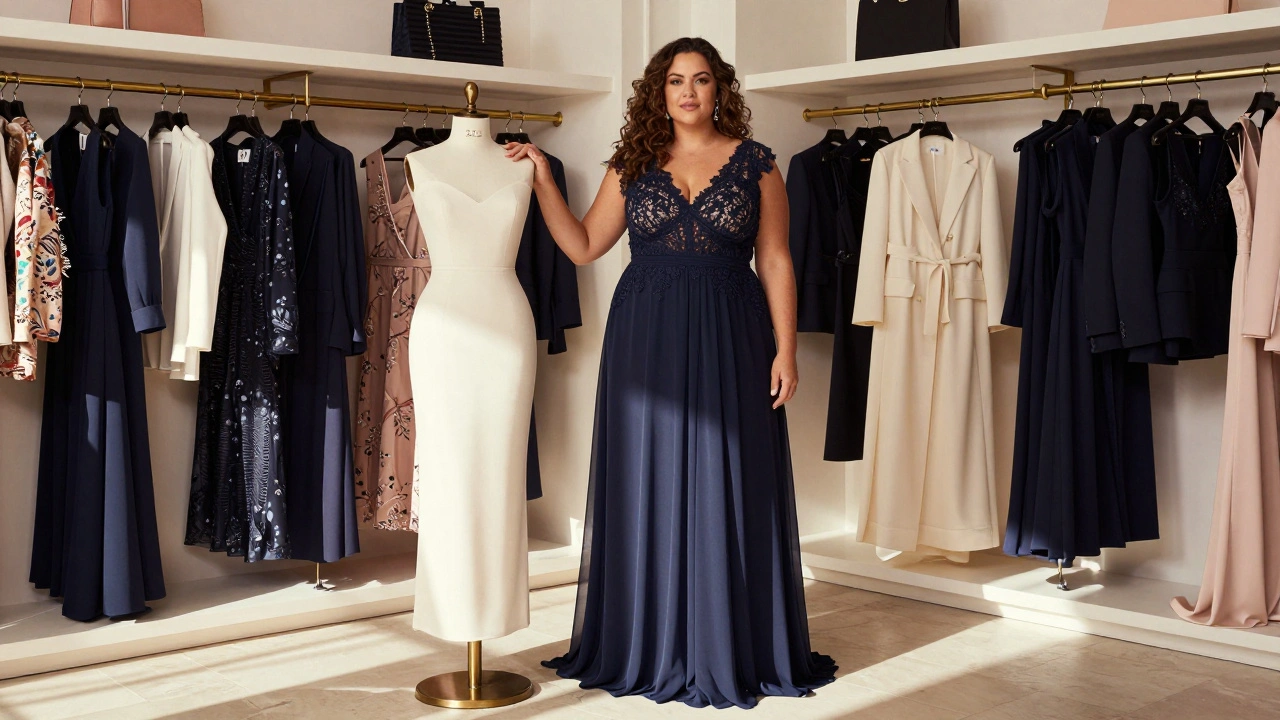
Plus size models aren’t just on runways. They’re in commercials, on billboards, in beauty ads, and in fitness campaigns. Tess Holliday, who stands at 5’8” and wears a size 22, became the face of CoverGirl in 2017-the first plus size woman to do so for a major beauty brand. She didn’t just promote lipstick. She promoted the idea that beauty doesn’t shrink to fit a mold.
Even swimwear brands, once the last holdouts of size exclusion, are changing. Swimsuit company Lane Bryant launched its ‘#LovingMyCurves’ campaign in 2018. Within two years, sales of their plus size swimwear jumped by 140%. That’s not marketing magic. That’s proof that when people see themselves represented, they buy.
Challenges Still Remain
Progress isn’t perfect. Many plus size models still earn less than their straight-size counterparts. A 2024 report by the Fashion Spot found that plus size models make, on average, 32% less per job. Some agencies still refuse to sign models over size 20. And in some markets, especially outside the U.S. and UK, plus size representation is still minimal.
There’s also the issue of tokenism. A brand might feature one plus size model in a campaign and call it ‘inclusion.’ But if every other model is size 0 to 10, that’s not diversity-it’s optics.
True change means more than one model on a shoot. It means consistent representation across all sizes, all ethnicities, all body types. It means hiring plus size models for editorial spreads, not just ‘body positivity’ campaigns. It means giving them the same lighting, styling, and camera angles as everyone else.
Who Are the Leading Plus Size Models Today?
Several names have become icons-not because they’re famous, but because they’re unstoppable.
- Ashley Graham: The most visible plus size model globally, with over 10 million Instagram followers and campaigns across luxury and high-street brands.
- Tess Holliday: A pioneer in body positivity, known for her unapologetic presence and activism.
- Lizzo: Though primarily a musician, her fashion choices and public appearances have redefined how curvy bodies are seen in pop culture.
- Paloma Elsesser: A model of mixed heritage who has walked for Gucci, Miu Miu, and Fenty, and is celebrated for her powerful presence on and off the runway.
- Robyn Lawley: An Australian model who has graced the covers of Vogue Australia and Elle UK, and is known for her work in high fashion.
These women aren’t just models. They’re influencers, entrepreneurs, and advocates. Many have launched their own clothing lines, podcasts, or nonprofits focused on body equity.
Why This Matters Beyond Fashion
When a young girl sees a size 20 woman on a billboard wearing a tailored blazer and looking confident, it changes something inside her. She stops thinking her body is a problem to fix. She starts thinking: ‘I can look like that.’
Studies from the University of California, Los Angeles, show that exposure to diverse body types reduces body dissatisfaction in teens by up to 40%. That’s not just about fashion. That’s about mental health.
Plus size models aren’t here to make you feel bad about your body. They’re here to remind you that your body doesn’t need permission to be beautiful.
What’s Next for Plus Size Modeling?
The next wave is about accessibility. More brands are launching extended sizing-up to size 40. Retailers like Target and H&M now carry up to size 28 in most lines. The UK’s ASOS launched its ‘ASOS Curve’ line in 2015. Today, it’s one of their top-selling categories.
Technology is helping too. Virtual fitting rooms now use AI to match body shapes to clothing. Apps like True Fit let you input your measurements and get accurate size recommendations across dozens of brands.
And the demand keeps growing. In 2025, the global plus size fashion market is projected to hit $350 billion. That’s bigger than the entire UK economy. Brands that ignore this market aren’t just behind-they’re losing money.
The future of fashion isn’t about shrinking to fit in. It’s about expanding to include everyone.

December 3, 2025 AT 06:45
Melissa Perkins
I’ve been following this shift for years, and honestly? It’s about damn time. I remember scrolling through fashion magazines as a teenager and never seeing anyone who looked like me-no curves, no stretch marks, no real skin texture. Now? I see women in size 20s rocking silk gowns like they were born on a runway, and it doesn’t feel like a ‘bold move’ anymore-it just feels normal. And that’s the win. Brands finally stopped treating plus size bodies like a niche experiment and started designing for actual humans. Fit sessions with real models? That’s not marketing fluff-that’s engineering for dignity. I’ve bought clothes from Eloquii and Dia & Co because they actually measure the distance between hip and waist, not just scale up a size 6 pattern. It’s the little things-the way a zipper doesn’t dig in, how the fabric drapes over a belly instead of bunching-that make you feel seen. This isn’t just fashion. It’s healing.
And don’t get me started on how much better swimwear is now. I used to spend hours in dressing rooms trying to find a bikini that didn’t cut into my thighs or ride up in the back. Now? I’ve got three one-pieces that fit like they were custom-made. No more ‘modest’ labels. No more ‘flattering cuts’ that actually just hide you. Just… clothes. For bodies. Real ones.
It’s not perfect-yeah, pay gaps still exist, and tokenism is still rampant-but the momentum? It’s real. And it’s not going backward.
I’m not just happy for models. I’m happy for the 12-year-old girl scrolling Instagram right now who just saw a size 24 woman in a power suit and whispered, ‘I could do that too.’ That’s the legacy we’re building.
Keep going. We’re not done yet.
December 4, 2025 AT 05:24
Jimmy Carchipulla
Yessss 🙌🔥
December 5, 2025 AT 21:12
Sriram T
OMG this is soooooo 2020s!! 🤯 I mean, like, before this movement, fashion was just… boring? Like, who even cared about size 0 models? They looked like they were made of paper! 🙄 Now? Real women, real curves, real LIFE! Ashley Graham? She’s basically a goddess. And Lizzo? She doesn’t even need to model-she just walks into a room and the whole industry has to bow down 😭💖
But like… why are we still talking about ‘plus size’? Isn’t it just… size? Why do we need a label? Like, ‘normal’ is a myth anyway. All bodies are beautiful. DUH. 🤷♂️✨
December 7, 2025 AT 13:06
Jonny BiGSLiCE
The normalization of diverse body types in fashion is one of the most quietly revolutionary cultural shifts of the last decade. What’s remarkable isn’t just the visibility-it’s the quiet dismantling of the assumption that aesthetic value is proportional to thinness. The industry didn’t evolve because of altruism; it evolved because the market refused to be ignored. Over two-thirds of American women wear a size 14 or above, yet for decades, the fashion system operated as if that demographic didn’t exist. That’s not oversight-it’s systemic exclusion disguised as tradition.
What’s more significant is the shift in design methodology. Moving from ‘scaling up’ to co-designing with actual body proportions represents a fundamental reorientation from abstraction to empiricism. The fact that fit sessions now include models in sizes 14–26 isn’t just about comfort-it’s about respecting anatomical reality. Zippers that don’t gap, seams that don’t pull, waistbands that don’t dig-these aren’t luxuries. They’re basic human rights in clothing form.
And while tokenism remains a problem, the rise of models like Paloma Elsesser and Robyn Lawley, who are not just ‘representatives’ but legitimate high-fashion icons, signals a deeper integration. They’re not in campaigns because they’re ‘inspiring’-they’re there because they command presence, poise, and marketability on equal footing.
This movement’s legacy won’t be measured in runway appearances, but in the quiet confidence of a girl who no longer believes her body is a problem to be corrected.
It’s not just fashion. It’s epistemology.
December 8, 2025 AT 21:33
Luke Ollett
Let’s be real-the fashion industry didn’t wake up one day and decide to be ‘inclusive.’ They saw the dollars. And honestly? Good. Money talks louder than virtue signaling.
That 140% sales jump for Lane Bryant’s swimwear? That’s not ‘body positivity.’ That’s capitalism finally catching up to reality. 68% of women are size 14+. You ignore that? You’re leaving money on the table. Period.
And yes, the pay gap is still absurd. Plus-size models make 32% less? That’s not ‘progress.’ That’s exploitation wrapped in glitter. Same lighting, same styling, same runway spot-but half the paycheck? Pathetic.
Also, calling Lizzo a ‘plus-size model’ is a stretch. She’s a musician who occasionally wears clothes. Don’t confuse celebrity with profession. Ashley Graham? Model. Tess Holliday? Activist. Paloma Elsesser? High fashion icon. Lizzo? Still a pop star who rocks a crop top. Don’t inflate her resume.
And yes, virtual fitting rooms and AI sizing? Long overdue. Took you long enough. But at least you’re here now. Let’s keep pushing for size 30+ to be standard, not ‘extended.’ And stop calling it ‘curvy.’ Just say ‘size.’ It’s not a personality trait.
Progress isn’t pretty. But it’s profitable. And that’s the only language the industry understands.
December 10, 2025 AT 03:07
Trent Thevenot
Look, I get the sentiment, but let’s not romanticize this. The fashion industry didn’t suddenly become woke-it got scared. Scared that if they didn’t include larger bodies, they’d lose market share to brands that did. That’s not empowerment. That’s economics.
And don’t act like these models are ‘redefining beauty.’ Beauty hasn’t changed. People are still conditioned to equate thinness with health, discipline, and value. All this has done is add a new box to check: ‘Oh, we have a plus-size model. Good job, we’re diverse now.’
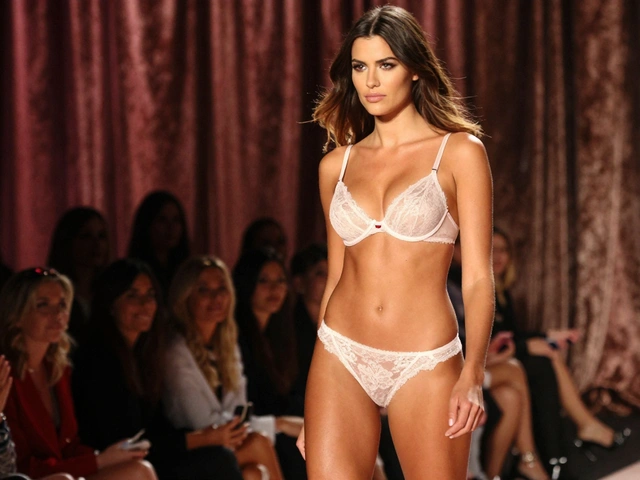
Meanwhile, the same brands that put a size 22 on the runway still design their core collections for size 2–6. They still use the same airbrushed lighting, the same impossible angles. They just added one token model to the mix and called it a revolution.
And let’s not forget: most of these ‘body-positive’ campaigns are still run by white, able-bodied, middle-class women. Where are the disabled, the hairy, the scarred, the truly unconventional? Oh right-they’re still invisible.
True inclusion doesn’t mean adding one more size to the range. It means dismantling the entire hierarchy of beauty. And until that happens? This is just branding with a conscience.
Also, why do we keep calling them ‘models’? They’re influencers. They’re activists. They’re entrepreneurs. They’re not models. Models are the ones who wear the clothes. These women are the ones changing the game. So stop pretending they’re just another category on the casting sheet.