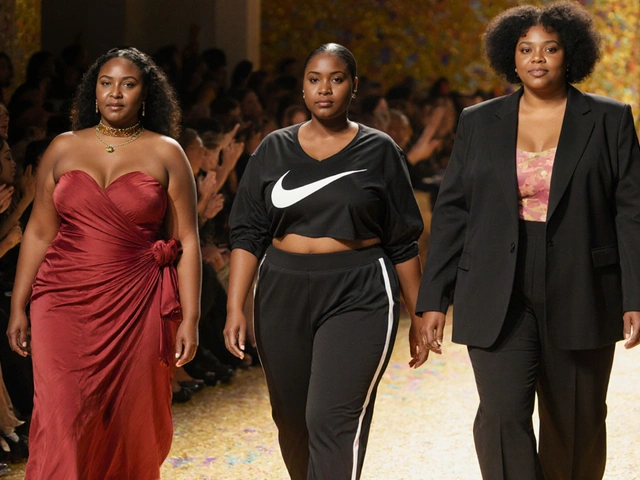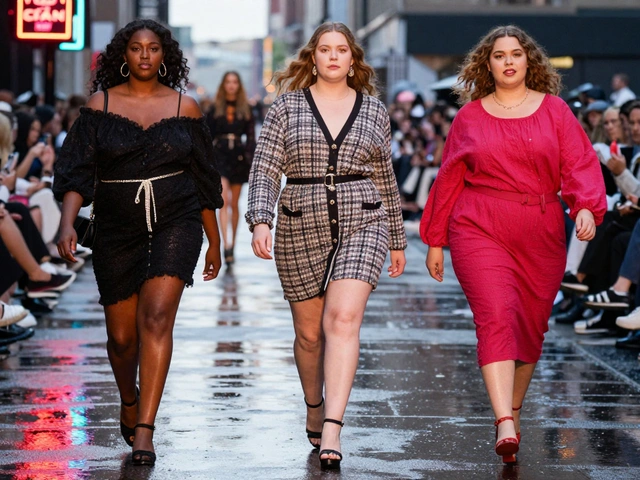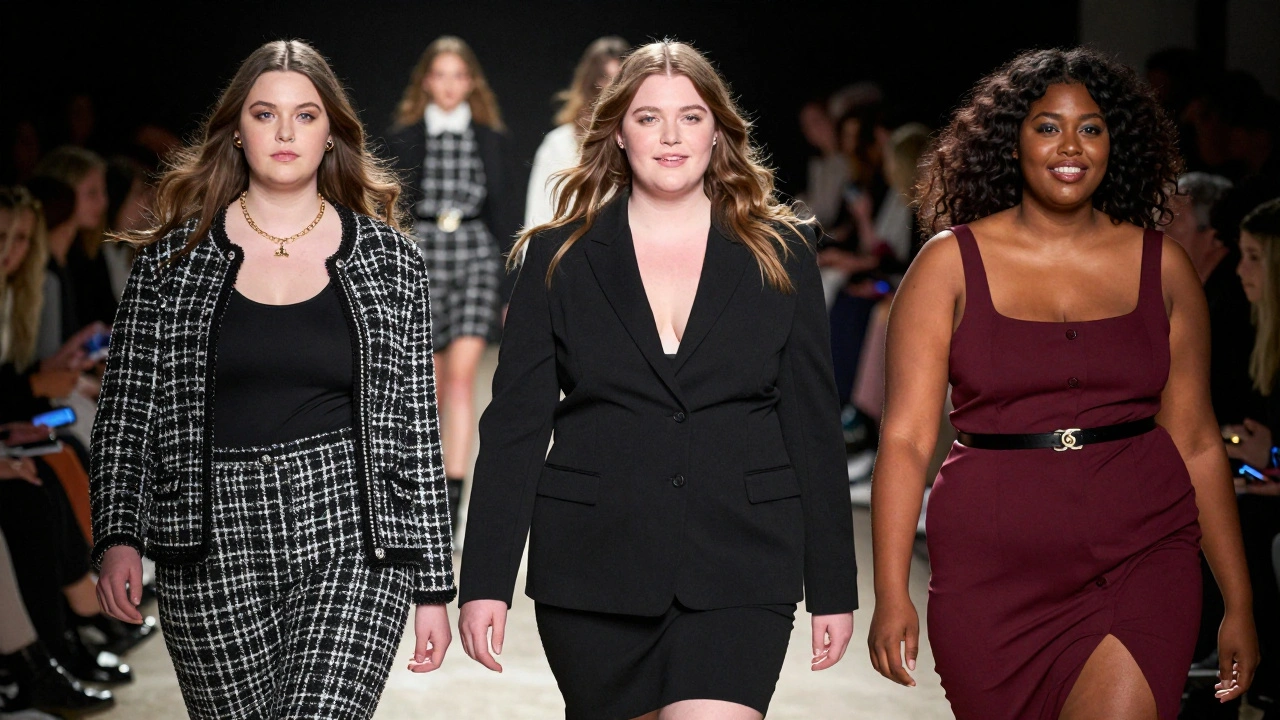
For years, the fashion world told us there was only one kind of beautiful. Tall, thin, and symmetrical - that was the standard. But something changed. Not because of a trend, but because of real people refusing to stay silent. Plus size models aren’t just walking runways anymore. They’re reshaping what beauty means, one photo shoot at a time.
Who Are Plus Size Models?
Plus size models are women (and sometimes men) who wear sizes 14 and up in the U.S., or sizes 16 and above in the UK. But that’s just the number. What matters more is what they represent. These are individuals who challenge outdated norms, prove that style doesn’t come in one size, and show up unapologetically in a world that once told them they didn’t belong.
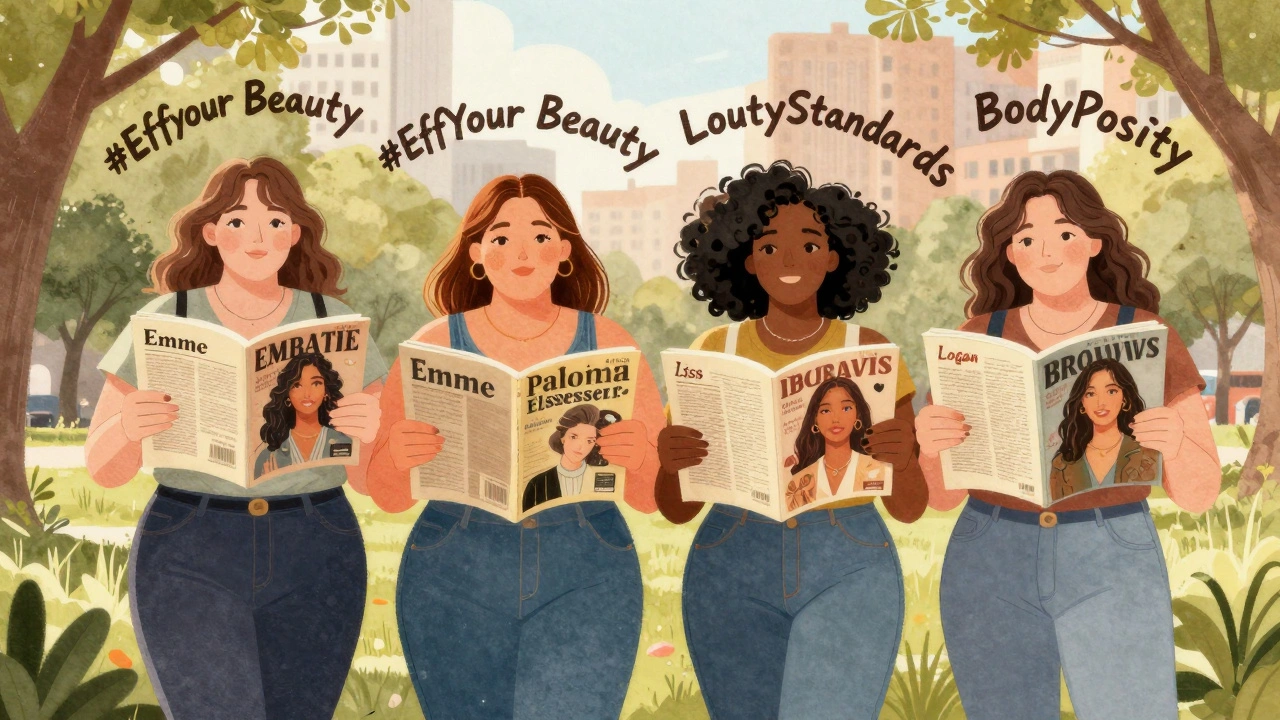
It’s not about being "curvy" as a euphemism. It’s about visibility. It’s about a model like Emme is a pioneering plus size model who broke barriers in the 1990s and became the first to land a major cosmetics campaign. Or Paloma Elsesser is a model and activist who walks for Chanel and Fendi while openly speaking about fatphobia in fashion. These aren’t outliers. They’re part of a movement.
The Rise of Body Positivity in Fashion
Body positivity didn’t start on Instagram. It started in living rooms, in bathrooms, in quiet conversations between friends who were tired of being told their bodies were wrong. By the mid-2010s, social media gave these voices a megaphone. Hashtags like #BodyPositivity and #EffYourBeautyStandards went viral. Suddenly, brands couldn’t ignore it.
Companies like Savage X Fenty, Aerie, and Dove started featuring real bodies - stretch marks, cellulite, rolls, and all. And it worked. Sales went up. Engagement skyrocketed. Consumers didn’t just like it - they *demanded* it. In 2023, a study by the Fashion Spot found that 78% of shoppers said they felt more loyal to brands that showed diverse body types in their campaigns.
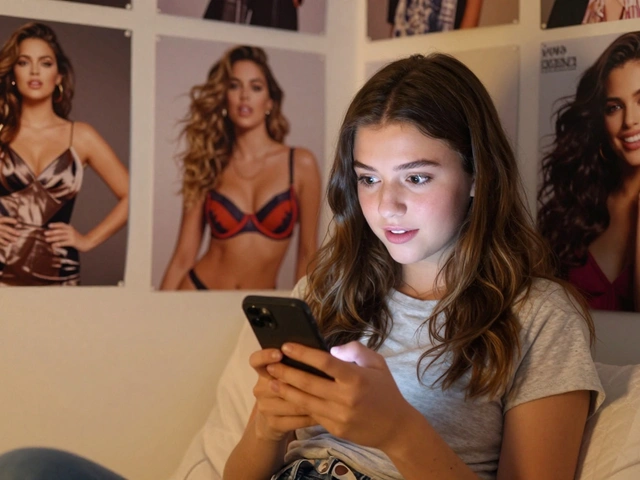
This wasn’t just about marketing. It was about healing. For the first time, young girls saw themselves reflected in magazines. Not airbrushed. Not cropped. Just them.
Why This Matters Beyond Runways
When you see a plus size model on a billboard, it doesn’t just sell clothes. It tells someone who’s been told they’re too much - too big, too loud, too much of a problem - that they’re enough. That’s powerful.
Research from the National Eating Disorders Association shows that exposure to diverse body types in media reduces body dissatisfaction by up to 40% in teens. That’s not a small number. That’s a generation learning to love their skin before they learn to hate it.
And it’s not just about women. More men are stepping into the space too - models like Logan Browning is a male plus size model who has worked with ASOS and Tommy Hilfiger, challenging the idea that masculinity is tied to a narrow physique. The movement is expanding, and it’s not slowing down.
The Industry Still Has a Long Way to Go
Don’t get it twisted - we’ve made progress, but we’re not done. A 2025 report by the Model Alliance found that less than 15% of runway models in major fashion weeks were size 14 or above. Most brands still use digital stretching to make models look smaller. Some still refuse to cast women over size 12.
And then there’s the pay gap. Plus size models often earn 30-50% less than their straight-size counterparts for the same job. Why? Because the industry still treats diversity as a checkbox, not a commitment.
But change is happening from the ground up. Independent designers are creating collections that actually fit larger bodies. Retailers like Lane Bryant and Universal Standard are offering extended sizing with real fit models. And consumers are voting with their wallets - if a brand doesn’t include diverse bodies, they’re losing sales.
Meet the New Faces Changing the Game
Here are a few names you should know:
- Isis Davis is a UK-based model who became the first plus size model to appear on the cover of British Vogue in 2022.
- Samara Joy is a model with vitiligo who walks for Gucci and advocates for skin diversity.
- Lauren Wasser is a former Victoria’s Secret model turned activist who speaks out against industry exploitation.
- Chloe Lattanzi is a model and singer who uses her platform to challenge fatphobia in entertainment.
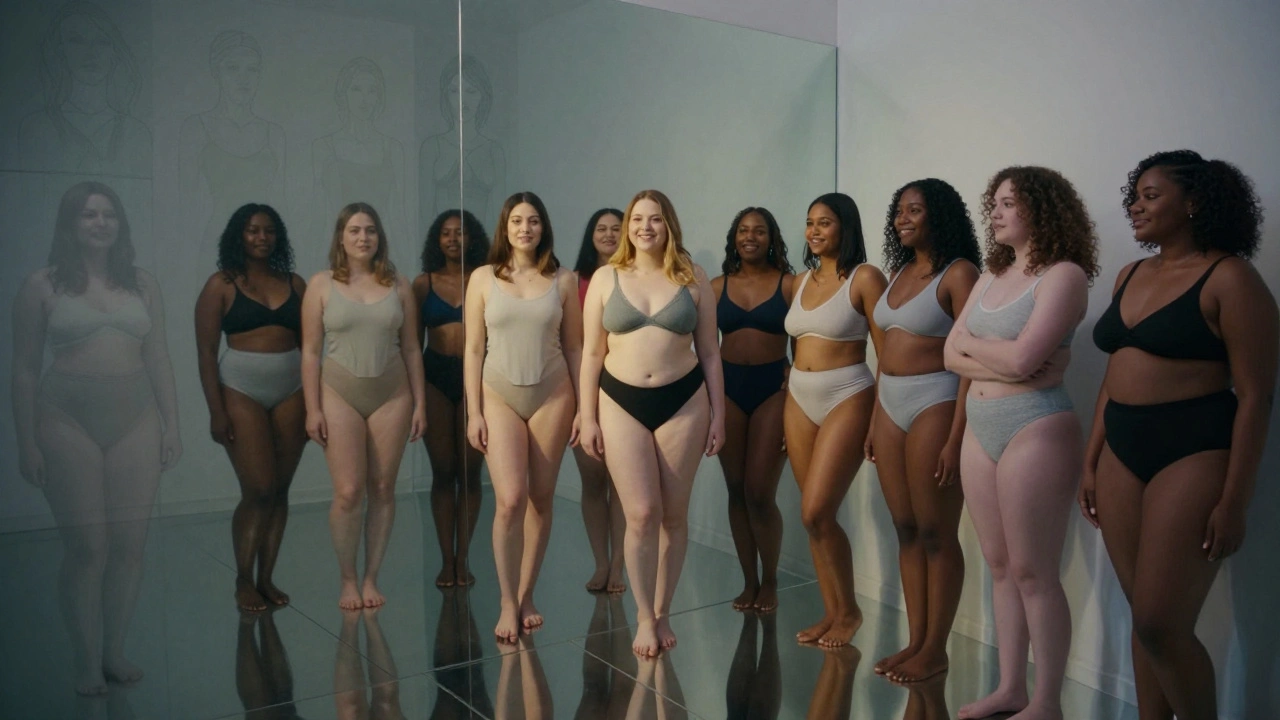
These women aren’t just models. They’re storytellers, advocates, and sometimes, therapists for strangers who message them saying, "I saw you today and finally felt seen."
How to Support the Movement
You don’t need to be a model to be part of this. Here’s how you can help:
- Follow and engage with plus size models on Instagram, TikTok, and YouTube. Their algorithms depend on your attention.
- Shop from brands that feature diverse bodies - not just because it’s "woke," but because it’s good business.
- Call out brands that use tokenism. If a campaign features one plus size model surrounded by 10 thin ones, call it out.
- Don’t say "she’s inspiring" as if being plus size is an achievement. Say, "she’s beautiful," because she is.
- Support body-positive content creators who talk about mental health, fashion, and self-worth - not just weight loss.
What’s Next?
The future of fashion isn’t about shrinking people to fit the mold. It’s about expanding the mold to fit everyone.
More designers are launching adaptive and extended sizing lines. More agencies are creating dedicated plus size divisions. More schools are teaching modeling without body shaming. And more young people are growing up believing their bodies are worthy - not because someone told them so, but because they saw themselves reflected in the world around them.
Plus size models aren’t a phase. They’re the new normal. And the fashion industry is finally catching up - not because it had to, but because it wanted to.
Are plus size models only for lingerie and swimwear?
No. While many plus size models started in lingerie and swimwear because those categories were more open to diversity, they now walk for haute couture houses like Chanel, Louis Vuitton, and Prada. In 2024, a plus size model appeared on the cover of Harper’s Bazaar wearing a custom Alexander McQueen gown. The industry is expanding - slowly, but surely.
Do plus size models have to be healthy to be accepted?
Health has nothing to do with it. Body positivity isn’t about fitness, diet, or BMI. It’s about dignity. A model can be a size 20 and run marathons. Or she can be a size 20 and never set foot in a gym. Neither makes her more or less valid. The movement rejects the idea that worth is tied to health habits.
Why do some people say "curvy" instead of "plus size"?
"Curvy" is often used as a softer, more palatable term - but it can be a way to avoid talking about size directly. Some models prefer "plus size" because it’s honest. Others prefer "curvy" because they feel it’s more flattering. The best practice? Ask the individual how they identify. Never assume.
Can men be plus size models too?
Absolutely. Male plus size models are still underrepresented, but they’re growing in visibility. Names like Logan Browning, Tyler Oakley, and Michael K. Williams (in fashion campaigns) are breaking ground. The same principles apply - visibility, dignity, and rejecting narrow ideals of masculinity.
Is body positivity just a Western trend?
No. While it gained global attention through social media, body positivity has roots in movements across cultures - from the Ndebele women of South Africa, who traditionally wore ornate jewelry to celebrate fullness, to the Polynesian cultures that honor larger bodies as symbols of strength and prosperity. The modern movement is global, not just Western.
Final Thought
Beauty has never been one-size-fits-all. It never was. Plus size models didn’t create diversity - they just refused to hide from it. And in doing so, they gave millions of people permission to take up space. Not as a compromise. Not as a token. But as their full, unedited, undeniable selves.