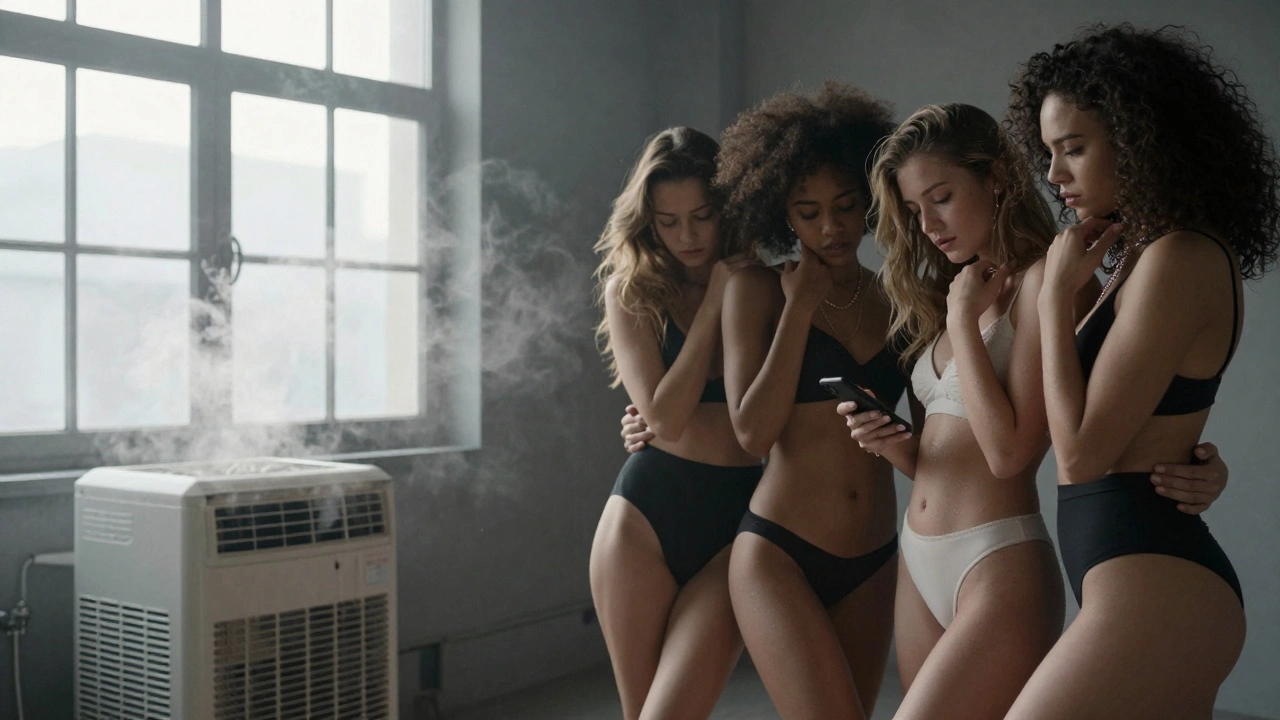
When you think of glamour models, you might picture glossy magazine covers, high-end lingerie shoots, or red carpet appearances. But behind those polished images is a real, often messy, journey - one that starts with a photo shoot and ends with a life reshaped by fame, pressure, and personal choices. Glamour modeling isn’t just about looking good. It’s about surviving the system that turns beauty into a product.
What Exactly Is a Glamour Model?
A glamour model isn’t a fashion model. They don’t walk for Chanel or wear haute couture on a runway. Instead, they pose for lifestyle, men’s magazine, or sensual photography - think Playboy, Maxim, or online content for brands like Victoria’s Secret or Swimsuit.com. Their work focuses on allure, confidence, and body positivity, often in swimwear, lingerie, or stylized casual wear.
Unlike fitness models who train for lean muscle, or fashion models who must hit specific height and size standards, glamour models come in all shapes. A 5’2” model with curves can land the same cover as a 5’10” model with a toned frame. The key? Charisma. Presence. The ability to look like you’re having the best day of your life - even when you’re standing in a freezing studio at 6 a.m.
Many start with local photographers, then build a portfolio. Some get scouted on Instagram. Others are approached at malls or events. There’s no single path. But there is a pattern: the first shoot is usually low-budget. The second? Maybe paid. The third? That’s when you start asking: Is this worth it?
The Reality Behind the Lens
Most people don’t realize how much of glamour modeling is about logistics, not lighting.
- You show up at 7 a.m. for a 10 a.m. shoot - and the makeup artist is late.
- The studio is 40 degrees because the AC is broken, but you’re still wearing a lace bra and thong.
- You’re asked to pose in ways that feel uncomfortable - and told it’s "just the shot."
- You’re expected to be "approachable" and "sexy" at the same time - while the photographer jokes about your body.
It’s not always like this. Some agencies treat models like professionals. Some photographers build trust. But too many don’t. And when you’re new, you’re easy to take advantage of.
One model from Manchester told me she once signed a contract that gave the photographer rights to her images for life - no pay, no credit. She only found out after seeing them on a porn site. That’s not rare. It’s common.
That’s why understanding contracts matters more than your jawline. Always read the fine print. Never sign away rights without a lawyer. If someone says "this is industry standard," walk away. There’s no such thing as a standard that lets you get exploited.
From Online to Offline: The Double Life
Most glamour models today start on Instagram. They post a bikini shot. It gets 10K likes. Then 50K. Then a brand offers $500 for a post. Suddenly, modeling isn’t a side hustle - it’s your income.
But here’s the catch: the same people who love your photos online won’t treat you like a person offline. You’ll get DMs asking for private photos. You’ll be called names when you say no. You’ll be told you’re "lucky" to be seen - even when you’re being paid less than minimum wage.
And then there’s the stigma. Families don’t understand. Friends pull away. Strangers assume things about your life based on a single photo. One model from Bristol said her own brother stopped talking to her for a year after seeing her in a swimsuit spread. "He thought I was selling myself," she told me. "I was selling a swimsuit. There’s a difference."
The mental toll is real. Many models report anxiety, body dysmorphia, and depression after years of being judged by how they look - not who they are.
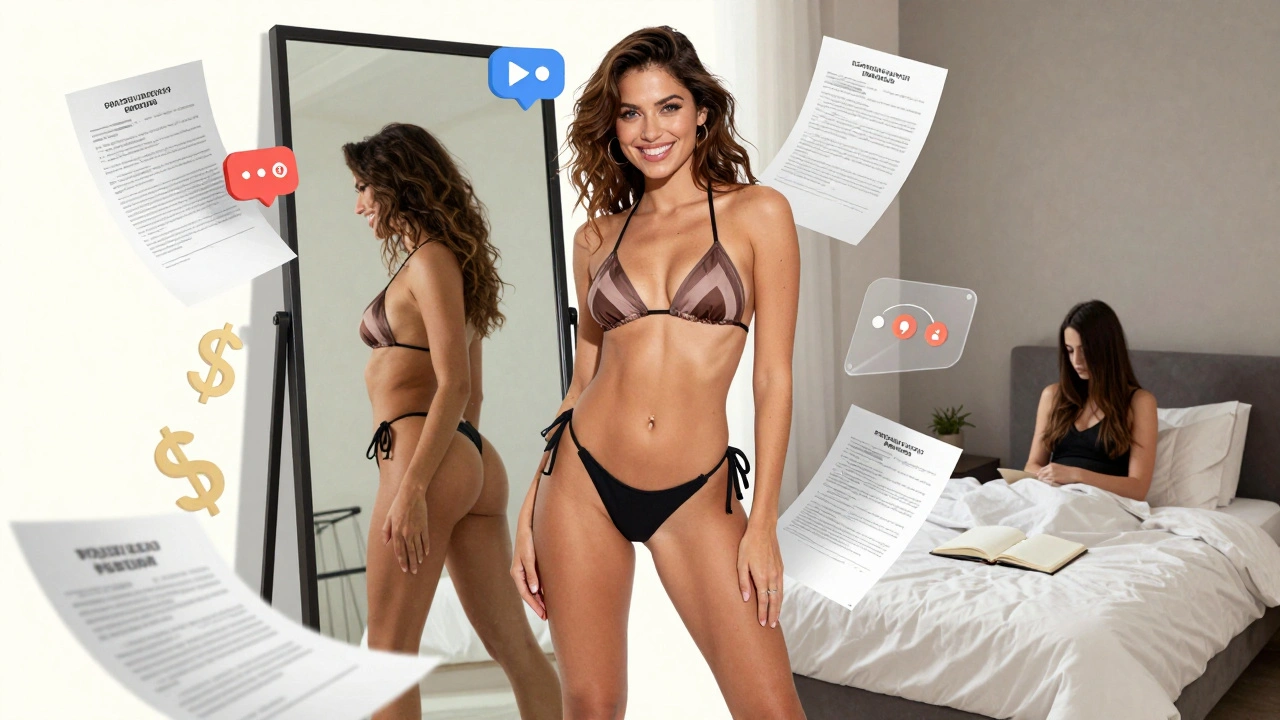
How Glamour Models Make Money
It’s not all magazine covers and paid trips to Bali. Most glamour models earn in four ways:
- Photo Shoots - $100-$500 per session, depending on the brand, location, and exclusivity.
- Content Subscriptions - Platforms like OnlyFans or Patreon let models charge monthly fees. Top earners make $10K-$50K/month, but 80% make under $500.
- Brand Deals - Partnering with lingerie, swimwear, or beauty brands. Often paid per post or campaign.
- Merchandise - Selling prints, calendars, or even custom lingerie lines. This is where some turn modeling into a business.
Some models also do live events - autograph signings, fan meetups, or appearances at expos. These can pay $200-$1,000 per day, but they’re hard to book without an agent or strong social following.
One model from Leeds built a six-figure business by selling her own swimwear line. She started with 500 Instagram followers. Five years later, she employs two stylists and ships worldwide. "I didn’t get famous," she said. "I got smart."
What You Need to Succeed - Beyond Looks
Here’s what no one tells you: your body is just the entry ticket. What keeps you in the game is your brain.
- Business Skills - You’re running a one-person company. Learn invoicing, taxes, contracts. Use tools like QuickBooks or Wave.
- Boundaries - Say no to anything that makes you uncomfortable. Period. No exceptions.
- Content Strategy - Posting every day doesn’t help. Posting the right content - consistent, authentic, high-quality - does.
- Networking - Build relationships with photographers, stylists, and other models. The industry runs on referrals.
- Therapy - Seriously. If you’re doing this long-term, find a therapist who understands the industry. It’s not weakness. It’s survival.
One of the most successful glamour models I know didn’t have perfect skin or a six-pack. She had a sense of humor, a clear business plan, and a refusal to be reduced to her body. She now runs a mentorship program for new models. "I didn’t want to be a product," she told me. "I wanted to be a person who sells products."
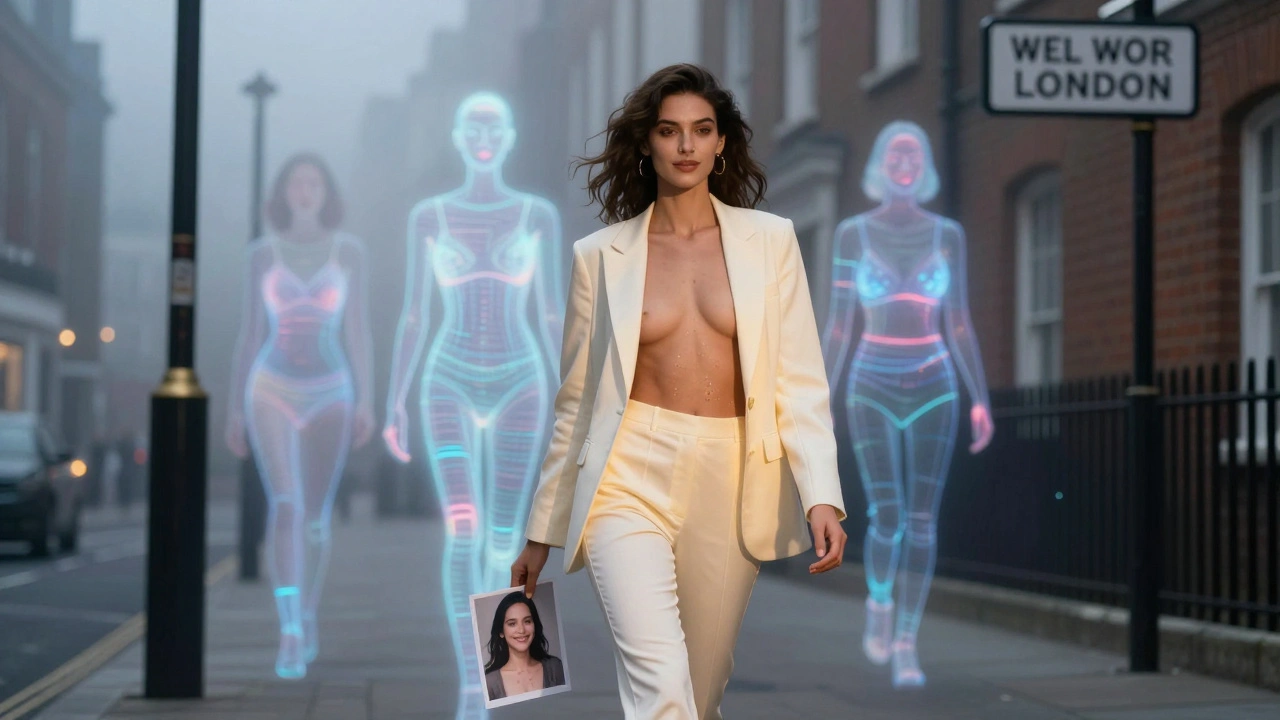
The Future of Glamour Modeling
AI is changing everything. Deepfakes, virtual models, and AI-generated images are flooding the market. Brands are using digital models because they’re cheaper and "easier to control."
That means real human glamour models have to do more than look good. They have to be real. Authentic. Unfiltered. Human.
The models who’ll thrive aren’t the ones chasing perfection. They’re the ones who show up with stretch marks, bad hair days, and real stories. They’re the ones who say: "I’m not here to be a fantasy. I’m here because I’m real - and you’re okay with that."
Brands are starting to notice. Companies like Savage X Fenty and Aerie are hiring models who look like actual people - not airbrushed icons. The demand is shifting. The old playbook is dying.
So if you’re thinking about entering this world? Don’t chase the dream. Build the life.
How to Start - Without Getting Burned
Here’s a simple 5-step plan for anyone considering glamour modeling:
- Know your why - Are you doing this for money? Freedom? Expression? If you can’t answer this, don’t start.
- Build a clean portfolio - Work with 2-3 reputable photographers. No nudity. No compromising poses. Stick to swimwear or lingerie in good lighting.
- Set boundaries - Write them down. Share them with anyone who wants to work with you. No exceptions.
- Start small - Local magazines, small brands, or even your own Instagram. Don’t rush to OnlyFans or adult sites.
- Get legal advice - Before you sign anything, talk to someone who knows modeling contracts. Use a service like LawBite or LegalZoom.
And if you’ve already started? Revisit your goals. Reassess your boundaries. Talk to someone you trust. You’re not alone. And you don’t have to stay in a system that doesn’t respect you.
Is glamour modeling the same as adult work?
No. Glamour modeling focuses on suggestive, stylish, and tasteful imagery - usually in swimwear or lingerie - without explicit nudity or sexual acts. Adult work involves explicit content and is legally and ethically separate. Many glamour models refuse to do adult content, and reputable agencies won’t require it. Always clarify the boundaries before signing any contract.
Do you need to be skinny to be a glamour model?
No. Glamour modeling celebrates diverse body types. You’ll see models with curves, athletic builds, and even postpartum bodies. The focus is on confidence, skin tone, and how you carry yourself - not a specific size or weight. Agencies today are actively seeking models who reflect real women, not just airbrushed ideals.
How much do glamour models earn per month?
Earnings vary wildly. Most part-time models make $500-$2,000 a month. Full-time models with strong brands or subscription platforms can earn $5,000-$20,000. But only about 10% reach that level. The rest hustle between gigs, side jobs, and personal projects. It’s not a guaranteed income - it’s a business.
Can you do glamour modeling without social media?
Yes - but it’s harder. Social media is the main way models get discovered today. That said, some still work through agencies, print magazines, or private clients. If you’re not on Instagram or TikTok, you’ll need to network in person: attend expos, connect with photographers, and build relationships offline. It takes longer, but it’s possible.
Are there age limits for glamour modeling?
There’s no official age limit. Models in their 30s, 40s, and even 50s are in demand - especially for brands targeting real women. However, some agencies or clients may prefer younger models. The key is finding the right fit. Many brands now celebrate aging beauty, and the market for mature glamour models is growing fast.
If you’re thinking about glamour modeling, don’t chase the spotlight. Chase the freedom. Build your brand. Protect your worth. And remember - you’re not a product. You’re the person who decided to create one.


February 11, 2026 AT 15:19
Devon Rooney
Let’s break this down from a business operations standpoint: glamour modeling is essentially a solopreneurship model with high churn and low barrier to entry. You’re not selling aesthetics-you’re selling access, exclusivity, and perceived intimacy. The ROI calculus is brutal: 80% of从业者 make under $500/month because they’re operating without KPIs, CRM systems, or content calendars. Top performers treat this like a DTC brand-A/B testing visuals, tracking CAC, and leveraging UGC to reduce paid acquisition costs. The real differentiator isn’t body type-it’s operational discipline. If you can’t invoice on time, file Schedule C, or negotiate a kill fee, you’re not a model-you’re content fuel for someone else’s funnel.
Also, AI-generated models are cannibalizing low-tier commercial shoots. If you’re not building a personal IP (merch, courses, Patreon), you’re already obsolete. The future belongs to those who pivot from ‘being seen’ to ‘building systems.’
February 11, 2026 AT 15:29
Caryn Guthrie
lol so basically this is just a long ad for OnlyFans with a side of therapy referrals? Like, sure, ‘you’re not a product’-until you’re selling $20 ‘personalized voicemails’ to strangers. This whole thing feels like a influencer cult manual. Also, ‘get legal advice’? Who’s gonna pay for that? Most people start this because they need rent money, not because they wanna build a ‘DTC brand.’
February 12, 2026 AT 21:55
Helen Chambers
OH MY GOSH THIS IS SO TRUE 🥹💖 I’ve been following this journey for years and I just wanna say-YOU’RE NOT ALONE!! 🌟 Every time I see a model post a behind-the-scenes pic of them shivering in a studio at 6am in lace, I cry happy tears because they’re being REAL 💕
Also, the part about therapy?? BEST PART. 🧠💖 I started my own swimwear line after 3 years of mental breakdowns and now I’m living in a tiny cottage in Portugal with my cat and 12k subscribers. It’s not about the likes-it’s about the *vibes* 🌊✨
PS: If you’re reading this and scared? DO IT. You’re braver than you think. And yes, stretch marks are HOT. 🫶
February 14, 2026 AT 01:21
Sharon Chui
I’ve been in this world for 12 years. I’ve seen agencies use fake contracts with hidden arbitration clauses. I’ve seen photographers who ‘accidentally’ leak shoots to porn sites because ‘the model looked like she wanted it.’
And now they’re telling us to ‘build a brand’? That’s not empowerment-that’s gaslighting wrapped in a glittery bikini. The system doesn’t change. It just rebrands. The same men who told us to ‘smile more’ now tell us to ‘be authentic.’
AI models don’t have trauma. They don’t cry in the shower after a shoot. They don’t have to explain to their mom why they’re ‘selling themselves.’
This isn’t a business guide. It’s a survival manual for a rigged game. And the only way out? Stop playing. Stop selling. Stop believing you’re worth more than what you’re paid.
They don’t want you to thrive. They want you to burn bright, then vanish.
February 15, 2026 AT 22:16
Marie-Eve Beaupré
Let’s quantify the delusion: 10% of glamour models make over $5k/month? That’s statistically impossible given the market saturation. There are over 1.2M active ‘glamour models’ on Instagram alone. Even if we assume 10% of them are full-time, that’s 120k people chasing 10k spots that pay $5k+. The math doesn’t work. This article is a placebo for people who want to believe in meritocracy. The real power isn’t in the model-it’s in the platform, the camera, and the algorithm that decides who gets seen. You’re not building a brand. You’re optimizing for a machine that deletes you when it’s bored.
February 16, 2026 AT 21:16
Kristin Briggs
As someone who’s reviewed 47 modeling contracts in my freelance legal assistant days-I can confirm: ‘industry standard’ is a red flag. Always. The moment someone says that, you’re being groomed.
Also, the ‘therapy’ advice? Necessary but insufficient. You need trauma-informed legal counsel *before* the first shoot. Not after the DMs start, not after the ex posts your bikini pic with ‘RIP my girlfriend’ in the caption.
And yes, AI is eating this industry. But here’s the twist: the human models who survive aren’t the ones with the best lighting. They’re the ones who stop performing and start narrating. The ones who post about their panic attacks, their tax nightmares, their weird obsession with vintage vinyl. People don’t follow aesthetics anymore. They follow authenticity with teeth. So if you’re gonna do this-don’t sell a body. Sell a story with receipts.
And always, ALWAYS use a P.O. Box. Not your home address. Not your email. Not your dog’s name as a password.