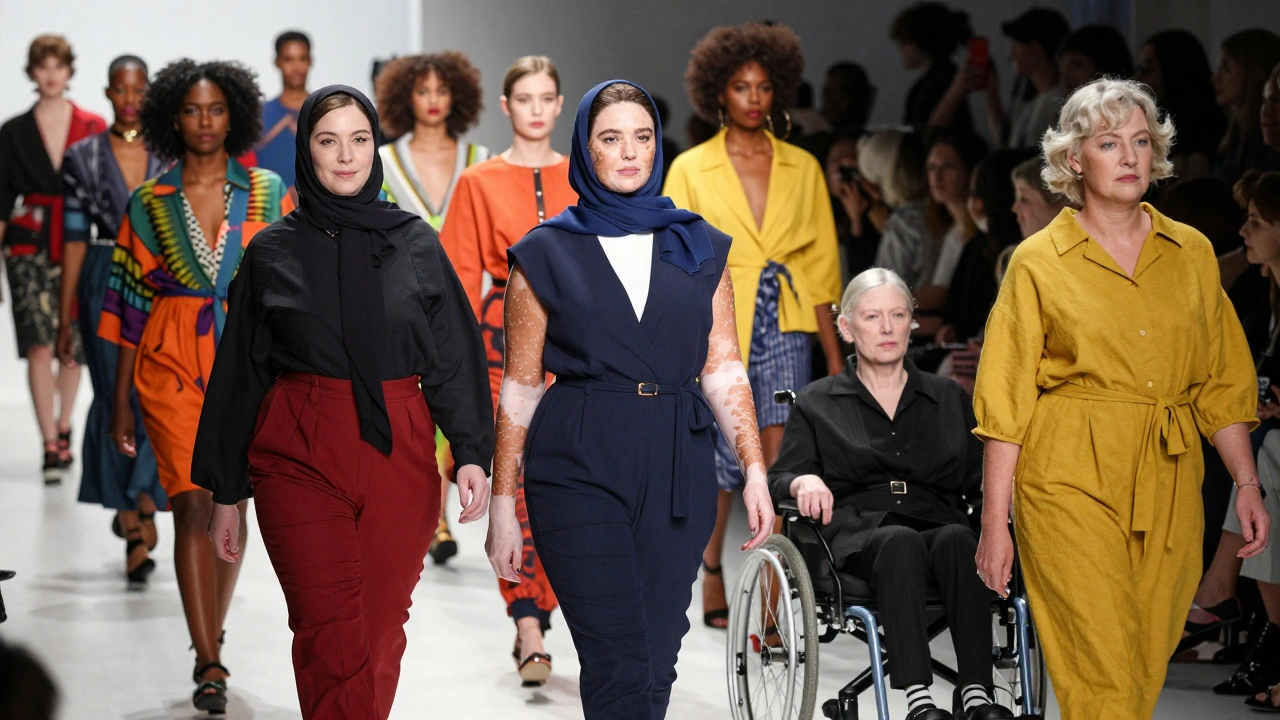
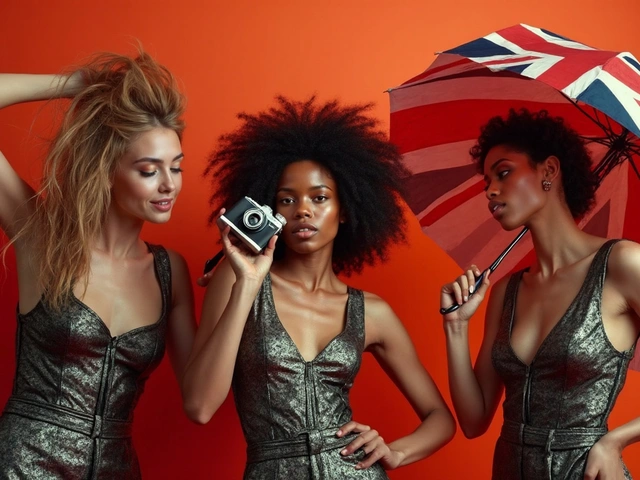
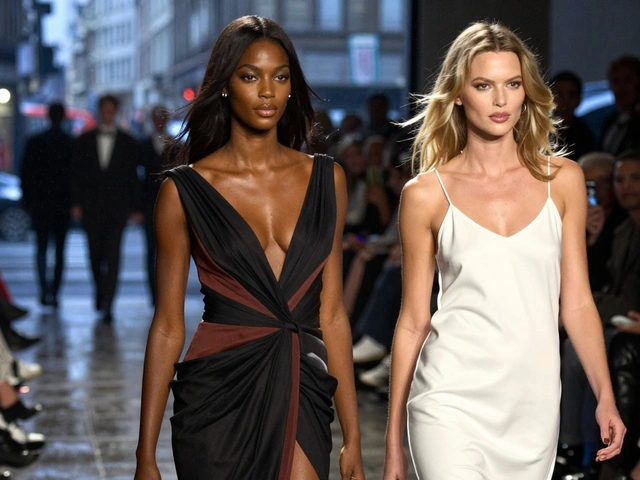
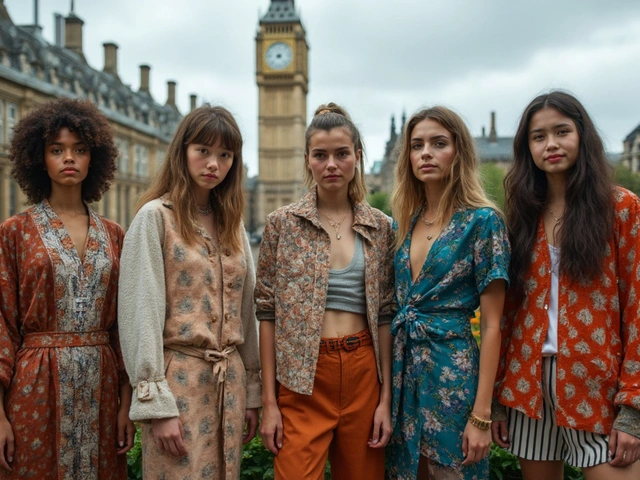
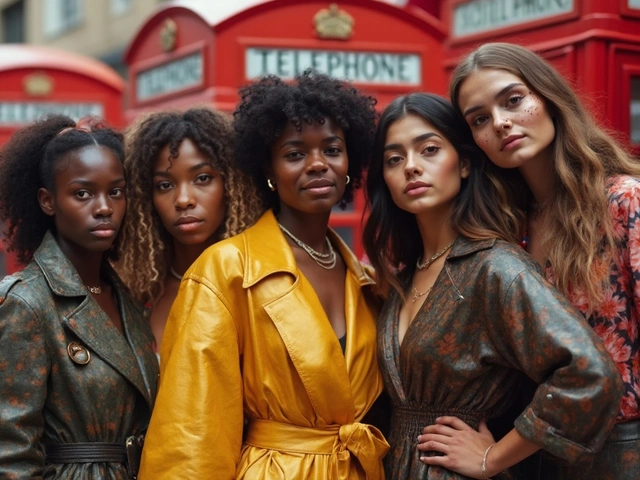
For decades, the fashion industry in the UK was built on a narrow ideal: tall, thin, white, and conventionally pretty. But something changed. Not because of a trend, not because of a magazine cover, but because real people refused to wait for permission to be seen. UK models - from London to Manchester, from Belfast to Bristol - began walking runways, starring in campaigns, and reshaping what beauty means. Today, British modeling isn’t just about clothes. It’s about identity, representation, and power.
The Quiet Revolution
The shift didn’t happen overnight. It started with a few defiant faces. In the early 2010s, models like Adwoa Aboah walked for top designers while speaking openly about mental health. Halima Aden, a Somali-American model raised in Minnesota but signed by a London agency, wore a hijab on the Milan runway. Amber Valletta, who started in the 90s, returned in her 40s to challenge ageism. These weren’t one-off moments. They were signals. By 2018, the UK government’s Modeling Diversity Charter was signed by over 80 agencies and brands, including Topshop, Burberry, and ASOS. It wasn’t a law. It was a promise: no more all-white casting calls. No more size discrimination. No more pretending that diversity is a box to check.Breaking the Size Barrier
The UK has led the way in redefining body standards. Before, a size 8 was considered ‘plus-size’ in many British agencies. Now, models like Robyn Lawley and Paloma Elsesser - both size 14 and above - headline campaigns for major retailers. In 2023, M&S launched its first full-size range with 12 models, all UK-based, representing sizes 8 to 28. No digital stretching. No hidden retouching. Just real bodies. The numbers back it up. A 2025 report by the British Fashion Council showed that 42% of UK fashion campaigns now feature models outside the traditional size range. That’s up from 11% in 2015. And it’s not just about size. Models with vitiligo, scoliosis, limb differences, and alopecia are now regularly booked for runway shows. The industry no longer sees these traits as flaws - they’re part of the story.Race, Identity, and Representation
British modeling has always been multicultural, but it wasn’t always treated that way. In the 80s and 90s, Black and South Asian models were often tokenized - one per show, never the face of a campaign. That changed when Naomi Campbell became the first Black model on the cover of French Vogue in 1989. But she didn’t stop there. She co-founded the Model Alliance in London, pushing for fair pay and protection against discrimination. Today, models like Adut Akech (South Sudanese-British), Devyn Garcia (mixed-race, raised in London), and Amber Liu (Chinese-British) are front-and-center for Burberry, Gucci, and Prada. In 2024, London Fashion Week featured more non-white models than white ones for the first time. Not because of quotas. Because casting directors finally realized that talent doesn’t come in one shade.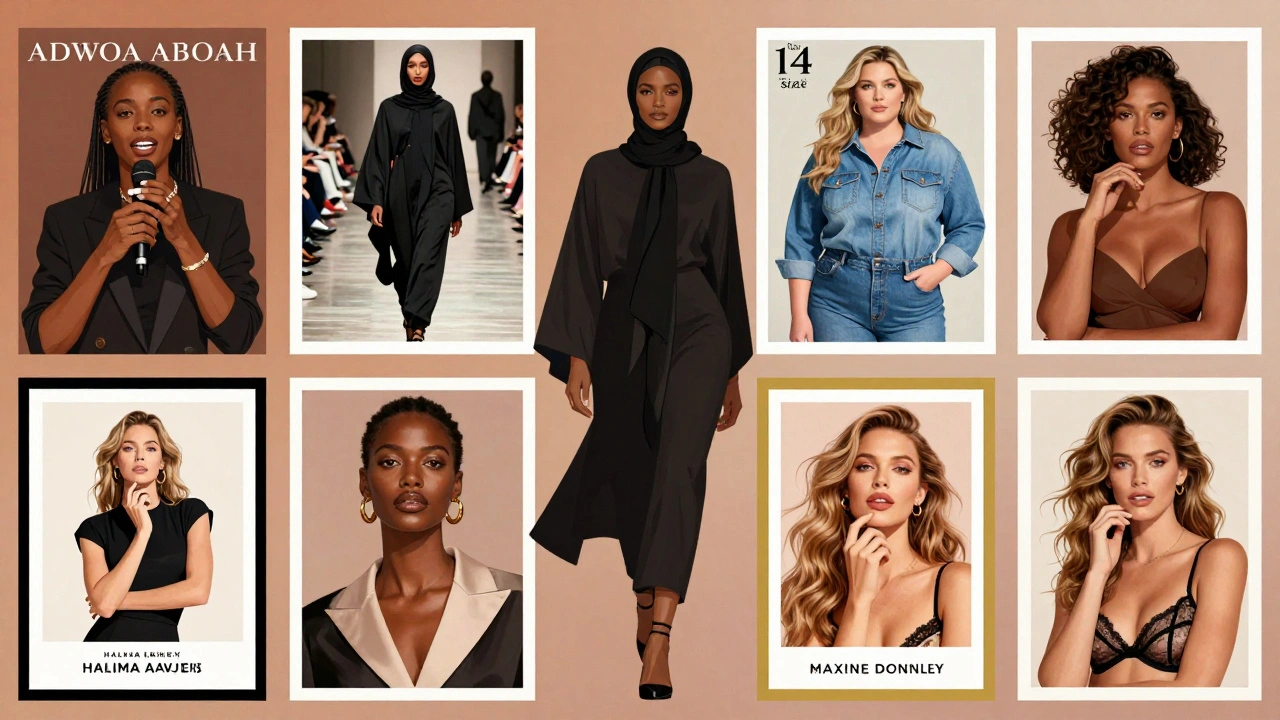
Disability and Inclusion
One of the most overlooked breakthroughs has been in disability representation. Before 2020, wheelchair users were rarely seen in fashion. Then came Hannah Stocking, who uses a wheelchair and became the face of a major UK beauty brand. She wasn’t hired because she was ‘inspirational.’ She was hired because she looked stunning in the makeup. Now, UK agencies like Modelz and Disability Models UK represent over 200 models with physical, sensory, and neurodiverse conditions. In 2025, a model with Down syndrome walked for a high-street brand during London Fashion Week - and the campaign went viral. Not because it was ‘bold.’ Because it was normal.Age Isn’t a Deadline
The myth that models retire at 25 died in the UK. Lauren Hutton - who started modeling in the 60s - still shoots campaigns at 76. Maxine Donnelly, 62, became the face of a national lingerie brand in 2023. She didn’t need a filter. She didn’t need to look ‘youthful.’ She just needed to be herself. The average age of UK models booked for major campaigns rose from 22 in 2010 to 31 in 2025. Brands now know: older customers spend more. And they want to see themselves reflected. It’s not about selling youth. It’s about selling truth.How It Changed the Industry
This shift didn’t just change who walked the runway. It changed how clothes are made. Designers now create for real bodies - not just the ones that fit a sample size. Fabric stretch, adjustable hems, inclusive sizing - these aren’t niche features anymore. They’re standard. UK brands lead the world in this. Zara, Next, and River Island now offer 90%+ of their lines in extended sizes. Photographers stopped asking models to ‘look thinner.’ Stylists stopped pinning clothes to hide curves. Casting directors stopped saying, ‘We need someone more marketable.’ The word ‘marketable’ was replaced with ‘authentic.’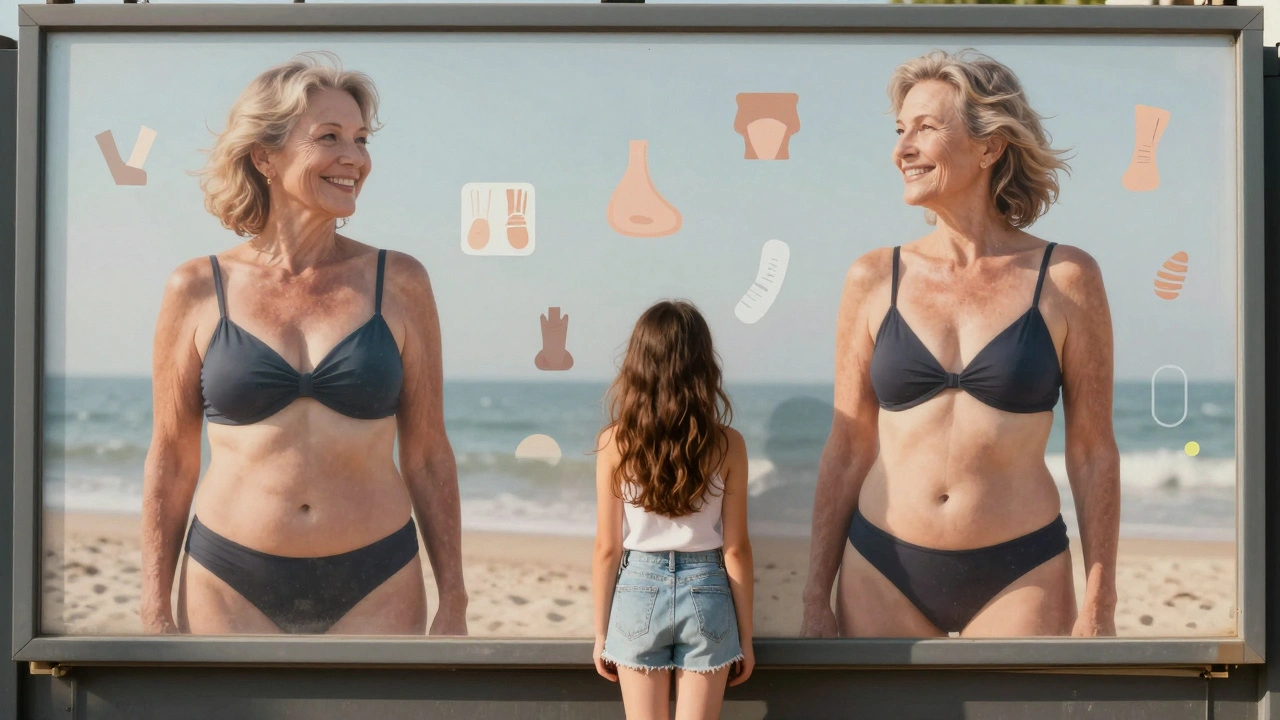
What’s Still Missing
Progress isn’t perfect. Transgender models still face rejection from some agencies. Non-binary models are often forced into binary categories. Rural talent still struggles to break in - most agencies are still based in London. And while diversity is visible on runways, it’s still rare behind the scenes. Fewer than 12% of UK fashion directors are people of color. The next wave isn’t just about who’s in front of the camera. It’s about who’s holding the camera, who’s writing the contracts, who’s approving the budgets.Why This Matters
This isn’t just fashion. It’s about dignity. When a 14-year-old girl sees a model with stretch marks on a billboard, she stops believing she has to be perfect to be worthy. When a man with a prosthetic leg sees himself in a suit ad, he stops feeling invisible. When a grandmother sees a 60-year-old model in a swimsuit, she remembers her body is still beautiful. UK models didn’t just change the clothes we wear. They changed how we see ourselves.What’s Next
The next frontier? Accessibility. More brands are starting to offer audio descriptions for fashion films. Tactile runway shows for visually impaired audiences. Sign language interpreters on live streams. The UK is testing these now. If they work here, they’ll go global. Diversity isn’t a trend. It’s the new baseline. And the UK didn’t just join the movement - it led it.Are UK models really more diverse than other countries?
Yes, by measurable standards. The UK leads in inclusive sizing, disability representation, and racial diversity on runways. According to the British Fashion Council, 42% of UK campaigns feature non-traditional models - higher than the US (31%) and France (27%). London Fashion Week also has the highest percentage of transgender and non-binary models globally.
Can anyone become a model in the UK today?
Yes - if you have confidence and the right support. Agencies now actively scout people of all sizes, ages, ethnicities, and abilities. You don’t need perfect skin, a certain height, or a specific look. What matters is authenticity. Many new models are found on Instagram, in local communities, or through disability advocacy groups. The old gatekeepers are gone.
Do UK agencies still use size 0 models?
Very rarely. Most major agencies have banned size 0 and under from their rosters since 2020. Even high-end designers now use size 6-12 for their main campaigns. Size 0 models still exist in niche editorial shoots, but they’re no longer the standard. The industry moved on because customers did.
How do I find a UK modeling agency that values diversity?
Start with agencies like Modelz, DNA Model Management, and Storm Model Management - all have public diversity policies. Look for agencies that list disability, age, and size inclusivity on their websites. Avoid those that require ‘perfect skin’ or ‘slim figure’ in their submission guidelines. The right agencies won’t ask you to change who you are.
Is diversity in UK modeling just for show?
No. The change is backed by sales. Brands that feature diverse models see 23% higher engagement and 18% higher conversion rates, according to a 2025 Kantar study. Retailers like ASOS and M&S report increased loyalty from customers who see themselves reflected. Diversity isn’t performative - it’s profitable.
January 2, 2026 AT 20:48
Thiago Gonçalves
This is the kind of stuff that actually gives me hope 😊
Used to think fashion was all about looking a certain way, but seeing real people on runways? That’s powerful.
My little sister saw a model with vitiligo on a billboard last month and she just stared at it for like five minutes.
Then she said, 'Mom, that’s me.'
That’s not marketing. That’s medicine.
January 3, 2026 AT 15:03
Tim Orrell
The paradigm shift in aesthetic hegemony within the UK fashion apparatus represents a post-industrial reconfiguration of corporeal representation
Capitalist commodification of identity has been subverted not through legislation but through embodied resistance
The aestheticization of difference as normalized spectacle signals a collapse of the binary between deviance and desirability
And yet the structural apparatuses of power remain largely unchallenged behind the scenes
January 3, 2026 AT 23:56
Clay Caldwell
Interesting how the UK leads here. In the US we talk a lot about diversity but the actual numbers don’t match.
London Fashion Week really does feel different. Even the ads on the subway there show people who look like the folks I see on the bus.
Not saying it’s perfect but it’s miles ahead of what we’re doing stateside.
Maybe we should just send our casting directors over for a field trip.
January 4, 2026 AT 09:19
anjan tiwari
lol why are we even talking about this
models are just people who wear clothes
why does it matter if they’re fat or black or old or in a wheelchair
just sell the damn pants
January 5, 2026 AT 17:54
Jazzmen McCray
That last part about accessibility is the real game changer
Audio descriptions tactile runways sign language on streams
That’s not virtue signaling that’s actual inclusion
And yeah the stats back it up too
People spend more when they see themselves
It’s not about being woke it’s about being smart
Brands that get this win
Brands that don’t? They’re already fading out
January 6, 2026 AT 21:15
Anjali Ragi
Wait wait wait 🤔
Did you see that 2025 British Fashion Council report?
42% non-traditional models? That’s impossible
They’re lying to us
They’re hiding the real numbers
And why are all the agencies still in London?
It’s a scam
It’s all just for the cameras
And they’re using disabled people as props 🚩
Also why is no one talking about the AI deepfakes replacing real models now?
It’s all fake
It’s always been fake
January 7, 2026 AT 09:08
Griffin Treanor
They call it diversity but it’s just replacement
They took the thin white girls and swapped them for tall Black women and plus-size models and called it progress
But what happened to the original standard
What happened to elegance
What happened to discipline
Now we have chaos dressed as empowerment
And you call that beauty
It’s not beauty
It’s surrender
January 8, 2026 AT 17:33
Trent Curley
Look I get it you want to feel good about yourself
But let’s be real
None of this would’ve happened if the industry wasn’t losing money
It’s not about dignity
It’s about profit
They realized skinny models weren’t selling enough
So they started using people who actually buy clothes
And now they’re pretending it’s a moral victory
It’s not
It’s capitalism adapting
And honestly
That’s fine
But don’t act like you’re saving the world
You’re just buying a better product