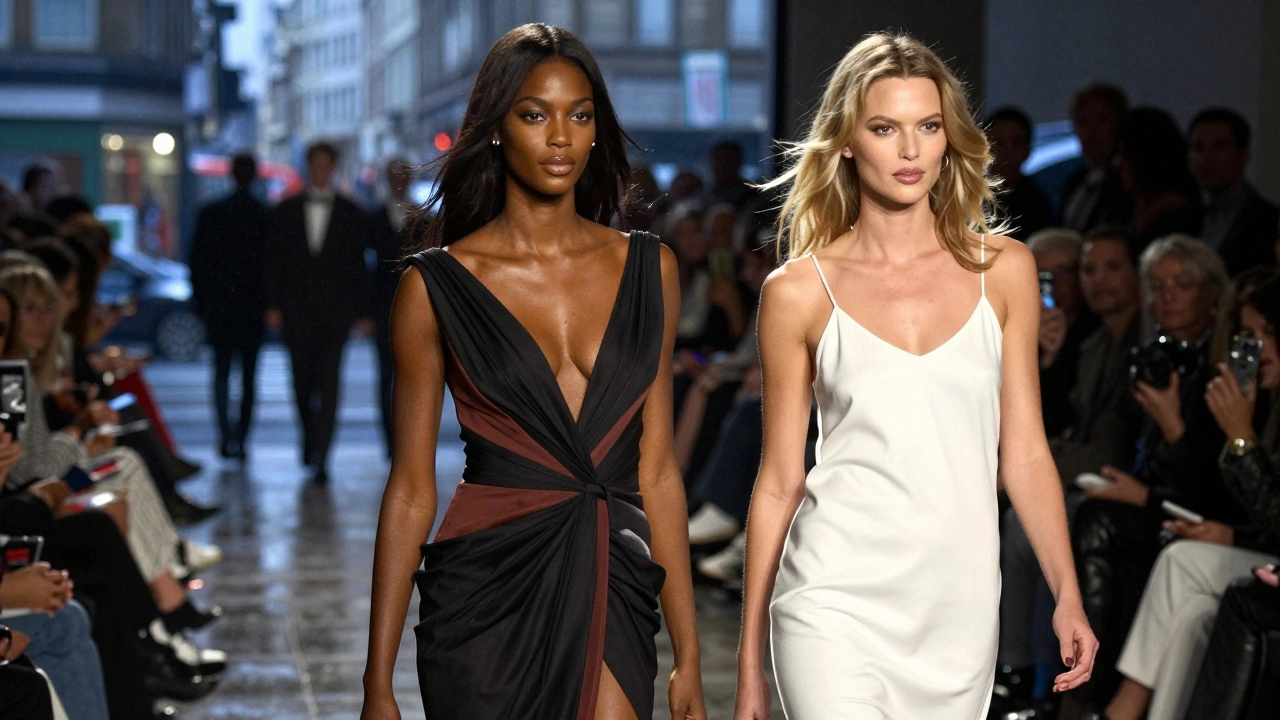
For decades, the global fashion industry told us there was one way to be beautiful: tall, thin, with sharp cheekbones and pale skin. Then came the UK models - not just as faces on runways, but as forces of change. From the streets of London to the runways of Paris and New York, British models didn’t just walk; they challenged, redefined, and expanded what beauty could look like.
Breaking the Mold Before It Was Cool
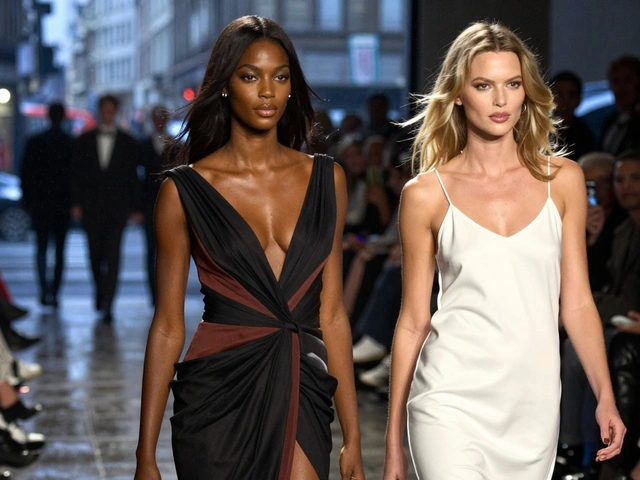
In the 1980s and 90s, the modeling world was rigid. Agencies wanted one look. The UK didn’t always follow. Naomi Campbell broke barriers as one of the first Black supermodels to dominate international runways. But she wasn’t alone. Kate Moss didn’t fit the supermodel mold - she was shorter, slimmer, and more androgynous. And yet, she became the face of a generation. Her look wasn’t an accident; it was a statement. The industry called it ‘heroin chic.’ Fans called it real.
These women weren’t trying to be perfect. They were trying to be themselves. And that made all the difference. By the early 2000s, UK models were proving that beauty didn’t need to be uniform. It just needed to be authentic.
The Rise of Diversity in British Casting
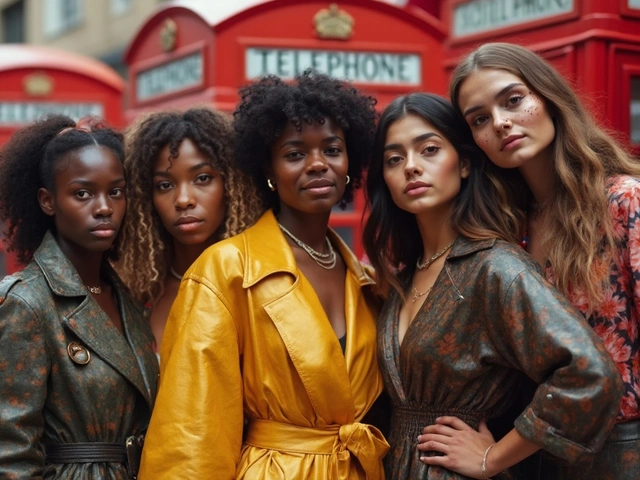
Today, British modeling agencies are leading the charge in diversity - not because it’s trendy, but because it’s necessary. In 2018, the British Fashion Council launched its Diversity Charter. Over 150 brands and agencies signed on, pledging to include models of all ethnicities, sizes, ages, and abilities in their campaigns and shows.
The results? In 2024, over 42% of models on London Fashion Week runways identified as non-white - the highest percentage in the world. Compare that to New York, at 31%, or Milan, at 24%. The UK isn’t just keeping up - it’s setting the pace.
Models like Adwoa Aboah, who speaks openly about mental health, and Paloma Elsesser, who redefined curvy on high fashion runways, aren’t outliers. They’re the new norm. And they’re not just hired for diversity points. They’re hired because they bring something irreplaceable: depth, presence, and a story.
Size Inclusion: From Marginalized to Mainstream
Curvy models used to be pushed to separate catalogs or niche magazines. Not anymore. In 2023, Burberry cast 18-year-old model Harnaam Kaur - who has facial hair due to polycystic ovary syndrome - as the face of its winter campaign. No edits. No hiding. Just her.
UK agencies like Models 1 and Select Model Management now have dedicated size-inclusive divisions. They don’t just represent sizes 10 to 16. They represent sizes 18 to 26. And brands are paying attention. In 2024, UK high street retailer ASOS reported a 37% sales increase in its inclusive sizing line after featuring models like Ashley Graham and Devyn Garcia in their UK-focused campaigns.
This isn’t charity. It’s commerce. And it’s working because customers see themselves in these models - not as a token, but as a reflection.
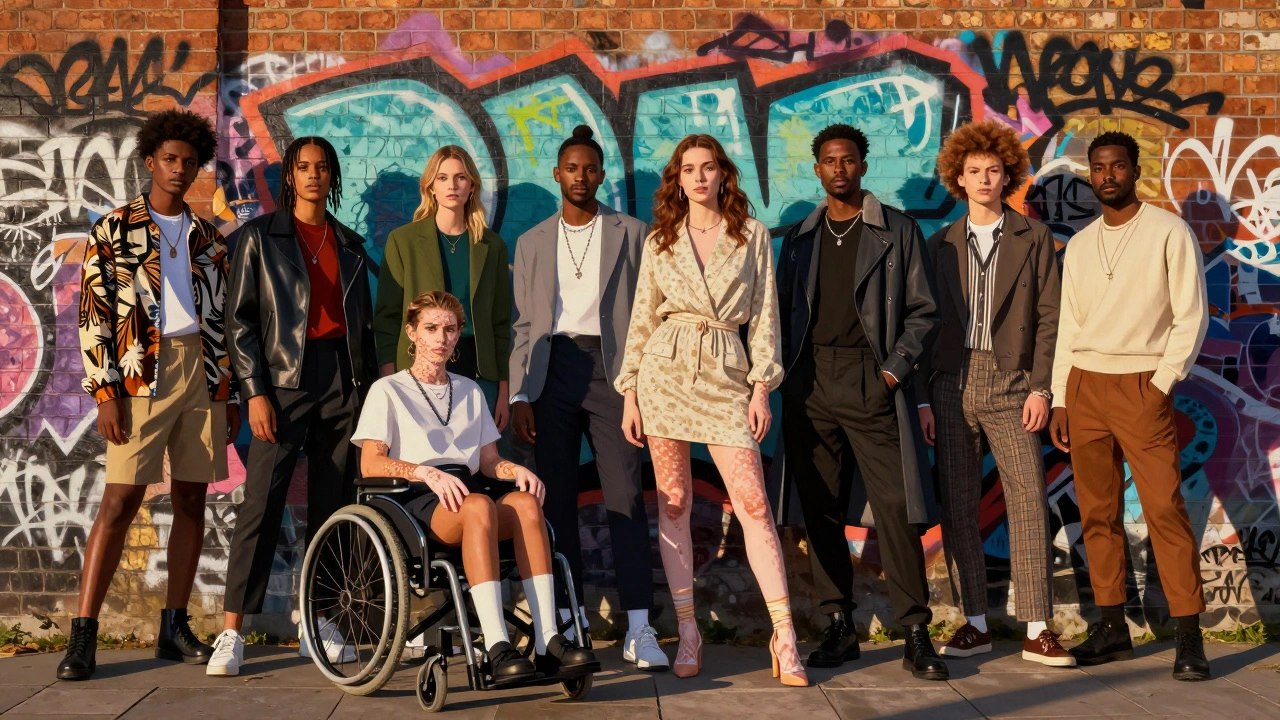
Disability, Age, and Gender: The New Frontiers
British modeling isn’t just about race and size. It’s about who gets to be seen at all.
Model and activist Jillian Mercado, who uses a wheelchair, was cast in a major campaign for Diesel in 2022 - the first time a wheelchair user headlined a global fashion brand’s UK campaign. She didn’t play a character. She played herself. And the response? Over 1.2 million views in the first week.
Then there’s the rise of older models. Jean Shrimpton was the face of 1960s London. Now, 73-year-old Pat Cleveland - who walked for Yves Saint Laurent in the 70s - is modeling for Prada and appearing in Vogue UK. Age isn’t a barrier. It’s a badge of honor.
And gender? Non-binary and trans models like Indya Moore and Hari Nef have walked for top UK designers like Vivienne Westwood and Alexander McQueen. They’re not ‘gender-neutral models.’ They’re models - full stop.
The Power of British Agencies
What makes UK models different isn’t just the people - it’s the systems behind them. Agencies like Premier Model Management and Storm Models have long prioritized talent over template. They scout in schools, community centers, and social media - not just in elite fashion capitals.
Storm Models, founded in 1989, was one of the first to sign a model with vitiligo (Sara Ziff) and a model with Down syndrome (Sofia Jirau). They didn’t wait for trends. They created them.
These agencies don’t just book jobs. They build careers. They offer mental health support, legal advice, and media training. In a world where models are often treated as disposable, UK agencies are treating them as people.
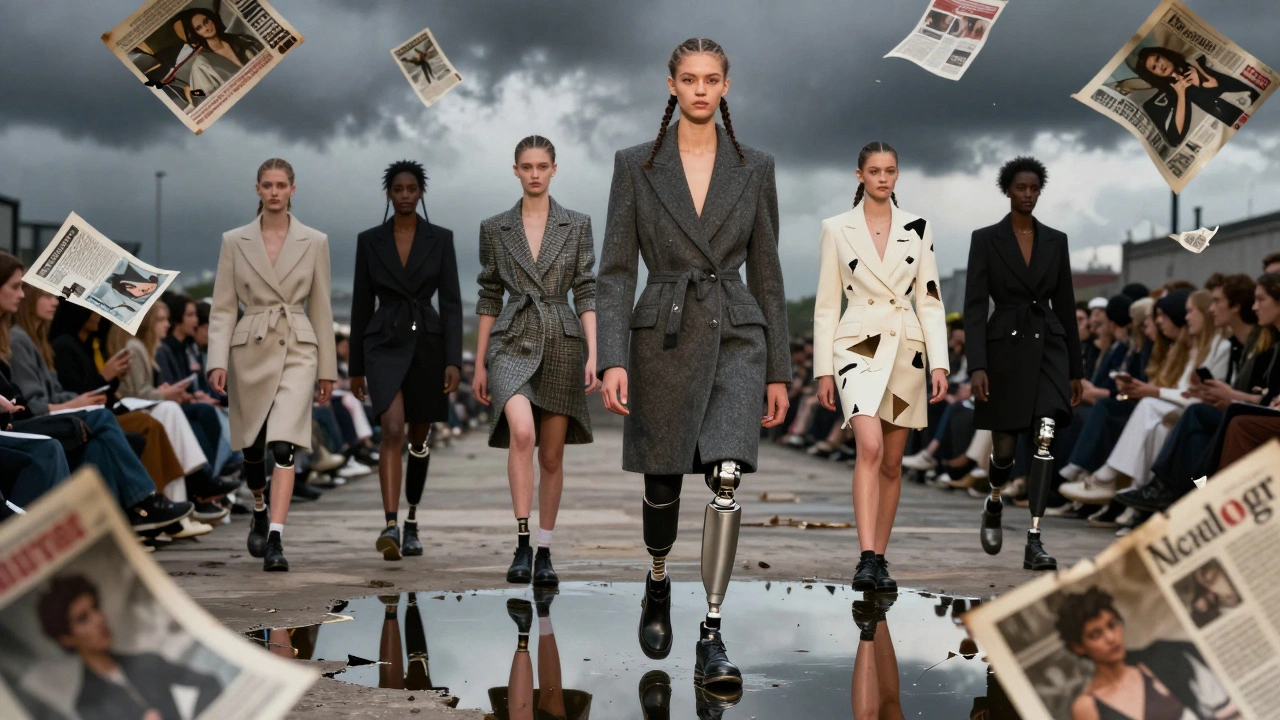
Why the World Is Watching
When a British model walks in Milan, the world takes notice. Why? Because they carry more than a garment. They carry a message.
From the UK, models are proving that beauty isn’t a single shape. It’s a spectrum. It’s scarred skin. It’s gray hair. It’s a prosthetic limb. It’s a voice that says, ‘I belong here.’
Brands in the US, Japan, and Brazil now look to London first when they want to launch inclusive campaigns. Why? Because the UK has already done the work. They’ve tested the waters, faced backlash, and kept going. They didn’t wait for permission. They just showed up - and brought everyone with them.
What’s Next?
The next generation of UK models isn’t waiting for the industry to catch up. They’re building their own platforms. TikTok stars like @thegirlwiththepurplehair, who has cerebral palsy, have over 2 million followers and are now signed to a major agency. Instagram models from Birmingham and Manchester are landing contracts with global brands without ever stepping into a traditional casting room.
The old gatekeepers? They’re losing power. The new gatekeepers? They’re the audience. And the audience is tired of the same old faces.
UK models didn’t just change beauty standards. They dismantled them. And they’re rebuilding something better - something real, messy, diverse, and human.
Are UK models more diverse than models from other countries?
Yes, by measurable standards. In 2024, over 42% of models on London Fashion Week runways were non-white, compared to 31% in New York and 24% in Milan. The UK also leads in representing models with disabilities, older models, and plus-size models in high fashion. This isn’t accidental - it’s policy. Agencies and designers in the UK have committed to diversity through formal charters and internal targets.
Who are some famous UK models changing beauty standards?
Naomi Campbell broke racial barriers in the 80s. Kate Moss redefined femininity with her waif-like look. Adwoa Aboah champions mental health. Paloma Elsesser transformed curvy modeling on runways. Harnaam Kaur, with her facial hair, became a global symbol of body autonomy. Indya Moore and Hari Nef brought trans visibility to top UK designers. These models didn’t just walk - they shifted culture.
How are UK agencies different from others?
UK agencies like Storm Models and Premier Model Management prioritize long-term development over quick bookings. They offer mental health support, legal aid, and media training. They scout beyond traditional channels - finding talent in schools, social media, and communities. They also actively fight against exploitative practices, making them safer spaces for models from marginalized backgrounds.
Is size inclusivity real in UK fashion, or is it just marketing?
It’s real. Brands like ASOS, Topshop, and River Island now regularly feature models sizes 18 to 26 in their main campaigns - not just in ‘plus-size’ sections. Sales data shows a direct link: ASOS saw a 37% increase in inclusive sizing sales after featuring larger models. Designers like Vivienne Westwood and Stella McCartney have designed collections specifically for diverse body types. This isn’t lip service - it’s profit-driven change.
Can someone from outside the UK become a UK model?
Absolutely. UK agencies actively scout globally. Models from Nigeria, Jamaica, India, and Brazil have signed with top UK agencies and walked London Fashion Week. What matters isn’t nationality - it’s uniqueness, presence, and authenticity. Many international models move to London because it’s one of the few markets where diversity is not just accepted - it’s expected.
December 5, 2025 AT 06:14
Mike Ritchie
Look, I get the whole ‘diversity is beautiful’ spiel, but let’s be real - this isn’t progress, it’s performative. They’re not casting these models because they’re the best talent, they’re casting them because it looks good on a press release. Fashion’s still run by old white men in Milan who just learned how to say ‘inclusive’ without choking.
And don’t get me started on Harnaam Kaur. Yeah, she’s ‘brave,’ but putting facial hair on a runway is just shock value dressed up as activism. Real beauty doesn’t need a Wikipedia page to be valid.
Also, 42% non-white models? Cool. But how many of them actually got paid the same as the white girls? Bet it’s not even close.
This isn’t revolution. It’s rebranding.
December 6, 2025 AT 11:23
Jeff Brainard
Beauty is a construct of the gaze and the gaze is a weapon of capital
They replaced one uniform with another uniform but now it’s got more skin tones and a few wheelchairs and they call it liberation
But the camera still frames them like they’re specimens in a museum of virtue
And the brands still profit off the pain they pretend to heal
Is this freedom or just a prettier cage
They didn’t break the mold they just repainted it with hashtags
December 7, 2025 AT 09:42
Kumar Manickam
This is honestly one of the most hopeful things I’ve read in a long time. Seeing models like Adwoa and Harnaam walk runways like they own them? That’s not just fashion - that’s healing.
I’m from India and we’ve got so many beautiful people who’ve been told for years they’re ‘too dark’ or ‘too curvy’ or ‘too different’ to be on magazine covers.
But now? A 16-year-old girl in Chennai just sent me a message saying she’s applying to modeling school because she saw a model with vitiligo on a Burberry ad.
That’s real change. Not just in clothes, but in hearts.
The UK didn’t just change the industry - they gave people permission to see themselves as worthy. And that’s bigger than any runway.
Keep going. We’re watching. And we’re proud.
December 8, 2025 AT 12:49
Hallesha Williams
First of all, you spelled ‘vitiligo’ wrong in the article - it’s V-I-T-I-L-I-G-O, not V-I-T-I-L-G-O. And ‘non-white’ is outdated terminology - it’s ‘Global Majority’ now, you’re literally erasing people’s identity by using colonial language.
Also, you say ‘models with disabilities’ but you never mention that most of them still get paid 60% less than able-bodied models - that’s not inclusion, that’s exploitation with a PR team.
And why are you calling Paloma Elsesser ‘curvy’? She’s a size 22 - that’s not ‘curvy,’ that’s a real body. You’re infantilizing her with euphemisms.
Also, ASOS sales increase? That’s not proof of ethics, that’s proof people like discounts. Stop conflating commerce with morality.
And who gave you the right to say ‘they’re not tokenized’? You don’t get to decide what marginalized people feel. You’re just a journalist with a blog.
December 9, 2025 AT 08:08
akarsh chauhan
It is imperative to note that the elevation of so-called diversity in the British fashion industry is not a genuine manifestation of meritocracy, but rather a calculated capitulation to progressive ideological pressure.
The notion that a model's worth is determined by their ethnicity, gender identity, or physical deviation from historical norms is antithetical to the principles of aesthetic excellence.
Furthermore, the institutionalization of quotas, as evidenced by the Diversity Charter, constitutes a form of reverse discrimination that undermines the integrity of artistic curation.
It is regrettable that economic metrics, such as sales increases, are being misused to validate moral posturing.
True beauty has always transcended demographic categories - it is not measured in percentages, but in timeless grace.
One must ask: are we celebrating individuality, or are we enforcing a new orthodoxy?
The answer, I fear, is the latter.
December 9, 2025 AT 20:44
Rupesh Deore
you think this is real change but its just another way for brands to sell stuff
they still make the models work 18 hour days and pay them peanuts
they put a girl with a prosthetic leg on a poster but wont give her a contract longer than 3 months
and why are you always talking about uk models like theyre the only ones doing this
what about the girls in nairobi or bangkok who been doing this for years
you just wanna pat yourselves on the back
its not about who walks the runway its about who gets to sleep at night without worrying about rent
you talk diversity but you dont talk pay
you talk presence but you dont talk power
and you never mention the agents who still control everything
you think this is progress
its just a new filter
December 11, 2025 AT 17:07
Chris Lombardo
Wait, so now they’re putting people with hair on their faces in ads? And wheelchairs? And trans people? This is the New World Order. They’re replacing the old beauty standards with a whole new agenda. This isn’t about fashion - it’s about brainwashing. They’re conditioning the youth to accept anything as normal. Who’s funding this? Big Pharma? The UN? The Illuminati? I’ve seen the numbers - the same people who control the vaccines are now controlling the runways. This is a distraction. They want you to focus on models so you don’t notice what’s happening to your kids. Wake up.