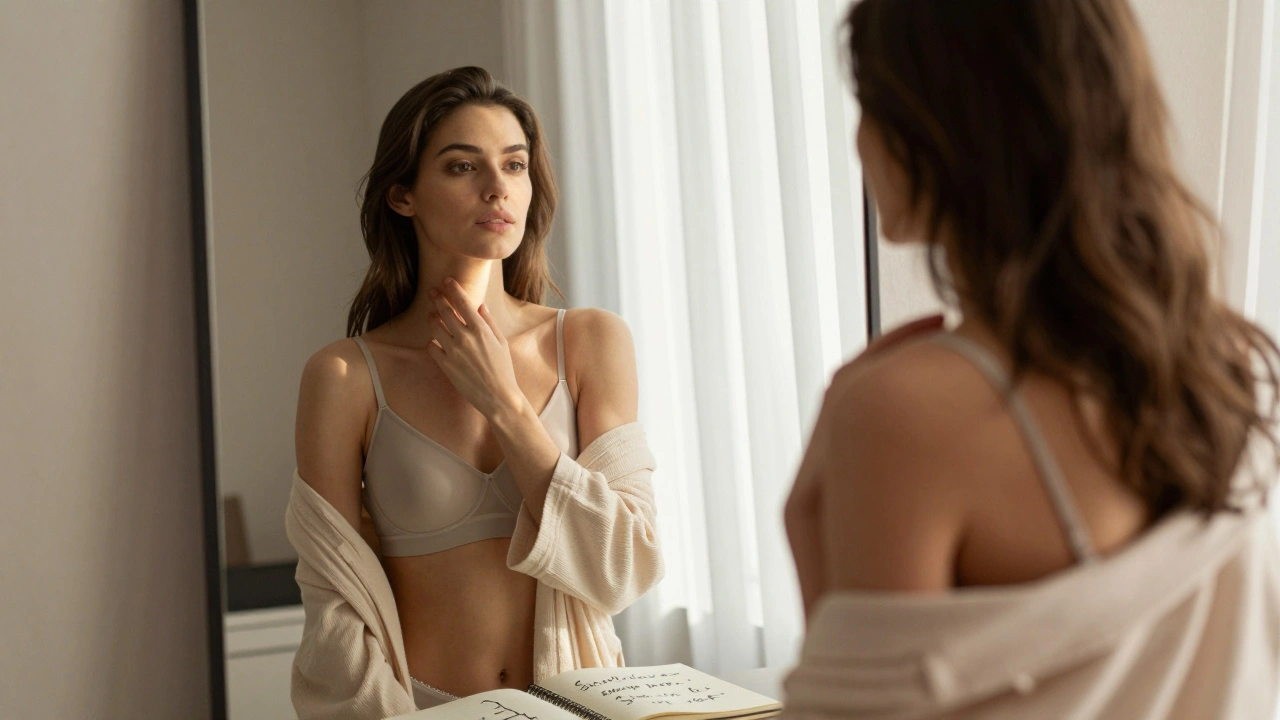
Standing in front of the camera isn’t just about posing. It’s about feeling like you belong there. Too many models walk into a photoshoot already doubting themselves-wondering if their hips are too wide, their skin isn’t smooth enough, or if the photographer will notice they’re nervous. The truth? The best photos don’t come from perfect bodies. They come from people who feel at home in their own skin. Confidence isn’t something you’re born with. It’s something you build, one shoot at a time.
Know Your Body Like You Know Your Phone
You don’t need to love every part of your body to look great in photos. You just need to know it. Spend five minutes each morning in front of a mirror-not to criticize, but to observe. Notice how your shoulders slope when you relax. See how your eyes light up when you smile naturally. Track which angles make your collarbones pop, or how turning your head slightly changes your jawline. These aren’t tricks. They’re facts.
When you know your body’s rhythm, you stop fighting it. You stop trying to be someone else’s version of a model. You start moving with intention. That’s when the camera picks up something real. One model I worked with in London told me she started doing this after her third failed shoot. She kept being told she looked "stiff." She didn’t realize she was holding her breath. Once she noticed how her breathing changed when she felt unsure, she learned to breathe through the tension. Within two shoots, her book changed.
Prep Like a Pro, Not Like a Beginner
Confidence isn’t magic. It’s preparation. If you show up to a shoot with no idea what to expect, you’re already behind. Before the day, ask for the mood board. Look up the photographer’s past work. Check the styling notes. Know if it’s high fashion, commercial, or editorial. If you’re doing swimwear, know the lighting will be harsher. If it’s natural light, understand how shadows fall at 4 p.m. in December.
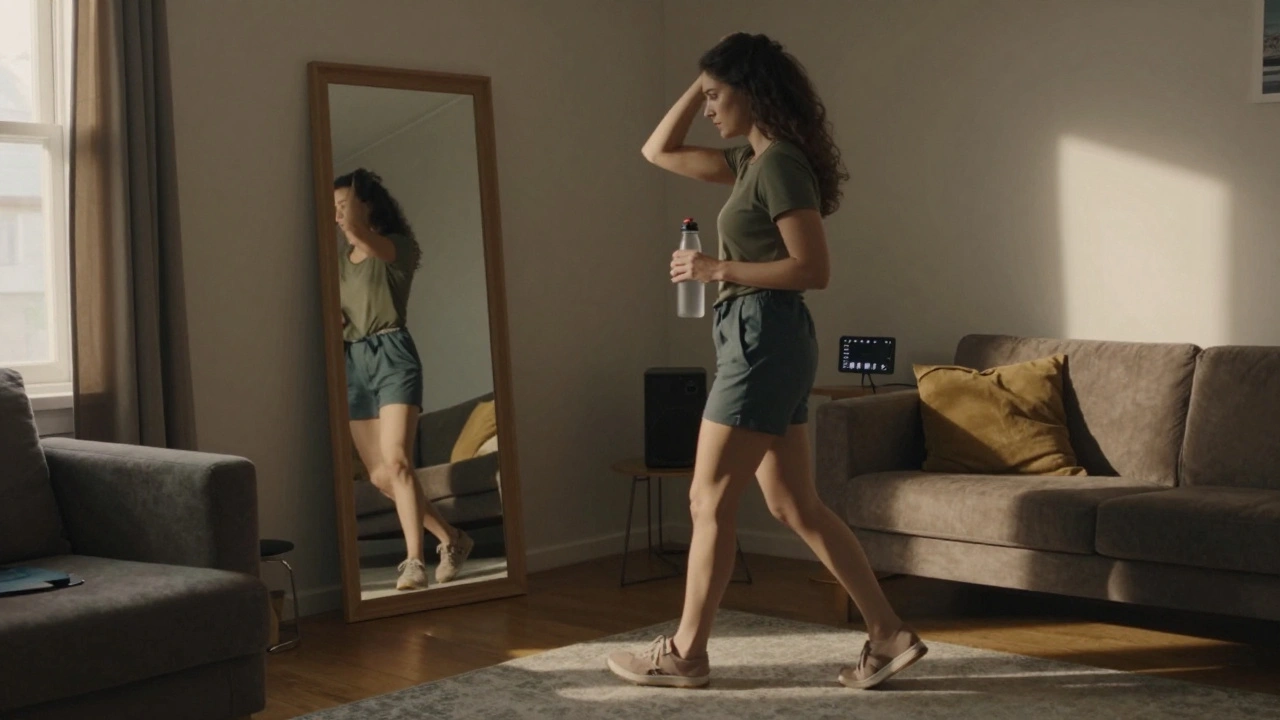
Practice your walk. Not on a runway. In your living room. Put on the same shoes you’ll wear. Play the same music they’ll likely use. Do three full turns. Pause. Look at your reflection. Repeat. This isn’t vanity. It’s muscle memory. When you step onto the set, your body already knows what to do. Your mind doesn’t have to scramble.
Bring a small checklist: lip balm, clear nail polish, safety pins, deodorant, and a water bottle. These aren’t accessories. They’re anchors. When you know you’re covered for the little things, you stop worrying about them. And that mental space? That’s where confidence lives.
Stop Waiting to Feel Ready
Here’s the myth: you have to feel confident before you can be confident. That’s backwards. You don’t wait to feel ready. You act-then you feel it.
Think about your first time driving. You didn’t wait until you felt like a pro. You turned the key, gripped the wheel, and drove anyway. The confidence came after. The same applies here.
On set, if you’re nervous, don’t say, "I’m not ready." Say, "I’m here." That’s it. One phrase. One shift. It’s not about pretending. It’s about redirecting. Your body responds to your language. If you say you’re nervous, your shoulders hunch. If you say you’re here, your posture opens. Your eyes lift. The camera sees that before it sees your outfit.
One model I coached used to whisper "I hope I don’t mess up" before every shot. We changed it to "I’m exactly where I need to be." Within three shoots, her bookings doubled. Not because she looked different. Because she stopped apologizing for existing in front of the lens.
Use the Photographer as Your Ally, Not Your Judge
Photographers aren’t there to find flaws. They’re there to find beauty. Most of them have seen hundreds of bodies. They’re not shocked by stretch marks, scars, or asymmetry. They’re looking for expression. Light. Movement.
If you’re unsure about a pose, ask. Not "Does this look good?" but "Can you show me what you’re thinking?" Most photographers will demonstrate. They’ll adjust your elbow, tilt your chin, or ask you to breathe out slowly. That’s not criticism. That’s collaboration.
And if they’re not helpful? That’s not your problem. That’s theirs. A good photographer will make you feel safe. If they’re yelling, rushing, or making comments about your body, walk out. You’re not a prop. You’re a partner. And you deserve to be treated like one.
Reframe Your Inner Critic
Your inner voice? It’s not your enemy. It’s just misinformed. It’s the same voice that told you you’d fail your driving test, or that you’d never make friends in a new city. It’s loud, but it’s not true.
When you catch yourself thinking, "My arms look big," pause. Then ask: "Would I say that to my best friend?" If the answer is no, then why are you saying it to yourself?
Replace the thought. Not with fake positivity like "I’m gorgeous!"-that often backfires. Instead, say: "My arms carry me through every day. They hold my coffee, hug my dog, type my messages. That’s strength. That’s enough."
One model kept comparing herself to others on Instagram. She’d see someone with a flat stomach and feel broken. Then she started tracking her own progress: how many days she showed up, how many shots she nailed, how many times she got booked after a shoot she thought went poorly. After six months, she realized she’d improved more than 90% of the people she used to envy. She didn’t need to look like them. She just needed to trust her own journey.
Post-Shoot Rituals Matter More Than You Think
Confidence isn’t built only on set. It’s reinforced after. The moment the shoot ends, your brain goes into review mode. You replay every awkward pose, every frown, every time you felt unsure. That’s normal. But you don’t have to let it stick.
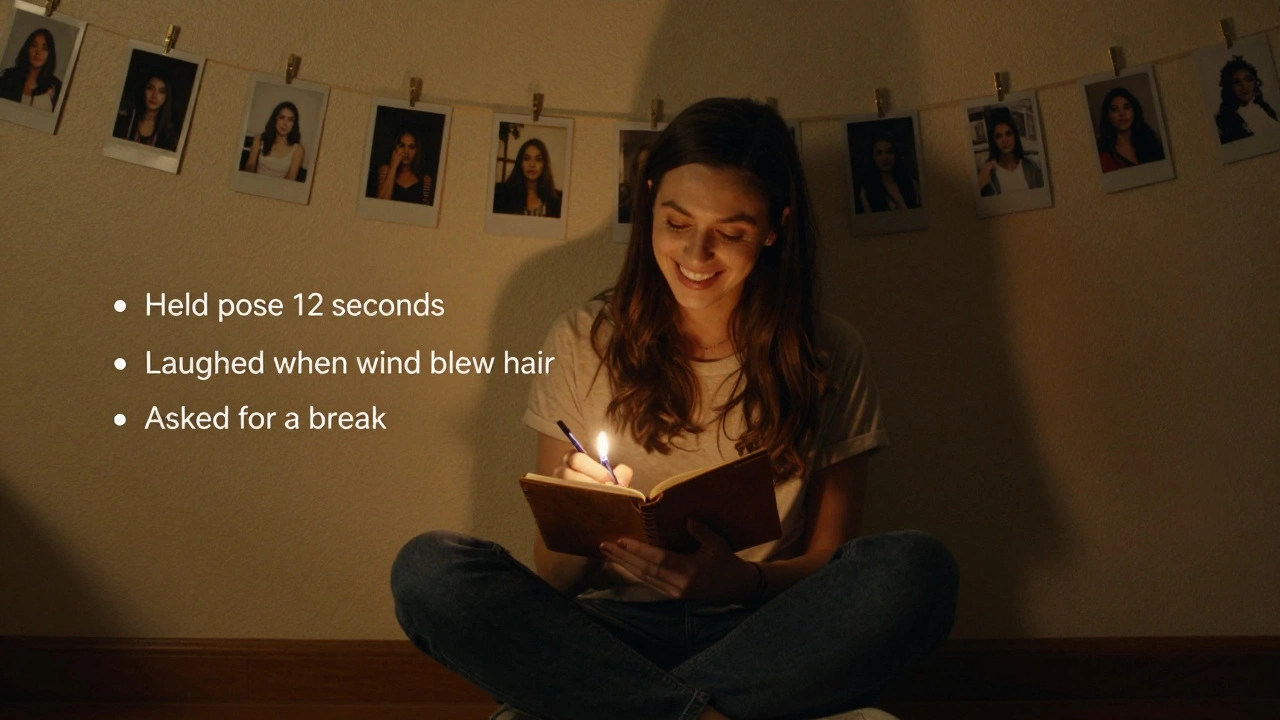
Create a simple ritual: after every shoot, write down three things you did well. Not "I looked hot." Specific things. "I held the pose for 12 seconds without blinking." "I laughed when the wind blew my hair and it looked natural." "I asked for a break when I needed it."
Keep this list. Look at it before your next shoot. It’s not bragging. It’s evidence. Your brain remembers failure faster than success. You have to give it something real to hold onto.
One model kept a notebook. She started with one line per shoot. After a year, she had 47 entries. She didn’t need to look at the photos. She just needed to remember: I showed up. I tried. I stayed. And that’s more than most people ever do.
Confidence Isn’t the Goal. Presence Is.
You don’t need to feel like a supermodel. You need to feel like yourself. The version of you that’s calm, curious, and unapologetically here.
When you stop trying to be perfect and start trying to be present, the photos change. Your eyes soften. Your shoulders drop. Your smile becomes real. The camera doesn’t care about flawless skin. It cares about emotion. Connection. Truth.
Confidence isn’t something you find. It’s something you build-by showing up, by preparing, by speaking kindly to yourself, by trusting the process. Every shoot is a brick. You don’t need to build a palace today. Just lay one brick. Then another. And another.
Next time you walk into that studio, don’t ask if you’re ready. Ask: "What will I learn today?"
What if I feel awkward during the photoshoot?
Feeling awkward is normal-it means you’re human. The key is to not fight it. Take a breath, pause, and ask the photographer for a moment. Most will adjust the lighting, change the music, or give you a joke to break the tension. Awkwardness fades when you stop trying to be perfect and start being present.
Should I practice poses before the shoot?
Yes-but not by copying Instagram models. Practice in front of a mirror with your own body. Try different angles, hand placements, and head tilts. Focus on how each movement feels, not how it looks. Your goal isn’t to replicate a pose. It’s to discover what feels natural to you. That’s what reads as confident on camera.
How do I handle negative comments from the team?
You don’t. If someone makes a comment about your body, weight, or appearance, it’s not feedback-it’s unprofessional. A good team focuses on lighting, composition, and expression. If you hear anything else, say, "I’d prefer to keep the focus on the shoot." If it continues, walk out. Your safety and dignity come before any job.
Do I need to be thin to be confident on camera?
No. Confidence has nothing to do with size. Models of all shapes and sizes have shot for major brands, magazines, and campaigns. What matters is how you carry yourself-your posture, your gaze, your energy. A model who owns their space, no matter their body, will always look more powerful than someone who’s "perfect" but shrinking.
What’s the fastest way to boost confidence before a shoot?
Stand tall. Place your feet shoulder-width apart. Roll your shoulders back. Take three slow breaths. Then say out loud: "I am here to create." That simple physical and verbal reset shifts your nervous system from fear to focus. It takes 20 seconds. It changes everything.
Build confidence not by chasing perfection, but by showing up-again and again-with your whole self. That’s what makes a model unforgettable.



December 16, 2025 AT 20:54
Kirsten Stubbs
Confidence isn’t built by whispering affirmations. It’s built by showing up when you’re terrified. And if you need a checklist to feel worthy? That’s not confidence-that’s insecurity in a fancy coat.
Also, ‘I’m here’? Cute. But if your posture’s still hunched and your eyes darting? Words don’t fix bad habits. Do the work. Or don’t bother.
And please stop telling people to ‘breathe through tension.’ I’ve seen models hyperventilate trying to ‘be present.’ It looks like a panic attack with good lighting.
December 18, 2025 AT 15:22
Sara Roberts
lol at ‘know your body like your phone’ 😭 i dont even know how to charge my phone but i still got booked for 3 campaigns last month. just smile and dont overthink it. also stop saying ‘collarbones pop’ like we’re in a vitamin water ad.
December 19, 2025 AT 16:23
Terrance Bianco
You know what they don’t tell you? This whole ‘confidence’ thing? It’s a distraction. A manufactured illusion designed to keep you focused on yourself while the real power players-photographers, agencies, lighting techs, Photoshop artists-control the narrative.
They don’t want you to feel ‘at home in your skin.’ They want you to look like a product they can sell. Every ‘mirror routine,’ every ‘pre-shoot checklist,’ every ‘I’m here’ mantra? It’s just another layer of the machine.
You think you’re building confidence? No. You’re just learning how to perform compliance. The camera doesn’t capture truth. It captures what the algorithm approves.
And if you really want to know what confidence is? It’s walking out of that studio and never looking back. Not because you felt good. But because you realized you were never meant to be there in the first place.
They sell you confidence so you’ll keep buying their filters.
Wake up.
They’re not looking for beauty.
They’re looking for profit.
And you? You’re just the canvas.
December 21, 2025 AT 13:00
William Kramer
This is so beautifully written, and I just want to say-thank you. Seriously. I’ve been modeling part-time for two years, and I’ve cried in dressing rooms more times than I can count. But the part about replacing ‘I hope I don’t mess up’ with ‘I’m exactly where I need to be’? That hit me like a warm blanket on a cold day.
Also, the checklist idea? I started doing that last week. Three things I did well after each shoot. I didn’t think it would matter, but now I have a little notebook with 12 entries, and I read them before I leave for shoots. It’s not magic. But it’s real. And that’s enough.
And to anyone reading this who feels like they don’t belong? You do. You always have. Even on the days you feel stiff. Even when you think your arms look big. Even when the lighting is harsh. You’re still here. And that’s the whole point.
One brick at a time. I’m so glad someone finally said this out loud.
December 23, 2025 AT 00:07
Zakaria SANKARA
Wow. So you’re telling me that if I just say ‘I’m here’ instead of ‘I’m nervous,’ my jawline magically becomes chiseled? And my stretch marks? They just… disappear because I breathed right?
Bro. I’ve been in 14 shoots. I’ve had photographers tell me to ‘suck in’ and ‘smile like you mean it.’ One guy asked if I was ‘trying to look like a potato.’
Confidence? Nah. Just pay the retoucher. That’s the real trick.
December 23, 2025 AT 04:56
Summer Perkins
I’m curious-when you say ‘know your body like your phone,’ do you mean literally? Like, memorize the angles like you’d memorize app icons? Or is it metaphorical?
Also, I tried the ‘I’m here’ thing, and it felt weird. Like I was performing. But then I tried ‘I’m allowed to be here,’ and it felt… quieter. More true.
And the notebook? I started one. I wrote ‘I didn’t cry when the stylist yelled at me.’ That’s not a win, but it felt like one.
Just… wondering if anyone else feels like these tips are helpful, but also… kind of idealized?
Not saying they’re wrong. Just… I wish I’d seen this when I was 16.
December 23, 2025 AT 06:43
Jimmy Jew
I’ve shot in Tokyo, Lagos, and L.A.-and let me tell you, this advice? It’s gold. Not because it’s perfect. But because it’s human.
Here’s what no one says: the best photos happen when you forget the camera is there. Not because you’re confident. But because you’re bored. Or tired. Or laughing at the photographer’s terrible joke.
That’s when the light catches your eyes right. That’s when your shoulder drops naturally. That’s when you stop trying to be a model-and start being a person.
And yeah, the checklist? I carry a tiny ziplock with gum, safety pins, and a photo of my dog. Not for ‘anchors.’ For comfort.
One time in Mumbai, I forgot it. I panicked. The shoot was a mess. Next time? I remembered. The photos? Stunning.
It’s not about perfection. It’s about showing up with your whole messy self. And that? That’s the only thing the camera can’t fake.
So keep laying bricks. One at a time. I’m still building mine.