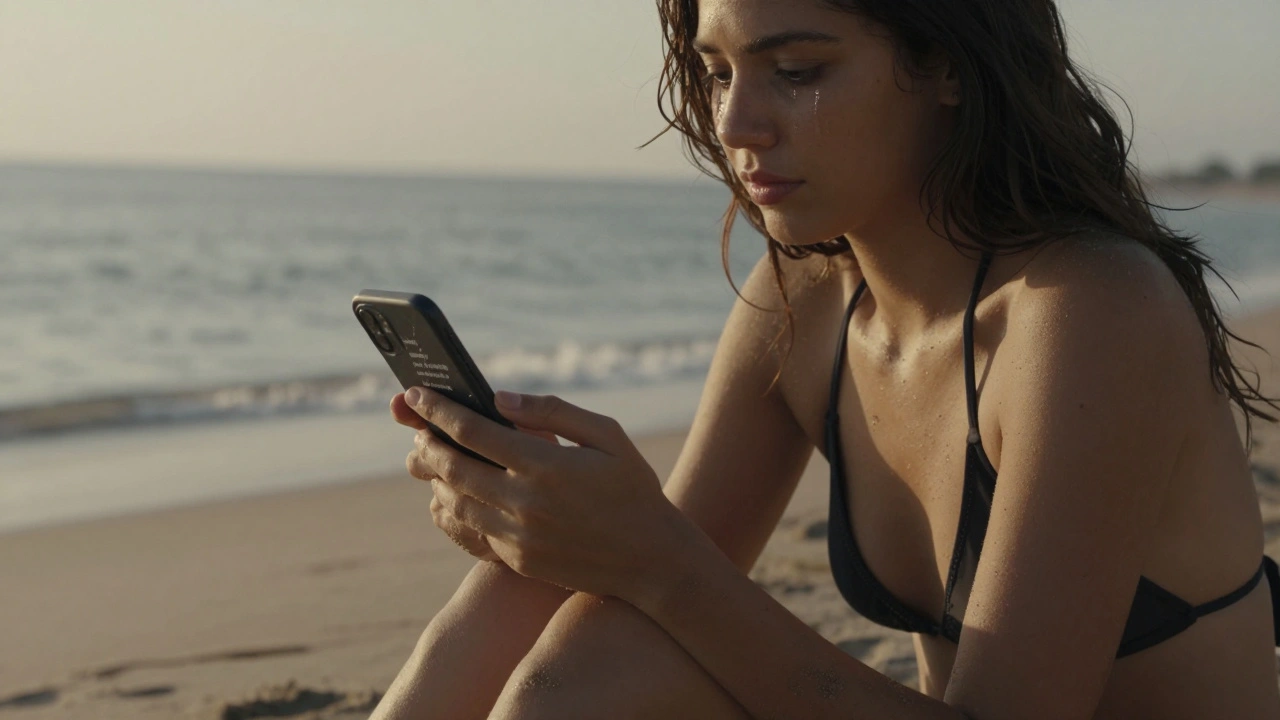
When you think of bikini models, you probably picture sun-kissed skin, toned bodies, and flawless smiles on beachfront shoots. But behind the camera, many are fighting a quiet battle-one that rarely makes the feed. The connection between bikini models and mental health awareness isn’t just real. It’s urgent.
The Pressure to Look Perfect
Bikini modeling doesn’t just require a certain body type. It demands perfection. Not just in how you look, but in how you carry yourself, how you smile, how you pose. Social media turns every photo into a performance. One wrong angle, one pixel out of place, and suddenly you’re called ‘too soft’ or ‘not fit enough.’Studies from the University of Sussex in 2024 tracked 400 female models across Instagram, TikTok, and agency portfolios. They found that 68% reported symptoms of anxiety linked to body image, and 52% said they’d been told to lose weight-even if they were already at a healthy BMI. These aren’t outliers. They’re the norm.
It’s not just about the scale. It’s about the comments. The DMs. The ‘you’d look better if…’ messages that pile up daily. One model, who asked to remain anonymous, told me she deleted her Instagram for six months after a viral post called her ‘flabby.’ She was 5’8’, 132 pounds, and ran 30 miles a week. The label stuck. It made her question everything.
Breaking the Silence
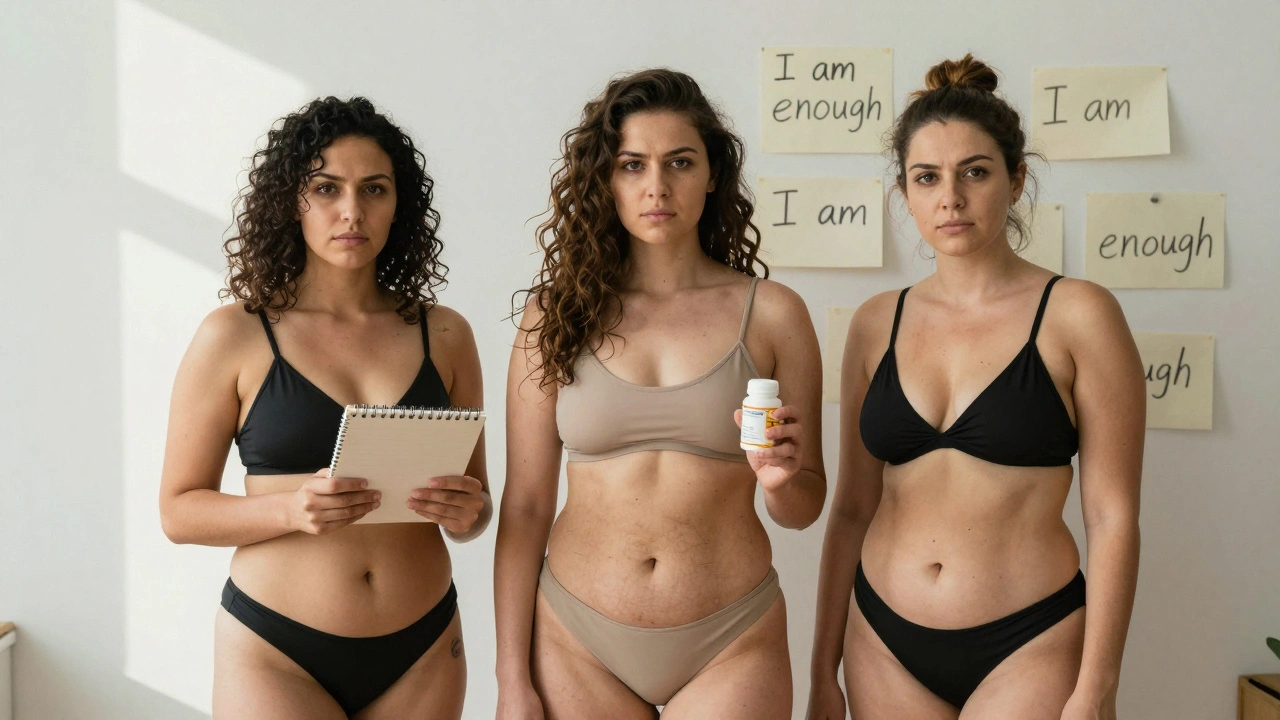
A growing number of bikini models are refusing to stay quiet. They’re using their platforms to talk about therapy, eating disorders, and the toll of constant comparison. Models like Jessi M’Lynn and Tasha K have posted raw, unedited photos alongside captions about panic attacks, antidepressants, and recovery.In 2025, the #RealBikiniProject launched on Instagram. It’s not a campaign by a brand. It’s a grassroots movement started by three models who got tired of seeing the same 10 bodies repeated across every fitness page. They invited 100 women-of all shapes, sizes, skin tones, and scars-to submit their own bikini photos. No filters. No retouching. Just truth.
The response? Over 2 million likes in the first month. Comments flooded in: ‘I thought I was the only one.’ ‘I didn’t know I could look like this and still be a model.’ ‘Thank you for showing me my body isn’t broken.’
The Industry’s Slow Shift
Some agencies are catching on. In Brighton, where I live, a few local modeling agencies have started requiring mental health screenings before signing new talent. They don’t just check your measurements-they ask about your sleep, your stress levels, your support system. One agency, Luminous Talent, even pairs new models with licensed therapists as part of their onboarding.It’s not universal. Big names still push for the same narrow ideal. But change is happening. In 2024, the UK’s Advertising Standards Authority updated its guidelines to ban ads that promote ‘unrealistic body standards’ in swimwear campaigns. Brands that ignore it risk losing their ability to advertise on major platforms.
Brands like Aerie, Savage X Fenty, and even Swimwear by Elle have shifted their casting. They’re choosing models who speak openly about their mental health. Not because it’s trendy. Because it’s honest. And customers are responding. Sales for inclusive swimwear lines rose 41% in 2025, according to market data from Euromonitor.
What It Means for You
You don’t have to be a model to feel this. If you’ve ever scrolled through bikini pics and felt worse about yourself afterward, you’re not alone. The problem isn’t your body. It’s the system that tells you your worth is tied to how closely you match a filtered image.Bikini models aren’t just selling swimsuits. They’re selling the idea that you can be strong, beautiful, and still struggle. That you can be confident and still need help. That your value doesn’t shrink just because you don’t look like the next viral post.
When a model posts about her anxiety, she’s not just being vulnerable. She’s giving permission to others to do the same. That’s powerful. That’s activism.
How to Support the Movement
You don’t need to be on a runway to help. Here’s what actually works:- Follow models who talk about mental health-not just the ones with perfect abs. Look for those who share their therapy sessions, their bad days, their progress.
- Don’t comment on bodies. Not ‘you’re so fit,’ not ‘you need to lose weight.’ Even compliments can reinforce the idea that appearance = worth.
- Call out edited photos. Tag brands that use heavy filters. Ask: ‘Is this real?’
- Share your story. Whether it’s a post, a journal entry, or a conversation with a friend-your truth matters.
- Support brands that prioritize mental health. Buy from companies that feature diverse bodies and disclose their editing policies.
Change doesn’t start with a campaign. It starts with a single post. A single conversation. A single person deciding to stop pretending.
The Bigger Picture
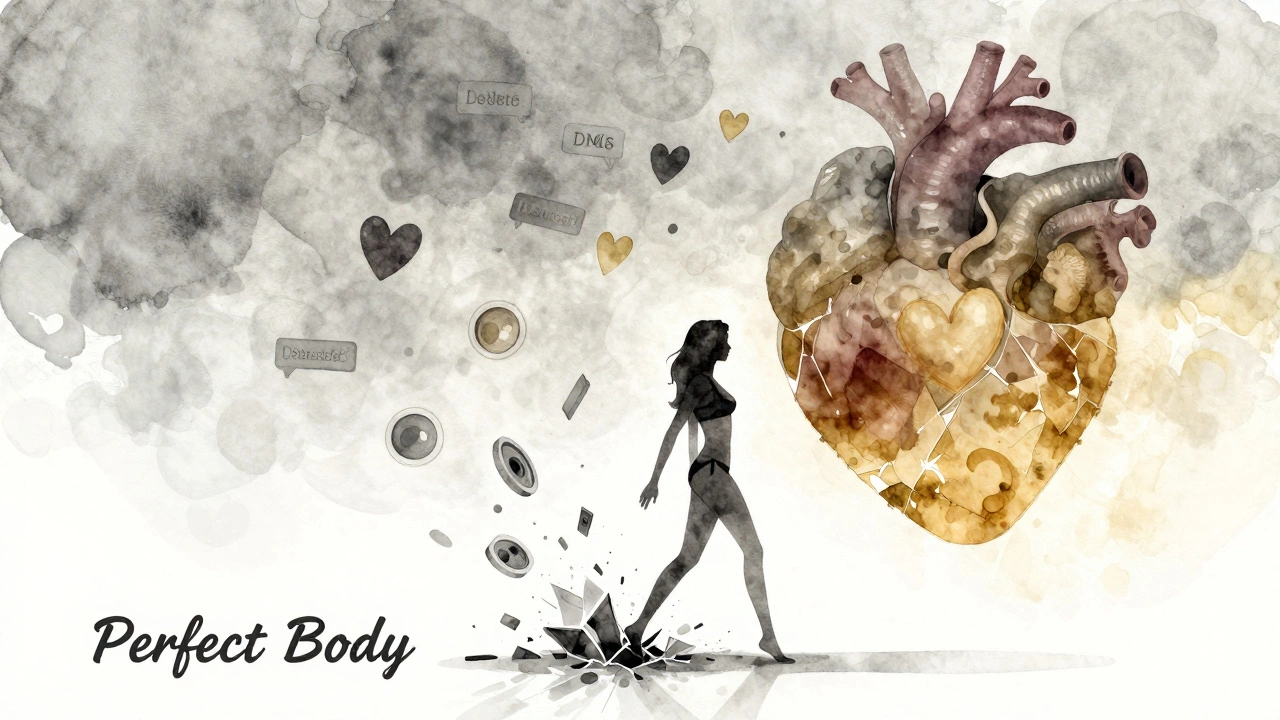
This isn’t just about bikini models. It’s about how society defines beauty-and who gets to decide.For decades, the beauty industry told women: ‘You’re not enough.’ Now, a new generation of models is saying: ‘We are enough, exactly as we are.’ And they’re not asking for permission.
Their message is simple: mental health isn’t a side note. It’s part of the job. And if you’re going to sell a swimsuit, you should also sell honesty.
Maybe the next time you see a bikini model, you won’t just see the body. You’ll see the person. The sleepless nights. The therapy sessions. The courage it took to show up, unfiltered, and say: ‘This is me.’
That’s not just modeling. That’s healing.
Do bikini models have higher rates of eating disorders than other women?
Research shows that models, including bikini models, are at higher risk for eating disorders due to industry pressures. A 2024 study in the Journal of Eating Disorders found that 37% of female models reported a history of disordered eating-nearly triple the rate in the general female population. But it’s not because of their bodies. It’s because of the constant scrutiny, weight criticism, and unrealistic expectations imposed by agencies and social media.
Are edited photos in bikini modeling illegal?
In the UK, edited photos aren’t illegal, but they’re increasingly regulated. Since 2024, the Advertising Standards Authority requires swimwear ads to disclose if images have been digitally altered to change body shape or size. Failure to comply can result in ad removal and loss of advertising privileges on major platforms like Instagram and Google. Many brands now include disclaimers like ‘Image retouched for lighting only’ to stay compliant.
Can someone be a bikini model and still have a healthy relationship with their body?
Absolutely. Many bikini models today prioritize mental health over aesthetics. They work with nutritionists who focus on energy and strength, not weight loss. They train for endurance and confidence, not just six-packs. Some even turn down jobs that require extreme photo editing. The industry is changing, and so are the models. Health isn’t a compromise-it’s the new standard.
Why do some bikini models speak out about mental health?
Because they’ve lived it. Many models enter the industry with high self-esteem, only to be told repeatedly that their body isn’t good enough. The emotional toll is real. Speaking out is both healing for them and a lifeline for others who feel isolated. It’s not about attention-it’s about breaking a cycle of shame that’s been passed down for generations.
Is the bikini modeling industry becoming more inclusive?
Slowly, yes. While mainstream media still pushes narrow ideals, a growing number of brands and agencies are embracing diversity. In 2025, over 60% of new bikini campaigns featured models with stretch marks, scars, cellulite, or non-traditional body types. This shift is driven by consumer demand. People are tired of perfection. They want real. And the industry is finally listening.
What Comes Next
The future of bikini modeling won’t be about who has the smallest waist. It’ll be about who has the strongest voice.More models are starting podcasts. Writing books. Launching mental health nonprofits. One former model from Brighton opened a free clinic for models struggling with anxiety-no insurance needed. She calls it ‘The Safe Space Project.’
If you’re reading this and you’ve ever felt invisible because of your body-know this: you’re not alone. And the women you see in bikinis? They’re not just showing skin. They’re showing courage.
Real beauty isn’t flawless. It’s resilient. It’s messy. It’s human.
And that’s worth more than any filter ever could.

January 26, 2026 AT 15:23
Vicky Durel
Okay but let’s be real-this whole ‘real body’ movement is just a marketing ploy by brands who realized skinny girls don’t sell anymore. They’re not doing this for mental health. They’re doing it because Gen Z won’t buy from companies that look like 1998 Victoria’s Secret. The models? They’re just cashing in. Same game, new filter.
And don’t even get me started on ‘no filters’ photos. Ever seen the lighting? The angles? The 17 different shots they took before picking the one where your thighs look smaller? It’s all curated. Just less obvious.
Stop romanticizing trauma. This isn’t activism. It’s aesthetic suffering.
Also-why are we letting influencers dictate what ‘real beauty’ is? Who gave them the authority? I’m not buying it.
January 26, 2026 AT 21:22
Mrigank Srivastava
The industry has always been toxic. The fact that people are now calling it out doesn’t make it less manipulative-it just makes the manipulation more sophisticated. They used to hide the eating disorders. Now they parade them like badges of honor. Same result. Different packaging.
I’ve seen too many women praise these models for being ‘brave’ while ignoring how the system still profits from their pain. It’s not healing. It’s performance.
January 27, 2026 AT 03:40
alyssa golightly
Y’all know I’m not a model fan but this post actually made me cry in my coffee. I used to delete every pic of myself before 2020 because I hated how I looked in swimwear. Then I followed a girl from Texas who posted her stretch marks with a caption like ‘this is what lifting 100lbs looks like’ and I finally felt seen.
It’s not about perfection. It’s about permission. And honestly? We all need more of that.
January 27, 2026 AT 04:00
Darshan R
Every time someone says ‘you’re not enough,’ they’re not just talking about your body-they’re talking about your worth. And that’s why these models speaking up matters. Not because they’re beautiful. Not because they’re fit. But because they’re human.
It’s not about changing the industry. It’s about changing how we see each other. I’ve talked to girls in Mumbai who say they don’t wear shorts because they’re ‘too thick.’ That’s not a body issue. That’s a trauma issue.
When a model says ‘I go to therapy,’ she’s not doing it for likes. She’s doing it because she remembers being 14 and staring at a mirror wondering if she’d ever be enough.
Let her be heard. Let her be real. Let’s all be a little less afraid of our own skin.
❤️
January 27, 2026 AT 15:26
Kristina Mozdzierz
While the sentiment expressed in this piece is undeniably commendable, one must consider the structural implications of commodifying vulnerability within the context of consumer-driven media ecosystems. The transition from idealized aesthetics to curated authenticity may represent an evolution in branding strategy rather than a substantive reformation of systemic pressures inherent to the modeling industry.
Furthermore, the normalization of mental health disclosures as performative content risks diluting the clinical and psychological significance of such experiences, potentially reducing them to marketable narratives for commercial gain.
It is imperative that institutional accountability-rather than individual disclosure-be prioritized in effecting meaningful change.
January 28, 2026 AT 06:17
Tim Paradis
Models don’t have eating disorders because of the industry
They have them because they’re weak
Stop making excuses
Just eat
January 30, 2026 AT 02:26
Matt Ferry
Actually the whole ‘real bodies’ thing is just the next phase of the same old beauty standard. Now instead of being thin, you have to be ‘authentic’ and ‘vulnerable’ and ‘unfiltered’-which is just another way to be judged. Now you’re not enough if you don’t have scars, or if you don’t talk about your trauma in a poetic Instagram caption.
It’s not liberation. It’s just a new cage with better lighting.
And the fact that people think this is progress? That’s the real tragedy.