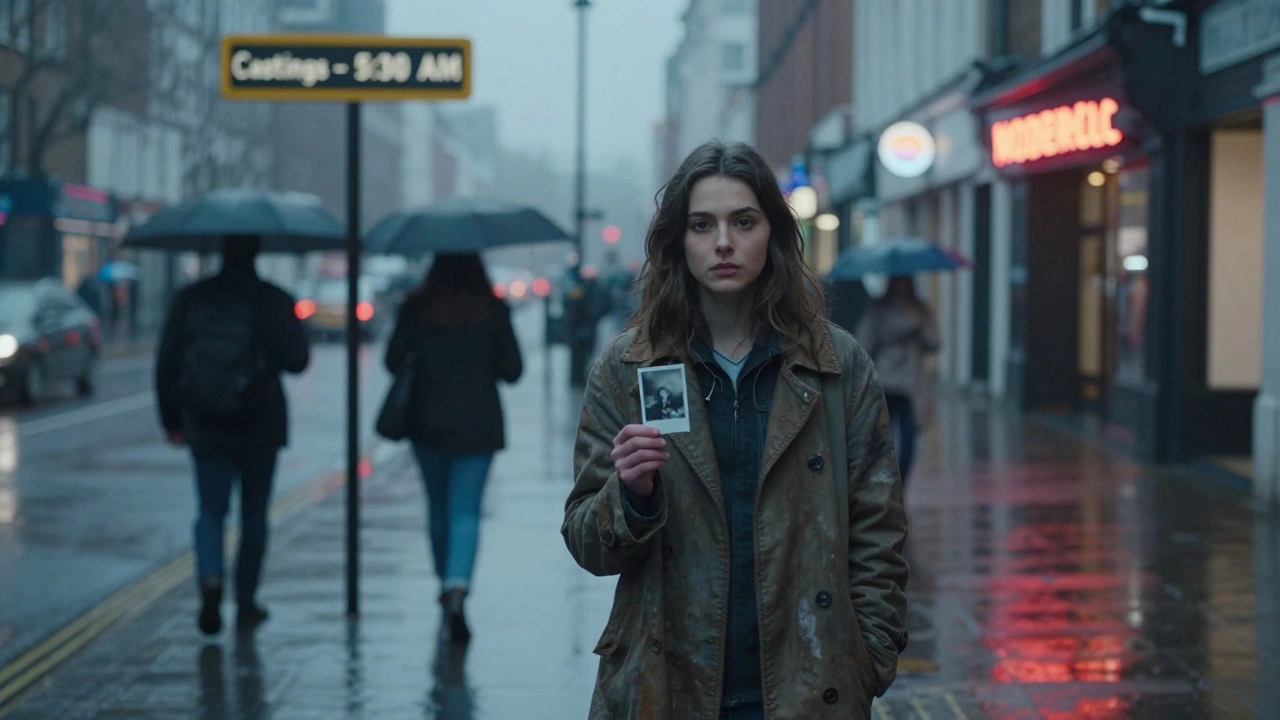
Most people see the glitz - the designer gowns, the flashing cameras, the magazine covers. But behind every successful female model is a path that’s rarely talked about: the early mornings, the rejections, the long bus rides to castings, the nights spent eating ramen while waiting for a call that might never come. This isn’t a fairy tale. It’s a job. And it’s harder than you think.
It Starts with a Photo
For nearly every female model who made it to the top, it began with a single photo. Maybe it was a snapshot taken at a local mall by a stranger who said, "You should be a model." Maybe it was a school yearbook picture that got noticed by a talent scout. Or maybe it was a selfie posted on Instagram that caught the eye of a small agency in Manchester or Leeds.
That first photo isn’t magic. It’s just a starting point. What comes next is more about persistence than perfection. Agencies don’t sign girls because they look like supermodels. They sign girls who show up on time, who take direction, who don’t crack under pressure. One model from Birmingham told me she went to 47 castings in six months before landing her first paid gig - a 15-minute commercial for a supermarket chain.
The Agency Game
Not all agencies are created equal. Some are reputable, with real connections to top designers and fashion houses. Others? They’re just photo studios charging $500 for a "portfolio package" that no one in the industry recognizes.
Top agencies like Models 1 in London, Premier in New York, or Women in Milan don’t ask for money upfront. They take a 20% commission only after you earn. If an agency asks you to pay for classes, editing, or "exposure," walk away. Legit agencies make money when you do. They don’t sell dreams - they sell results.
Once you’re signed, the real work begins. You’ll be expected to maintain your look: no drastic haircuts, no sudden weight changes, no weekend binges. You’ll need to learn how to walk in heels without limping, how to pose without looking stiff, and how to smile even when you’re exhausted. A former top model from Glasgow said she once did 12 castings in one day, wore six different outfits, and still had to show up at 7 a.m. the next morning for a shoot in Scotland.
The Catwalk Isn’t Just Walking
Walking down a runway sounds simple. But try holding a 10-pound gown for 15 minutes while 500 people stare at you, lights burn your skin, and a producer yells, "Faster! More attitude!"
Successful runway models train like athletes. They do core workouts, balance drills, and posture corrections. They study the designer’s collection - not just the clothes, but the mood, the inspiration, the story behind each piece. A model from Liverpool who walked for Alexander McQueen told me she spent weeks watching interviews with the late designer just to understand how he wanted her to move.
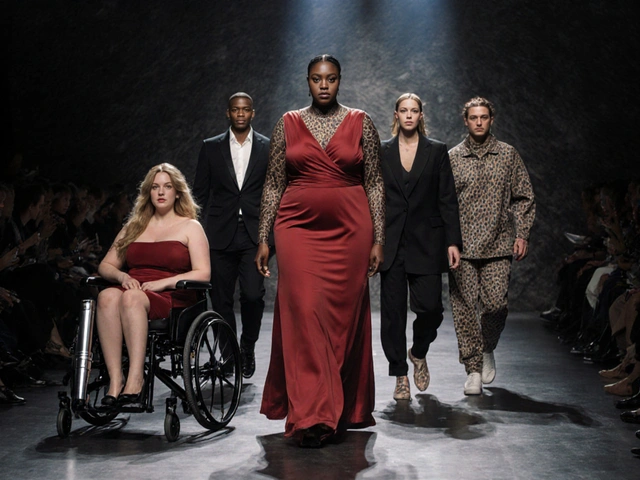
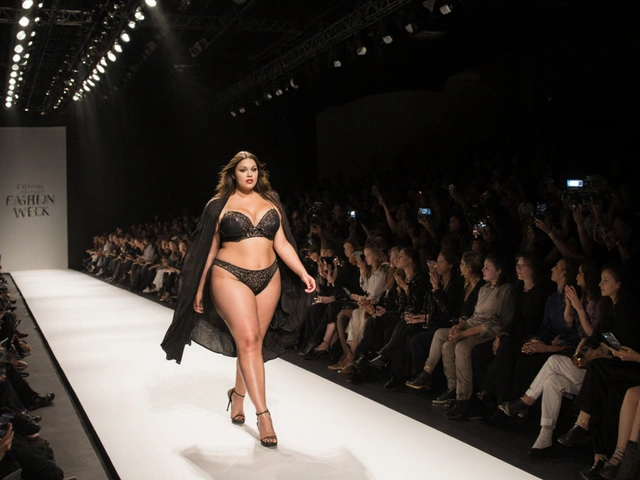
And it’s not about being the tallest. While many runways favor 5’9” and up, there’s a growing demand for diversity. Brands like Savage X Fenty, Aerie, and Reformation regularly cast models of all heights, sizes, and backgrounds. One model, 5’5” and size 12, walked for a major UK brand last season and landed a six-figure contract. It’s not about fitting a mold anymore - it’s about bringing something real to the stage.
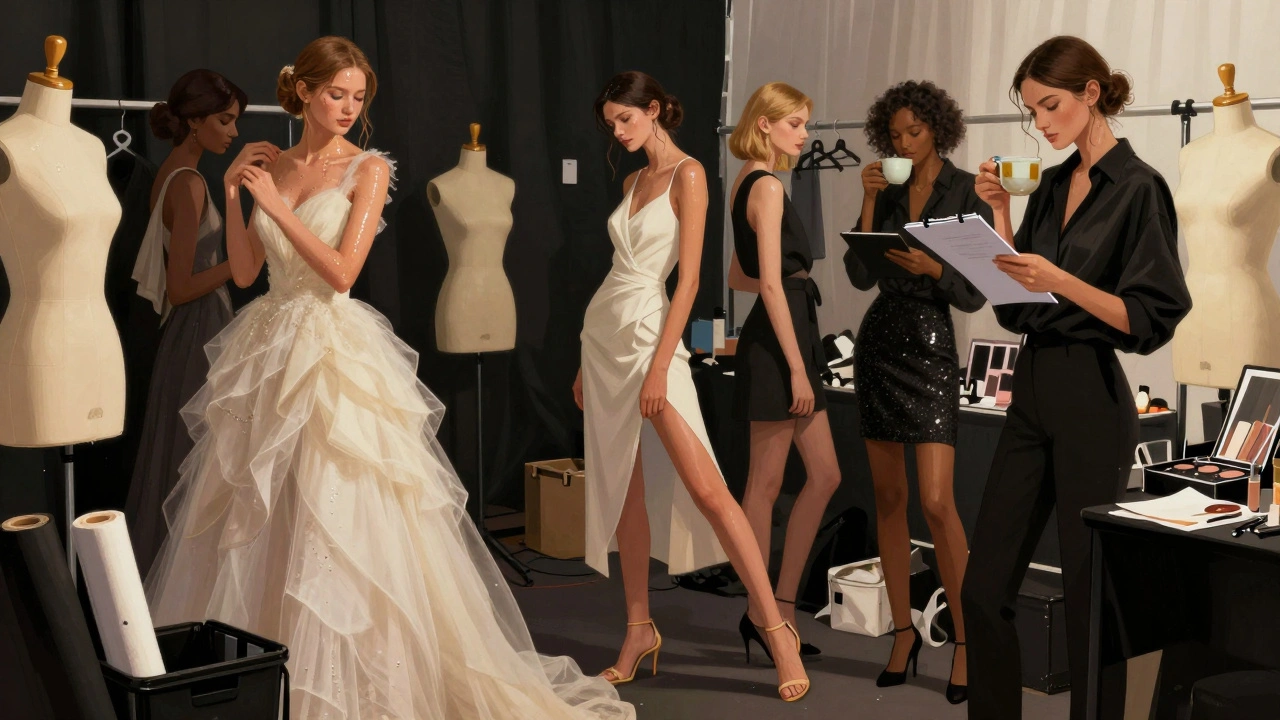
The Dark Side of the Glamour
Let’s be honest: the industry has a dark side. Pressure to lose weight. Unethical photographers. Creepy clients. Body shaming disguised as "feedback."
A 2024 survey by the Model Alliance found that 68% of female models under 25 had been asked to lose weight before a shoot. One model from Cardiff shared that she was told to "look more like a child" for a children’s clothing campaign. She refused. She got dropped from the agency.
But things are changing. More models are speaking up. Organizations like the UK Model Guild now offer free legal advice, mental health support, and contract reviews. If you’re signed with an agency, ask: "Do you have a code of conduct?" If they hesitate - walk.
It’s Not Just About the Cover
Most people think the goal is to land a Vogue cover. But the real power? Consistency. Building a career that lasts beyond one shoot.
Top female models today don’t just walk runways. They launch beauty lines. They write books. They become brand ambassadors for ethical fashion. Some even start their own agencies. Adwoa Aboah, for example, went from catwalk to founding Gurls Talk - a mental health platform for young women.
Success isn’t measured by how many times you’ve been on a magazine cover. It’s measured by how much control you have over your own career. Can you say no to a shoot that makes you uncomfortable? Can you negotiate your own rate? Can you choose your own stylist? That’s the real win.

What It Takes to Last
There’s no secret formula. But here’s what every long-term model I’ve spoken to has in common:
- They treat it like a business. They track bookings, save 30% of earnings, and invest in training - not just makeup, but public speaking, negotiation, and financial literacy.
- They build relationships. Not just with agents, but with photographers, stylists, and editors. They follow up. They thank people. They show up when no one’s watching.
- They protect their mental health. Therapy isn’t a luxury - it’s part of the job. Many top models now have weekly sessions.
- They have a backup plan. Whether it’s studying fashion design, learning editing, or opening a small boutique, they never put all their eggs in one basket.
One model from Brighton, now in her 40s, still books jobs. She’s not on magazine covers anymore. But she teaches aspiring models. She consults for brands on diversity. She’s more respected now than ever.
Final Thought: It’s a Marathon, Not a Sprint
The model who lands the cover at 19? She might vanish by 23. The one who keeps showing up, keeps learning, keeps standing up for herself? She builds a legacy.
If you’re thinking about this path - go for it. But go in with your eyes open. Bring your own water. Bring your own confidence. And don’t let anyone tell you what you’re worth. Your value isn’t in your measurements. It’s in your resilience.
Do you need to be tall to become a female model?
No, you don’t need to be tall. While traditional runway modeling often favors heights of 5’9” and above, the industry has shifted dramatically. Commercial modeling, editorial work for brands like Aerie, Savage X Fenty, and Reformation, and even high-street campaigns now regularly feature models between 5’4” and 5’8”. What matters more than height is presence, confidence, and how well you connect with the brand’s message.
How do I find a legitimate modeling agency?
Legitimate agencies never ask for money upfront. They earn their cut (usually 20%) only after you get paid. Research agencies online - check their client list, look for real fashion shows they’ve worked on, and read reviews on sites like Model Mayhem or the UK Model Guild. If they push you to buy expensive photoshoots or classes, that’s a red flag. Stick to agencies with a track record of placing models with known brands like Marks & Spencer, Topshop, or Burberry.
Is social media necessary to succeed as a model?
It’s not required, but it helps. Brands now look at your Instagram following not just for numbers, but for engagement - how real your audience is, how you present yourself, and whether your vibe matches their image. A model with 50,000 engaged followers can be more valuable than one with 500,000 fake ones. Build a feed that shows your personality, your work, and your professionalism - not just selfies.
What’s the average income for a female model?
There’s no average - it varies wildly. A beginner might earn £100-£300 for a day’s shoot. A mid-tier model working consistently could make £30,000-£70,000 a year. Top models with major campaigns earn £200,000 or more. But most models work freelance, so income fluctuates. Many supplement their income with part-time jobs, teaching, or content creation. Financial planning is critical.
How do I build a strong model portfolio?
Your portfolio should show range: commercial, editorial, and lifestyle shots. Start with 8-12 high-quality images. Include a headshot, a full-body shot, and a few looks that show your versatility - like a business casual look, a natural makeup look, and a styled editorial shot. Don’t clutter it. Less is more. Work with a photographer who understands modeling portfolios - not just a friend with a DSLR. Many agencies will review your portfolio before even considering you.
Next steps? Start small. Get a professional headshot. Reach out to one reputable agency. Attend open calls. Keep your portfolio updated. And remember - every top model started exactly where you are now.


February 8, 2026 AT 17:47
Ron Tang
Let’s be real - this industry doesn’t care if you’re 5’2” or 5’11”. It cares if you show up with energy, know how to hold a look for 12 seconds without blinking, and don’t cry when someone says your hips are too wide. I’ve seen girls with zero experience land billion-dollar campaigns because they had presence. Not perfection. Presence.
And yeah, social media helps, but don’t fall for the myth that you need 100k followers. I know a girl with 18k real followers who got signed by L’Oréal because her feed looked like someone who actually lived life - not just filtered selfies. Be authentic. Be consistent. That’s the new currency.
February 9, 2026 AT 09:31
lee sphia
The structural integrity of this profession is often misunderstood. Modeling, as a commercial enterprise, operates under a framework of transient aesthetic value that is both economically volatile and psychologically taxing. The emphasis on resilience is not merely anecdotal - it is statistically necessary. Data from the Model Alliance indicates that models under 25 experience anxiety disorders at rates 3.2x higher than the general population.
Investing in financial literacy and mental health infrastructure is not optional; it is the only viable path toward sustainable career longevity. The transition from model to entrepreneur is not a lateral move - it is an evolutionary necessity.
February 9, 2026 AT 09:58
Emily Hutchis
I used to think being a model was about being seen. Now I know it’s about refusing to be erased.
That girl from Cardiff who got dropped for refusing to look like a child? She didn’t lose a job. She gained her soul.
Every time a brand chooses a model who doesn’t fit the old mold - the size 12, the 5’5”, the dark skin, the scar, the freckles - they’re not just selling clothes. They’re saying: you belong here. And that’s more powerful than any cover shoot.
I’ve worked in fashion for 15 years. The ones who last? They’re not the prettiest. They’re the ones who kept their truth intact while the world tried to reshape them. That’s the real runway.
February 10, 2026 AT 21:38
Michael Pergolini
I read this whole thing. Quietly. No comments. No likes.
Just sat there thinking about the girl in Manchester who did 47 castings and got a supermarket commercial. I think about her every time I walk past a billboard of some 20-year-old with perfect skin and zero expression.
I don’t know her name. But I know her story. And I know she’s worth more than all the filters in the world.
Thank you for writing this. Not because it’s inspiring. Because it’s true.
February 11, 2026 AT 06:59
Celeste Salva
Ugh. Another woke modeling manifesto. When did this become a social justice movement? I just want to see hot girls in pretty dresses, not a lecture on mental health and "body positivity".
And why are we talking about size 12 models? That’s not modeling, that’s a grocery ad. If you want to be a model, get tall, thin, and pretty. Stop watering it down.
Also, no one cares about your "backup plan." Just get the job. Stop overthinking. This isn’t college. It’s fashion. It’s supposed to be glamorous, not a therapy session.
February 11, 2026 AT 11:59
Garry Lawton
Hey, I’m a guy from Canada who’s never modeled, but I’ve worked with photographers and stylists for years. One thing I’ve learned: the most successful models aren’t the ones who look like they were carved out of marble.
They’re the ones who show up early. Who say thank you. Who don’t ghost the crew after the shoot. Who laugh when the hair doesn’t work or the outfit rips.
That’s what sticks. Not the face. Not the height. The humanity.
If you’re starting out? Be the person everyone wants to work with again. The rest follows.
February 12, 2026 AT 20:08
Eamon Lane
One model from Brighton in her 40s still books jobs. She teaches. She consults. She’s more respected now than ever. That’s the real win.
Yeah.