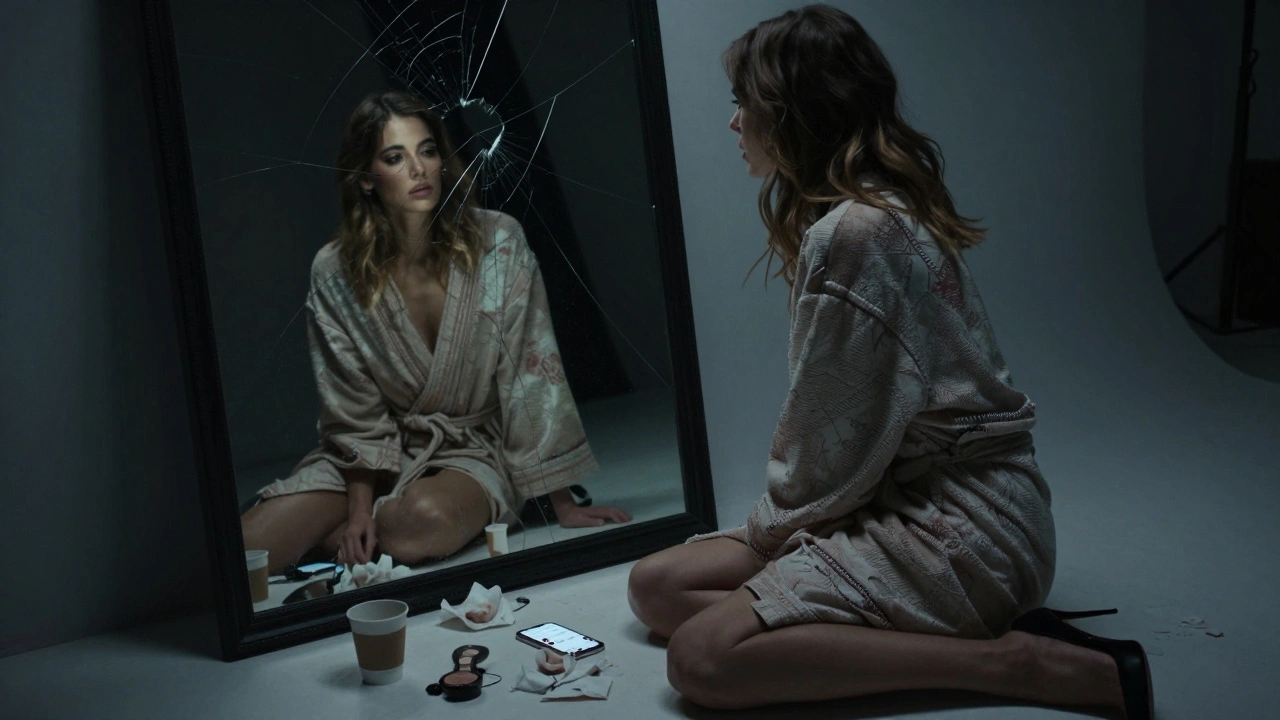
Being a glamour model might look like endless photoshoots, designer clothes, and spotlight moments-but behind the flashes and filtered selfies, there’s a reality most people never see. These models don’t just show up, smile, and get paid. They navigate a system built on inconsistent pay, invasive expectations, and emotional exhaustion. The industry doesn’t talk about the burnout, the manipulation, or the quiet battles with self-worth. It’s not about being glamorous-it’s about surviving it.
Unpredictable and Inconsistent Pay
Glamour modeling doesn’t come with a steady paycheck. Unlike corporate jobs or even some fashion modeling gigs, there’s no salary, no benefits, and no guarantee of work next month. A model might earn $2,000 for a shoot one week and wait six weeks for the next job, only to be offered $300 because the client "didn’t expect such high production value."
Many clients treat glamour shoots as disposable content. A magazine might pay $500 for a spread that runs for one issue, then never hire the same model again. Stock photo agencies often pay under $50 per image, even if the model spent eight hours in makeup and hair. Without union representation or standardized rates, models are left negotiating alone-often against producers who know they have dozens of others waiting in the wings.
Some models supplement income with OnlyFans or private bookings, but that opens new risks: harassment, leaked content, and the stigma that follows. The financial instability isn’t just inconvenient-it’s destabilizing. Many models live paycheck to paycheck, skipping medical care or delaying rent because a shoot got canceled last minute.
Body Image Pressure and Unrealistic Standards
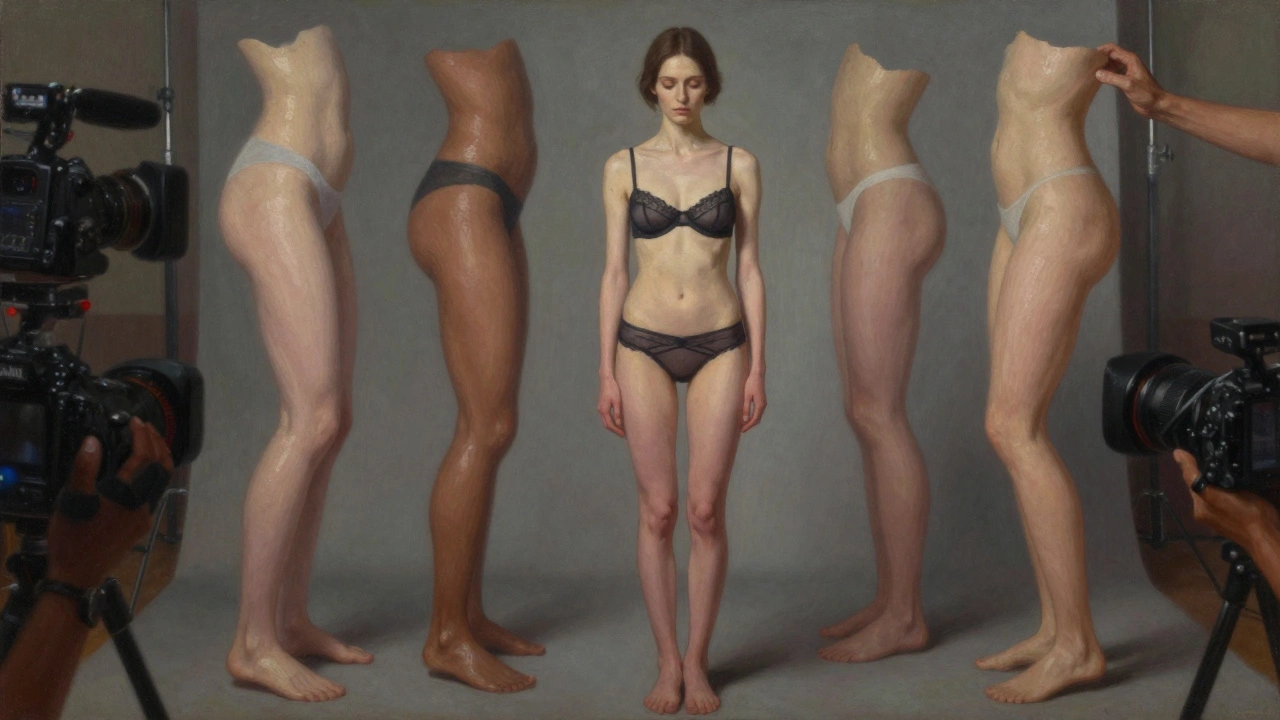
There’s no single "glamour model body"-but everyone acts like there is. Clients demand a specific mix: toned but curvy, slim hips but full breasts, long legs but small waist. The contradictions are endless. One photographer wants you to look "soft and sensual," the next says you need to be "athletic and fierce."
Models are routinely told to lose weight, gain muscle, or change their shape-even after signing a contract. A 2023 survey of 412 active glamour models found that 78% had been asked to alter their body within 30 days of a booking. Some were told to lose 10 pounds in two weeks. Others were pressured to get breast implants or butt lifts to "fit the brand."
These pressures don’t disappear after the shoot. Social media amplifies the problem. Models are expected to post flawless, airbrushed images daily while being told to "stay real." The result? Anxiety, disordered eating, and body dysmorphia are common. One model, who asked to remain anonymous, said she stopped looking in mirrors for six months after being told her thighs were "too thick for the campaign."
Exploitation and Lack of Boundaries
The line between professional and personal often vanishes in glamour modeling. Shoots that start as "boudoir" can shift into something more intimate without warning. Photographers may ask for "more natural" poses-code for nudity or suggestive acts. Clients sometimes insist on private locations, late-night sessions, or one-on-one meetings with no chaperone.
Contracts rarely protect models from these situations. Many sign boilerplate agreements written by agencies that prioritize the client’s comfort over the model’s safety. Consent is assumed, not confirmed. A model might agree to a "semi-nude" shoot, only to find the final edit includes full nudity she never approved.
Reporting abuse is risky. Agencies often dismiss complaints to keep clients happy. Some models have been blacklisted after speaking up. Others are told, "This is the industry. You knew what you signed up for." The power imbalance is extreme: models are replaceable. Producers are not.
Stigma and Social Isolation
Even when they’re doing everything "right," glamour models face judgment from people who don’t understand their work. Family members may cut off contact. Friends stop inviting them to events. Romantic partners leave, fearing the stigma or assuming the work means they’re "easy."
One model shared that her father refused to attend her wedding because he said, "You used to pose in your underwear. How can I be proud of that?" She spent years trying to prove she was more than her photos-earning a college degree, starting a nonprofit-but the label stuck.
Online harassment is constant. Comments like "slut," "whore," or "just a porn star" flood their social media. Even when they’re fully clothed, the assumptions follow. This isolation leads to depression. A 2024 study by the Model Alliance found that 62% of glamour models reported symptoms of clinical depression-twice the rate of the general population.
Ageism and Short Career Spans
Glamour modeling is a young person’s game. Most models peak between 18 and 26. After 30, opportunities shrink fast. Agencies stop calling. Clients say they want "younger, fresher faces." Even if a model is in perfect shape, they’re considered "past their prime."
There’s little support for transitioning out. Unlike athletes or actors, glamour models rarely get coaching on how to pivot into other careers. Many spend their entire 20s building a portfolio, only to find no market for their skills once they hit 30. Some turn to teaching yoga or starting makeup brands. Others go back to school, often with debt and no safety net.
And if a model has children? The industry rarely accommodates it. One mother of two said she was dropped by her agency after announcing her pregnancy-even though she’d been their top earner for three years. "They said I wouldn’t fit the aesthetic anymore," she told me. "But I still looked the same. I just had a baby."

Limited Legal Protection
There’s no federal law in the U.S. that defines glamour modeling as a profession with rights. No minimum wage guarantees. No overtime pay. No protection against sexual harassment in private photo sessions. Most states don’t even require contracts to be in writing.
Models are often classified as independent contractors, which means they pay their own taxes, buy their own gear, and have no recourse if they’re not paid. Even when they win lawsuits, legal fees can wipe out any settlement. One model spent $18,000 on lawyers to recover $12,000 in unpaid fees-and still had to declare bankruptcy.
Some countries, like France and Canada, have started creating model protection laws. But in the U.S., the burden falls entirely on the individual. The result? Most models never fight back. They just move on-quietly, and with no support.
Why Do They Keep Doing It?
It’s not about the money. It’s not about fame. Most glamour models say they do it because it’s the only path they’ve ever known-or the only one that felt possible.
For some, it’s the first job that paid them more than their parents ever did. For others, it’s the only way to afford college, help family, or escape an abusive home. A few genuinely love the art of photography and the creative control they get on set. A small number build brands that outlive their modeling years.
But the truth? They keep going because the alternatives feel worse. The system doesn’t give them many choices. And even when they’re exhausted, hurt, or scared-they still show up-because someone, somewhere, still believes in the fantasy.
Do glamour models make good money?
Most don’t. While top-tier glamour models can earn $10,000+ per shoot, the average model earns between $200 and $800 per job. Many work only a few times a month, and income is unpredictable. Without steady work, it’s hard to cover rent, insurance, or even groceries. The idea of glamour modeling as a high-paying career is mostly marketing.
Are glamour models exploited more than other types of models?
Yes, in specific ways. Glamour models often work in private settings without third parties present, making it easier for exploitation to go unnoticed. They’re also more likely to be asked to push boundaries around nudity and intimacy than fashion or commercial models. The industry’s lack of regulation and weak contracts leave them especially vulnerable.
Can glamour models transition to other careers?
It’s possible, but difficult. Many lack formal education or professional networks outside modeling. Some become photographers, stylists, or influencers. Others go back to school or start businesses. But without mentorship or financial support, the transition is rarely smooth. The stigma can also block doors-even in unrelated fields.
Is glamour modeling the same as pornography?
No. Glamour modeling focuses on aesthetic, stylized photography-often clothed or semi-clothed-with an emphasis on beauty and confidence. Pornography involves explicit sexual acts. But the line is blurred by clients, editors, and social media algorithms that treat both as "adult content." This confusion leads to stigma, misrepresentation, and legal risks for models who never agreed to explicit work.
How can someone protect themselves entering glamour modeling?
Never sign a contract without reading every line. Demand a chaperone for private shoots. Get paid upfront for new clients. Use a model release that specifies exactly what will be published. Keep records of all communication. Join organizations like the Model Alliance or Model Rights Initiative for legal support. Trust your gut-if something feels off, walk away.
The glamour is a product. The reality? It’s human. And those behind the lens deserve more than pretty pictures-they deserve respect, safety, and a fair shot at a life beyond the shoot.

December 5, 2025 AT 04:58
Inaki Kelly
This hit me harder than I expected. I used to do some freelance photography gigs back in college and saw how models were treated-sometimes just quietly ignored, other times outright disrespected. It’s not just about the money, it’s about being seen as a person. I’ll never look at a glamour photo the same way again. 🙏
December 6, 2025 AT 02:07
Jeremy Hunt
Canada’s got some decent model protection laws now-minimum pay standards, mandatory chaperones on private shoots, even union representation in some provinces. The U.S. is decades behind. Why are we still treating creative labor like it’s not real work? It’s not just glamour-it’s skilled labor with real psychological tolls. Time for federal legislation.
December 6, 2025 AT 10:30
Amy Black
As someone who’s worked in modeling agencies for 12 years, I’ve seen this up close. The contracts are predatory by design. Most models don’t know they can negotiate terms-like shoot duration, clothing restrictions, or image usage rights. I always told new models: ‘If they won’t let you read the contract before signing, walk out.’ No one’s coming to save you. You have to save yourself.
December 6, 2025 AT 22:39
Elle Daphne
Y’ALL. I just want to say-this is why we need to stop romanticizing ‘the life’ and start supporting the people behind it. Glamour models aren’t ‘just models’-they’re artists, survivors, entrepreneurs, and often the sole breadwinners for their families. If you’re gonna like a post, comment, or share-it’s not enough. Donate to Model Alliance. Volunteer. Speak up. They’re not asking for pity. They’re asking for dignity. 💪✨
December 7, 2025 AT 12:09
La'Sherrell Robins
ok but like… why do these girls even sign up for this? like i get it, money, freedom, etc-but u know what? if u dont wanna get catcalled on the internet or have your pics leaked, maybe dont post half-naked pics on the internet?? just sayin. also, why is it always the models fault when they get exploited? like… maybe if u dont wanna be treated like a sex object, dont act like one?? 🤷♀️💅
December 8, 2025 AT 18:23
Nick LoBrutto
Minor correction: the Model Alliance isn’t a union, but they do offer legal templates and advocacy. Also, the 2023 survey cited? It’s from the Journal of Body Image Research-link in my profile if you want to read the full methodology. And for real, the ‘you knew what you signed up for’ line? That’s gaslighting wrapped in a contract. We need better education for teens entering this industry.
December 10, 2025 AT 07:53
Tatiana Pansadoro
As an American woman who worked hard to get where I am, I just don’t get why we’re glorifying this lifestyle. We have real problems in this country-like education and healthcare-and now we’re giving a platform to people who choose to pose in lingerie? It’s not empowerment-it’s exploitation of the weak. And don’t tell me ‘it’s their choice’-if you’re 18 and broke, it’s not a choice, it’s desperation. We need to protect our youth, not enable them.