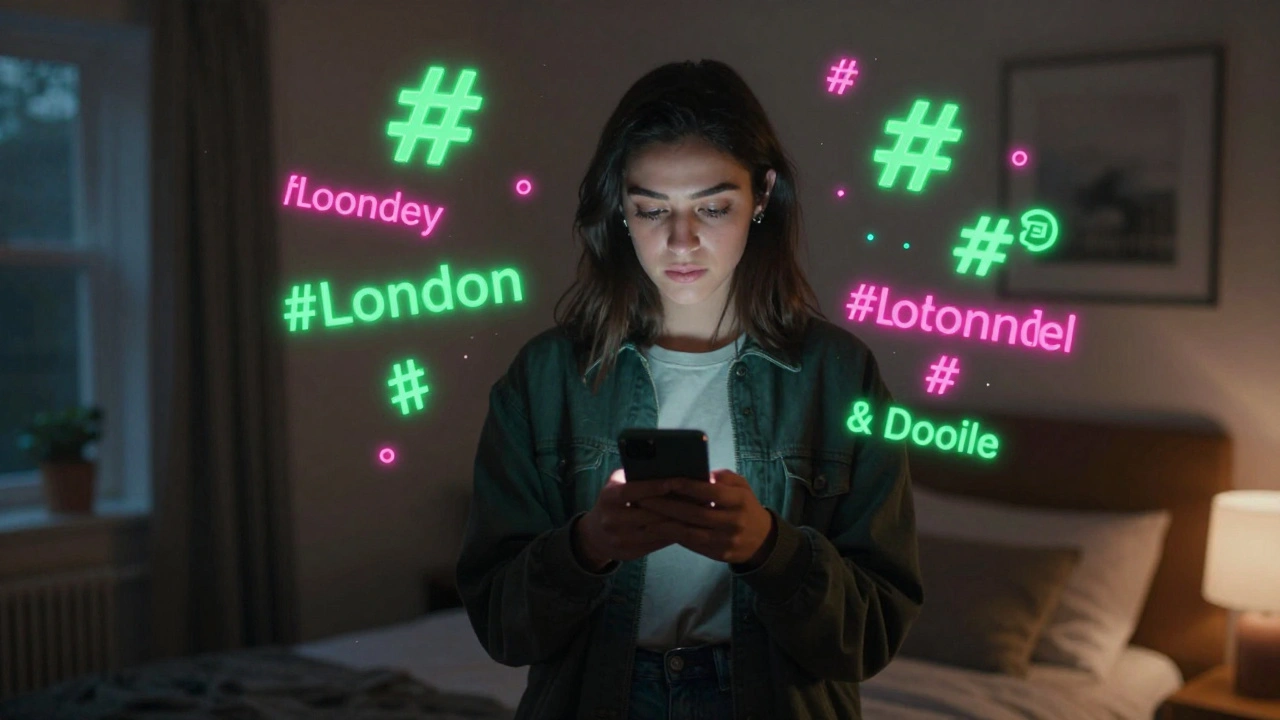
Five years ago, a UK model agency’s biggest concern was getting a model on the cover of a magazine. Today, it’s about getting them trending on TikTok. The rise of social media hasn’t just changed how models get discovered-it’s rewired the entire business model of agencies across the UK. What used to be a slow, gatekept industry built on physical portfolios and casting calls is now a fast-paced, algorithm-driven machine where a single viral post can launch a career overnight.
Discovery Has Gone Digital
Before Instagram, models were scouted at train stations, shopping malls, or through referrals from other models. Agencies like Premier Model Management and Storm Model Management relied on annual open calls and photo submissions sent by post. Now, those same agencies have entire teams dedicated to scrolling through hashtags like #LondonModel, #UKFashion, and #ModelSearchUK. A 16-year-old from Leeds doesn’t need to fly to London for an audition-she just needs to post a photo with the right lighting and hashtags.
In 2024, over 68% of new signings at UK-based agencies came from social media, according to a survey by the British Association of Model Agents. That’s up from just 12% in 2018. The most common path? A model posts a photo, it gets picked up by a local influencer, then shared by a scout who works for an agency. No appointment. No portfolio. Just a phone call one morning saying, “We’d like to meet you.”
The Rise of the Micro-Influencer Model
Agencies aren’t just looking for tall, thin, and photogenic anymore. They’re looking for relatable. Real. Authentic. A model with 15,000 followers and a 7% engagement rate is now more valuable than one with 200,000 followers but low interaction. Why? Because brands pay for results, not reach.
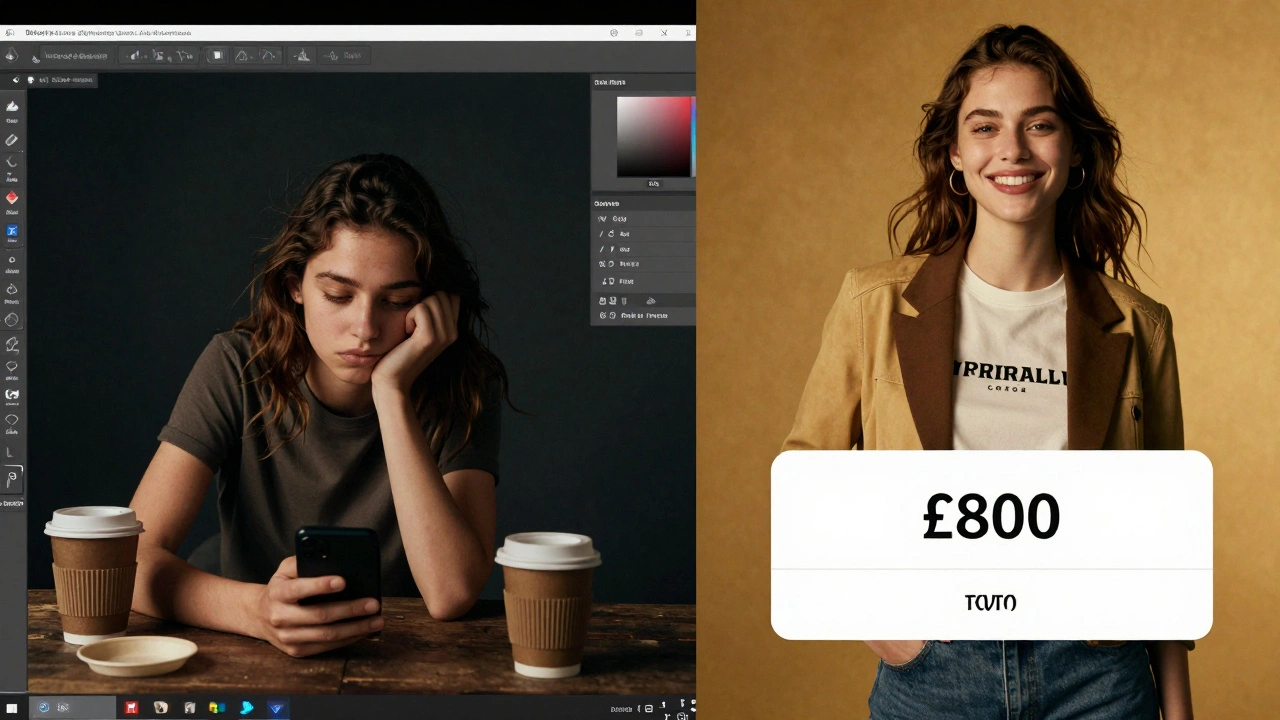
Take a model from Manchester who posts daily outfit reels on Instagram. She doesn’t walk runways. She doesn’t do magazine editorials. But she gets paid £800 per post for a high street brand’s new denim line. Her audience trusts her. Her content feels like a friend’s recommendation, not an ad. That’s exactly what agencies now sell: micro-influencer credibility. Agencies like Models 1 and Women Management have created new divisions just for social-first talent-models who earn their keep through branded content, not catwalks.
Agencies Are Becoming Content Studios
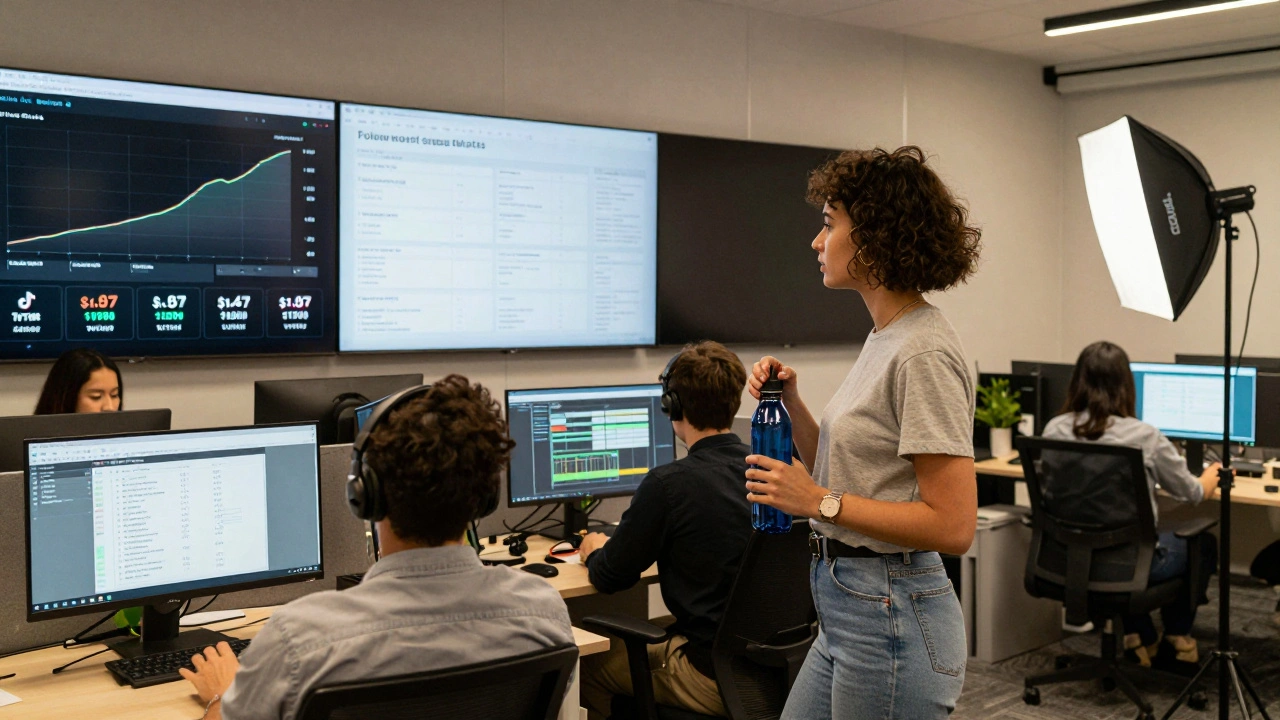
It’s no longer enough to book a model for a photoshoot and call it a day. Today’s top UK agencies run full content production units. They hire photographers, stylists, editors, and even TikTok strategists to turn their models into consistent, platform-optimized content creators.
At Select Model Management in London, every new model signs a content agreement. They’re expected to post at least three times a week across Instagram, TikTok, and YouTube Shorts. The agency provides captions, hashtags, and even lighting tips. Why? Because the more content a model produces, the more attractive they become to brands. One agency told me they’ve seen a 200% increase in brand deals when a model posts consistently for six months.
It’s not just about visibility-it’s about control. When a model posts something off-brand, it can damage the agency’s reputation. So now, agencies coach their talent on tone, timing, and even what not to say. A model who posts political opinions? That’s a risk. A model who posts a selfie in a bikini with a branded water bottle? That’s a revenue stream.
The Pressure Is Real
But this new system comes with a cost. Models, especially teens and young adults, are under more pressure than ever. They’re expected to be models, influencers, marketers, and customer service reps-all before breakfast.
One 19-year-old model from Brighton told me she spends 3-4 hours a day editing photos, replying to DMs, and planning content. She’s not paid for that time. Her agency only pays when a post goes live and gets approved by a brand. That means she’s working unpaid for weeks, hoping one post will break through. Many models report anxiety, burnout, and body image issues tied directly to the need to constantly perform.
There’s no regulation in this space. Unlike traditional modeling contracts, social media obligations are rarely written into formal agreements. Many models sign vague “digital representation” clauses that give agencies rights to their content forever. Some agencies even take a 40% cut of influencer earnings-higher than their cut from runway jobs.
Brands Are Calling the Shots
Big brands like ASOS, Boots, and PrettyLittleThing no longer hire agencies to find models-they hire agencies to find influencers. They want data: follower growth, engagement rate, audience demographics, even comment sentiment. They want to know if a model’s followers are mostly 18-24-year-old women in the Midlands, and whether they actually buy the products.
As a result, agencies now run analytics dashboards for every model. They track which posts drive the most sales, which hashtags convert best, and which times of day get the most likes. A model who posts at 7 PM on a Tuesday might earn £500. The same post at 9 AM on a Friday might earn £1,200. Agencies now schedule content like a stock trader manages portfolios.
It’s not just about looks anymore. It’s about conversion. A model with a 4.8 average rating on product reviews gets booked more than one with a 200K follower count but low engagement. The industry has shifted from beauty to behavior.
What’s Next? The Algorithm Is the New Agent
Some agencies are starting to use AI tools to predict which models will go viral. One London-based agency uses machine learning to analyze facial expressions, lighting, clothing colors, and even the type of music in a model’s Reels. The system flags models with a “high virality score” and pushes them into brand campaigns before they even have a following.
Meanwhile, new platforms are emerging. TikTok Shop is now a major revenue channel. Models don’t just post-they tag products directly in videos. One model in Glasgow made £18,000 in three months just by tagging her favorite high street brands in daily outfit videos. No agency needed. She did it herself.
That’s the real threat to traditional agencies: models who learn to bypass them entirely. More young talent is signing up for free online courses on how to monetize their social media. They’re learning how to negotiate with brands, use Canva for graphics, and track their own analytics. The power is shifting-from agency offices to smartphone screens.
Can Traditional Agencies Survive?
Some are adapting. Others are clinging to old models. The agencies that are thriving now are the ones treating social media not as a side hustle, but as their core business. They’re hiring digital marketers, investing in training, and offering transparent contracts that pay for content time.
Those that don’t change? They’re fading. A 2025 report from the UK Fashion and Textile Association found that 17% of smaller agencies closed in the last two years-not because of the economy, but because they refused to adapt to the digital model. Their models left for agencies that understood the new rules.
The future belongs to agencies that act like tech startups, not old-school talent brokers. They don’t just find models-they build brands. They don’t just book jobs-they create ecosystems. And they don’t wait for the next Vogue cover. They chase the next trending hashtag.
Do UK model agencies still hold power in the age of social media?
Yes-but their power has changed. Agencies no longer control access to jobs. Instead, they control access to brands, tools, and training. A model can post on Instagram alone, but getting paid by big brands still usually requires an agency’s network, contracts, and legal backing. The agency’s role has shifted from gatekeeper to strategist.
Can I become a model in the UK without an agency?
Absolutely. Thousands of models now build careers independently using TikTok, Instagram, and TikTok Shop. But going solo means handling everything: contracts, taxes, branding, and negotiations. Many find it overwhelming. Agencies still offer value in scaling income and reducing risk, especially for younger models.
How much do UK model agencies take from social media earnings?
It varies. Top agencies like Storm and Premier typically take 20-25% of influencer income. Smaller agencies may take up to 40%, especially if they provide content production services. Always read the contract. Some now charge a monthly fee for social media management instead of a commission.
What should I look for in a UK model agency that works with social media?
Ask: Do they have a dedicated social media team? Do they provide training or content support? Are their contracts clear about social media rights and earnings splits? Avoid agencies that demand exclusive social media control without offering support. Look for ones that post their own models’ work publicly-proof they know how to promote.
Is there a risk of exploitation in social media modeling?
Yes. Many young models are pressured to post revealing content or work long hours without pay. There’s no legal minimum for social media modeling in the UK. Always get contracts in writing. If an agency asks you to post something that makes you uncomfortable, walk away. Your mental health matters more than a post.


December 13, 2025 AT 05:37
Rich Beatty
Honestly, this is such a refreshingly honest look at how the industry's changed. I know a few young models who went viral on TikTok and now make more in a month than their older siblings did in a year doing runway. The system’s broken, but it’s also more accessible than ever. Just wish there was better mental health support built in.
Keep pushing the conversation - this needs more visibility.
December 14, 2025 AT 19:23
Cody Deitz
It’s fascinating how the definition of ‘marketable’ has shifted from physical perfection to emotional relatability. The data-driven approach is cold, but undeniably effective. Brands aren’t selling aesthetics anymore - they’re selling trust. And trust is built through consistency, vulnerability, and repetition. The model isn’t the product anymore; the routine is.
I wonder if this will lead to a new kind of celebrity - not the kind you admire, but the kind you feel like you know.
December 16, 2025 AT 10:21
Ronnie Chuang
UK model agencies? Pfft. This whole thing is just woke corporate nonsense. Kids these days post selfies in their underwear and call it ‘content’? Back in my day, you had to be tall, look like a statue, and not talk unless spoken to. Now it’s all ‘authenticity’ and ‘relatability’ - whatever that means. And don’t get me started on those 16-year-olds with 50K followers thinking they’re influencers. America’s going downhill.
Also, why is everyone spelling ‘model’ wrong now? It’s M-O-D-E-L. Not ‘moddel’ or ‘moodel’ or whatever trash they’re posting.
December 17, 2025 AT 02:25
j t
You know, when you think about it, this isn’t really about modeling anymore. It’s about the commodification of identity. Every selfie, every hashtag, every carefully lit bathroom mirror shot - it’s all just data points in a machine that doesn’t care if you’re tired, or scared, or lonely. The agency doesn’t want you to be a person. They want you to be a performance. And the worst part? You start believing it too. You start thinking your worth is tied to how many likes you get before breakfast. And then one day you look in the mirror and you don’t recognize yourself anymore. Not because you changed - because you were never allowed to be real in the first place.
It’s not exploitation. It’s erasure. And nobody’s talking about that.
December 17, 2025 AT 21:51
Melissa Perkins
I love how this piece highlights both the opportunity and the cost. So many people only see the glam side - the branded water bottles, the free clothes, the viral moments - but no one talks about the 3 AM editing sessions or the panic attacks before posting. I work with young creatives, and I’ve seen how this pressure fractures self-worth.
Agencies that offer real support - like content coaching, mental health stipends, and transparent contracts - are the ones that will survive. The rest are just feeding a machine that eats its own. Let’s push for better standards. These kids deserve more than algorithms and empty likes.
December 18, 2025 AT 04:15
Jimmy Carchipulla
AI scouts? That’s wild. 😮
December 18, 2025 AT 08:09
Sriram T
OMG this is sooo deep!! 🤯 Like, I’ve been following this whole ‘social media modeling’ thing since I was 14 in Delhi and let me tell you - the UK is just *late* to the party. We’ve had girls from Jaipur making ₹50k per post since 2020. This isn’t a revolution - it’s evolution. And the real winners? Those who understand that VIRALITY IS A SCIENCE, not luck. Also, agencies taking 40%? That’s just robbery. I’d rather go solo and use Canva like a GOD. 🙌 #ModelLife #TikTokIsTheNewCatwalk
December 20, 2025 AT 05:08
Jonny BiGSLiCE
The most profound shift here isn’t technological - it’s epistemological. The model is no longer an object of gaze, but a subject of algorithmic negotiation. The agency, once a gatekeeper of physical capital, now functions as a curator of digital capital. What’s being sold isn’t beauty, but behavioral predictability. And in this new economy, authenticity is not a virtue - it’s a metric.
This raises a deeper question: If identity becomes a product optimized for conversion, what remains of the self when the feed goes dark?
December 20, 2025 AT 20:25
Luke Ollett
Let’s be clear: the rise of the micro-influencer model isn’t democratization - it’s labor exploitation disguised as empowerment. Agencies are outsourcing the psychological toll of content creation onto minors while extracting 40% of their earnings. No minimum wage. No overtime. No union. No recourse.
Meanwhile, the same agencies that demand three posts a week won’t even cover the cost of a therapist for a model who develops an eating disorder from constant body scrutiny. This isn’t innovation. It’s a regulatory vacuum with a marketing team.
If you’re considering entering this space - get a lawyer. Document everything. And never, ever sign a clause that gives them perpetual rights to your likeness without compensation for derivative use.
December 22, 2025 AT 16:10
Trent Thevenot
Everyone’s acting like this is new, but it’s just capitalism with better filters. The same exploitative structures exist - they’ve just moved from casting rooms to DMs. The real tragedy isn’t the 40% cut - it’s that models now think they’re lucky to get it. They’ve been convinced that visibility equals value, and that’s the most dangerous lie of all.
And don’t get me started on those ‘AI virality scores.’ You’re training machines to replicate what humans used to find beautiful - but now you’re reducing humanity to a set of pixels and engagement rates. What’s next? Algorithmically generated models? No skin. No soul. Just conversion.