
Most people think becoming a model is about looking good in photos. That’s the myth. The truth? It’s a business. And like any business, you need strategy, persistence, and the right moves. If you’re serious about modeling, you need to stop scrolling Instagram and start building a real foundation. Here’s what actually works in 2025.
Understand the Types of Modeling That Pay
Not all modeling is the same. The industry splits into clear categories, and each has different rules. If you don’t know which path fits you, you’ll waste time applying to the wrong agencies.Fashion modeling is what you see on runways and in Vogue. Agencies here want height: women usually 5’9” and up, men 6’0” and up. Body measurements matter-thin, proportional frames are standard. This isn’t about personality; it’s about being a blank canvas for designers.
Commercial modeling is everywhere: TV ads, billboards, catalogs. You don’t need to be tall. You need to look like someone your audience relates to. A 5’6” mom with a warm smile? Perfect. A 6’2” guy with a friendly, approachable vibe? That’s gold. This is where most beginners start-and where the steady work is.
Fit modeling is less glamorous but pays well. You try on clothes for designers before they go into production. Agencies need your exact measurements: bust, waist, hips, inseam. If you’re a size 8 and your body doesn’t change, you could work every week.
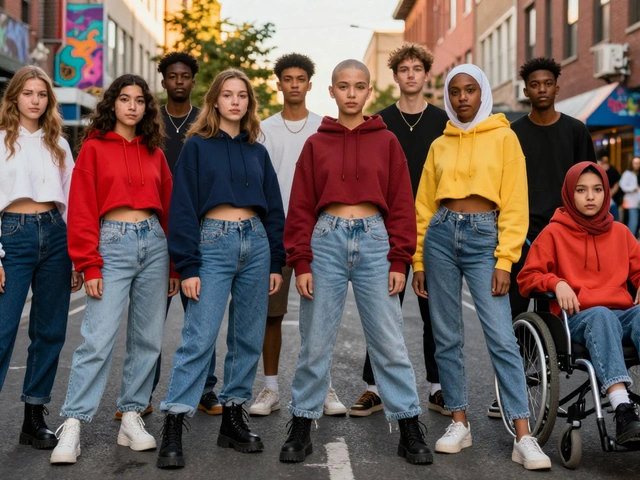
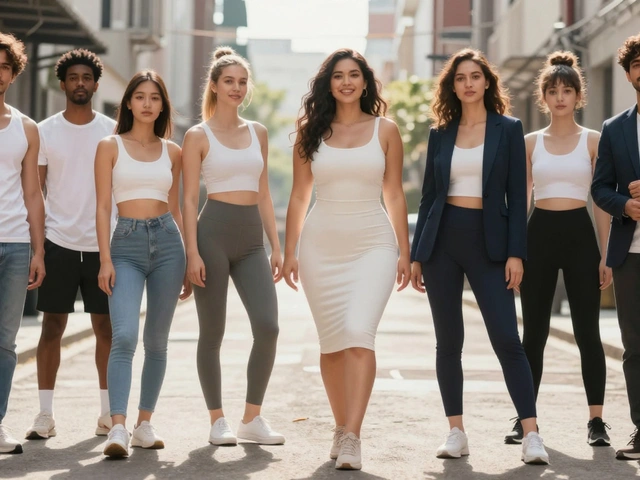
Plus-size, fitness, and teen modeling are growing fast. Brands now want diversity. If you’re curvy, athletic, or under 18, you’re not excluded-you’re in demand.
Build a Real Portfolio (Not Just Selfies)
A portfolio isn’t a gallery of your Instagram posts. It’s a professional tool that shows agencies you can deliver.Start with 8-12 high-quality images. Include:
- A clear headshot (no filters, natural lighting)
- A full-body shot in neutral clothing
- A fashion look (even if it’s just a simple outfit)
- A commercial look (smiling, casual, relatable)
- A portrait that shows emotion
Don’t pay a studio that charges £500 for a “modeling shoot.” Instead, find a photography student at a local college. Offer to trade: free modeling for their portfolio. Most are hungry for experience and will give you professional results for £50 or less.
Use ModelMayhem or OneModelPlace to connect with photographers. These sites are free to join and used by real industry pros. Avoid agencies that ask you to pay for photos upfront. That’s a red flag.
Find the Right Agency-Not Just Any Agency
You don’t need to sign with a big name like IMG or Elite to start. But you do need a reputable agency that actually books jobs.Here’s how to spot the real ones:
- They don’t ask for money upfront. Legit agencies earn commission (15-20%) from your bookings.
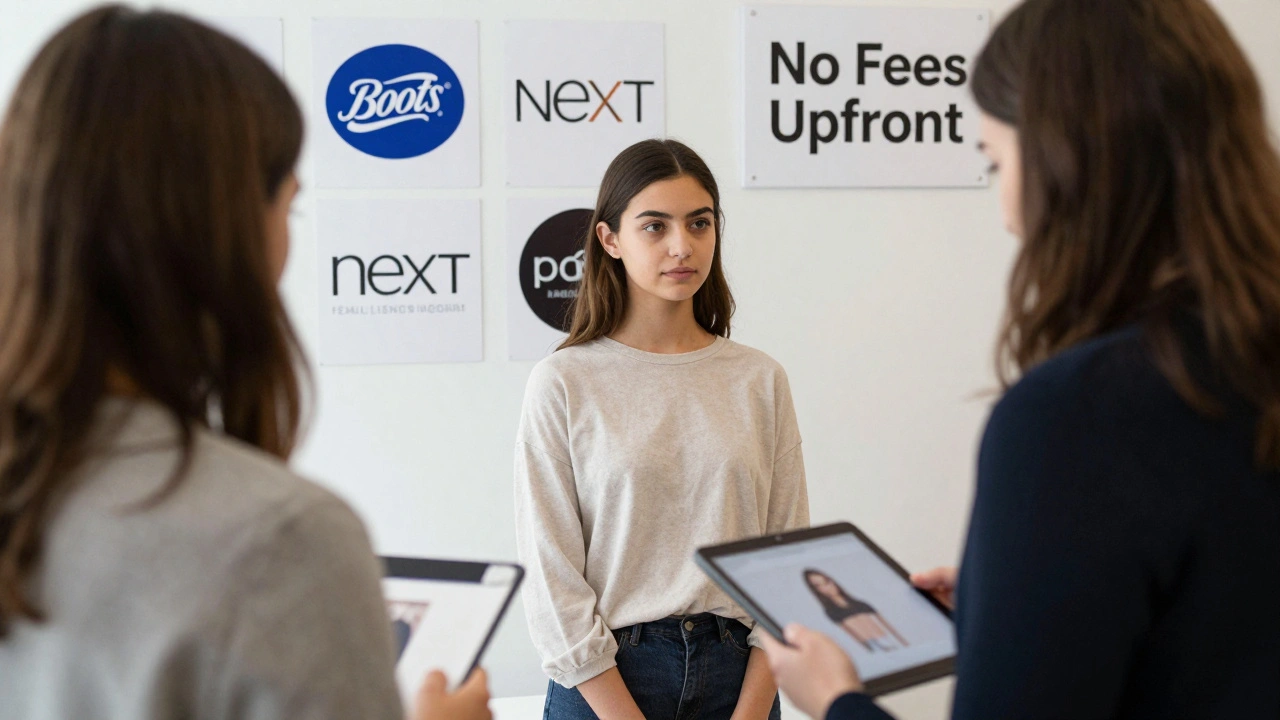
- They have a website with real client logos (Topshop, Marks & Spencer, Boots, etc.).
- You can call them and speak to a real person-not just a chatbot.
- They’re listed on Models.com or Modeliste.
In the UK, agencies like Models 1, Storm Model Management, and Select Model Management are trusted. Smaller agencies like Modelhub (London) and Cherry (Manchester) also book steady commercial work.
Send your portfolio to 5-10 agencies at once. Don’t wait for one to reply. Follow up in 10 days. If you hear nothing, move on. No response means they’re not interested-not that you’re not good enough.
Learn How to Walk, Pose, and Express
You can have the face and the body, but if you can’t move in front of a camera, you won’t get hired.Take a basic modeling class. Look for weekend workshops at London College of Fashion or Modeling Academy UK. These cost £80-£150 and last 4-6 hours. You’ll learn:
- How to walk on a runway without tripping
- How to hold a pose for 30 seconds without blinking
- How to change your expression for commercial vs. editorial shots
Practice daily. Stand in front of a mirror. Try 10 different facial expressions. Film yourself walking. Watch how your shoulders move. Watch videos of models like Adriana Lima or Devyn Garcia. Notice how they use their eyes, not just their body.
Don’t overdo it. The best models look natural. If you’re trying too hard, it shows.
Get Your Legal Basics Right
If you’re under 18, you need a parent or guardian to sign contracts. That’s the law. But even if you’re over 18, you still need to protect yourself.Never sign a contract without reading it. Watch out for:
- Exclusivity clauses (can’t work with other agencies)
- Long-term commitments (more than 2 years)
- Hidden fees (for “training,” “catalogs,” or “digital portfolios”)
Use the Equity model contract template. It’s free, clear, and used by UK agencies. If an agency refuses to use it, walk away.
Also, get a UK tax ID (Self Assessment). You’re self-employed. You’ll need to file taxes on your modeling income-even if it’s just £500 a year. HMRC doesn’t care how small it is.
Stay Consistent, Not Perfect
The biggest mistake new models make? Giving up after three rejections.One model I know applied to 47 agencies before getting signed. She got 42 no’s. She kept updating her portfolio. She went to open calls. She showed up on time. Two years later, she’s booking monthly jobs with Boots and Next.
Success in modeling isn’t about being the prettiest. It’s about being the most reliable. Agencies remember the girl who shows up early, knows her lines, and doesn’t complain. They forget the girl who’s gorgeous but late every time.
Update your portfolio every 4-6 months. Even if you haven’t worked, get new photos. Your look changes. Your style evolves. Keep it fresh.
Follow 5-10 agencies on Instagram. See what kind of models they post. Mimic their style-not their look. Learn what they’re looking for.
What Doesn’t Work (And Why)
Here’s what wastes time:- Buying followers on Instagram. No agency cares about your follower count. They care if you show up on set ready to work.
- Joining “modeling networks” that charge £100/month. These are scams. Real agencies don’t charge you to be listed.
- Waiting for a “discovery.” No one finds you at a mall. You find them.
- Doing only Instagram modeling. It’s fun, but it won’t pay your rent. Use it to build your brand, not your career.
There’s no shortcut. But there is a path. And it’s not glamorous. It’s paperwork. It’s rejection. It’s showing up when you’re tired. But if you stick with it, it pays off.
How Long Does It Take?
Most people think it takes months. It doesn’t. It takes years.Realistic timeline:
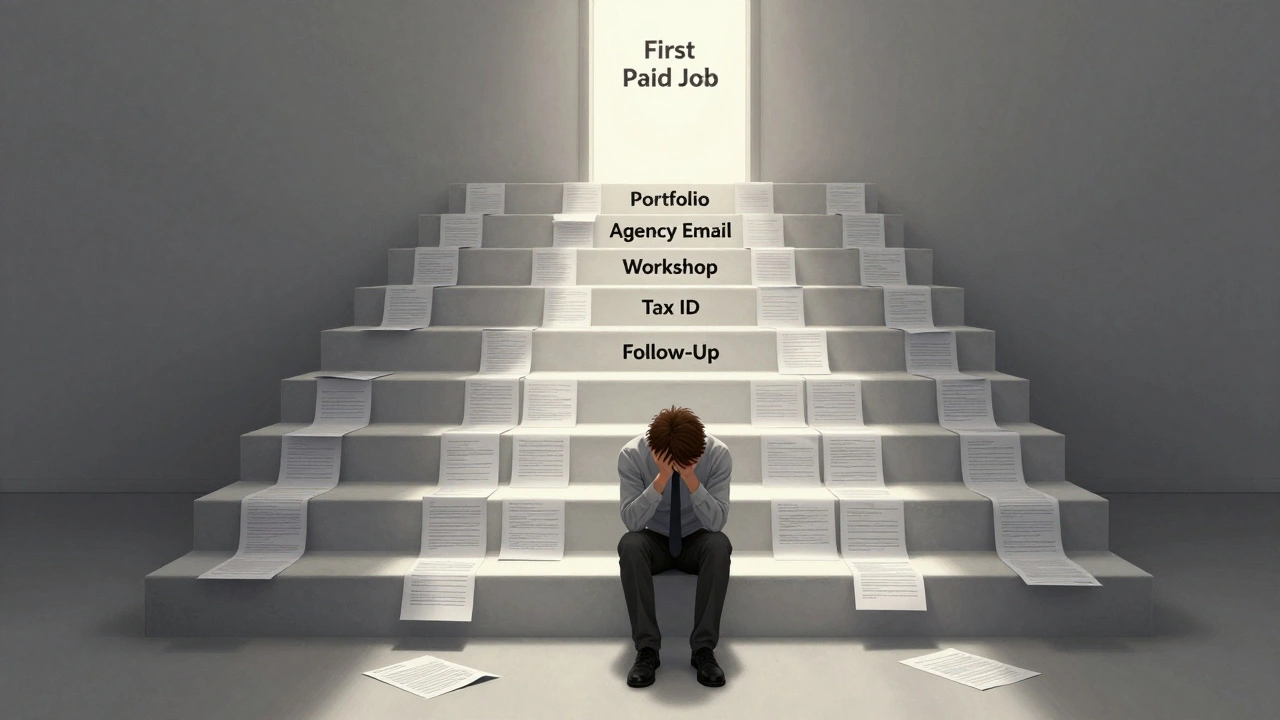
- Month 1-2: Build portfolio, research agencies
- Month 3: Apply to 10 agencies
- Month 4-6: Get signed (or not), keep shooting
- Month 7-12: Book your first paid job
- Year 2: Start getting regular work
If you’re not seeing progress after 18 months, reevaluate. Maybe modeling isn’t for you. Or maybe you’re doing the wrong things. Either way, don’t keep doing the same thing and expect a different result.
Do I need to be super tall to become a model?
No. Only fashion modeling requires height-usually 5’9” or taller for women. Commercial, fit, and plus-size modeling don’t. Many successful models are 5’5” to 5’7”. Agencies now want real people, not just runway figures.
Can I become a model without paying anything?
Yes. Legit agencies never charge you to join. You pay for photos only if you choose to-never to the agency. Avoid anyone asking for money upfront for “training,” “catalogs,” or “membership.” That’s a scam. Real work pays you.
What’s the best way to get noticed by agencies?
Send a clean portfolio (PDF or link) to 5-10 agencies at once. Follow up in 10 days. Attend open calls-many agencies hold them monthly in London, Manchester, and Birmingham. Show up on time, dressed simply, and be polite. Agencies notice professionalism more than looks.
Do I need social media to be a model?
Not to get signed, but it helps. Agencies look at your Instagram to see if you’re easy to work with and if you have a natural audience. Keep it clean. Post real work, not just selfies. A few hundred engaged followers is better than 10,000 bots.
How much money can I make as a new model?
First jobs pay £50-£150 for a 2-3 hour shoot. Commercial work pays more: £200-£500 per day. Runway jobs are usually £100-£300 per show. It’s not a high-income job at first. But with consistency, you can earn £1,000-£3,000 a month after a year.
If you’re ready to start, begin today. Take one photo. Send one email. Make one call. Progress isn’t about big leaps. It’s about small, daily steps. The modeling industry doesn’t wait for the perfect person. It rewards the persistent one.



December 2, 2025 AT 15:48
Marie-Eve Beaupré
Okay but let’s be real - most of these ‘tips’ assume you live in London or NYC. What if you’re in Winnipeg and your only photo studio is a guy with a DSLR and a bedsheet? This advice feels like it was written for people who already have access to resources most of us don’t.
December 4, 2025 AT 03:01
Kristin Briggs
YOOOOO. I literally just did this last year. Portfolio? Got it. Photographer? Student from UMass. Agency? Storm Model Management. Signed in 14 days. Now I’m doing a Target campaign next month. The key? STOP WAITING FOR PERMISSION. You don’t need to be ‘discovered.’ You need to be relentless. Also - stop using filters. Agencies can tell. You look like a glitchy AI avatar. Real skin. Real eyes. Real you.
December 5, 2025 AT 23:59
Sean Phoenix
Let me guess - this whole ‘modeling is a business’ thing is just corporate propaganda to get young girls to pay for ‘portfolio shoots’ so the industry can profit off their desperation. The real truth? The modeling world is a controlled illusion. Agencies are just middlemen for fashion houses that want to sell you an ideal you’ll never be. You think you’re building a career? You’re building a brand for someone else’s profit. Wake up. The system doesn’t want you to win. It wants you to keep trying.
December 6, 2025 AT 08:53
Erika Hernández
THIS. THIS IS THE ENERGY I NEEDED. I applied to 12 agencies last month. Got 11 rejections. One said ‘we love your vibe but your measurements aren’t marketable.’ I cried. Then I took 3 new photos with my roommate’s iPhone and sent them again. Got a reply today. They want me for a local yoga brand. I’m not 5’9”. I’m 5’5” and I have stretch marks and I still showed up. This post didn’t just give me steps - it gave me permission to be me. Thank you.
December 7, 2025 AT 04:19
vincent ngeso
man i just wanna say i read this whole thing and it made me feel less alone. i’m 19 and i’ve been trying for a year. i don’t have money for classes but i watch runway videos on youtube and practice in my room. i sent my portfolio to 8 agencies and only one replied. they said ‘we’ll keep your info on file.’ i didn’t know if that meant anything but now i think maybe it does. i’m gonna keep going. not because i wanna be famous but because i like how it makes me feel to stand tall and own my space. thanks for writing this.
December 7, 2025 AT 05:33
Sophie Kerr
Delusional. Modeling isn’t a ‘career.’ It’s a temporary aesthetic commodity. You’re a mannequin with a pulse. The only ‘persistent’ people are the ones who realize this and exit before their self-worth is auctioned off to L’Oréal. Your ‘small steps’ are just steps toward becoming a branded product. Pathetic.
December 8, 2025 AT 10:12
Hanna Holmberg
Okay, let’s break this down - because I’ve been in this industry for 12 years, and I’ve trained over 200 new models - and this is the most accurate, practical, non-glowy, non-scammy guide I’ve seen in YEARS. Seriously. People think it’s about looks? NO. It’s about reliability. It’s about showing up on time. It’s about knowing how to hold a pose without looking like you’re constipated. It’s about not texting during a shoot. It’s about not showing up in sweatpants and expecting to get booked. And yes - you CAN do this without paying a dime. I’ve seen it. I’ve done it. I’ve helped girls from rural Texas and Detroit and Atlanta get signed - all with iPhone photos and zero budget. The real secret? It’s not talent. It’s tenacity. Keep updating your portfolio. Keep applying. Keep showing up. And for god’s sake - stop buying followers. No one cares. I’ve seen girls with 500 real followers book more work than girls with 50K bots. You’re not selling a fantasy. You’re selling professionalism. And if you’ve got that? You’re already ahead of 90% of the competition. Now go take that photo. Send that email. Make that call. And then do it again tomorrow. You’ve got this. I believe in you.